
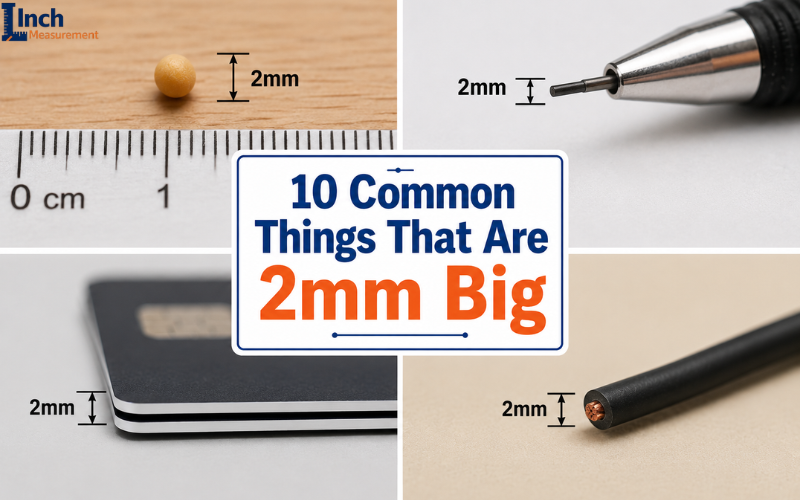
Introduction
A size of 2mm is very small, but it is still easy to notice in daily life.
It equals:
- 0.2 centimeters (cm)
- 0.0787 inches
- 2 millimeters (mm)
If you are wondering how big is 2mm, think about the thickness of a small coin edge, a mustard seed, or the tip of a crayon. It is tiny, but many common objects around you are close to this size.
Many people search for measurements like what does 2mm look like or 2mm examples because it helps them picture the size better than numbers alone. Seeing real-life comparisons makes the measurement easier to understand without using a ruler.
How Big Is 2mm?
A measurement of 2mm is smaller than most people expect. Since it is less than one-tenth of an inch, it can be difficult to picture at first. In inches, 2mm equals about 0.0787 inches. That means you could fit several 2mm spaces across the width of your fingernail.
When people ask how big is 2mm in inches, they usually want a simple visual comparison. One easy way to imagine it is the thickness of a credit card edge stacked twice. Another comparison is the width of a small grain of uncooked rice. It is also close to the size of tiny craft beads or the thickness of some headphone wires.
This measurement is common in jewelry, screws, wires, paper thickness, and electronics. Small machine parts and tiny drill bits are often measured in millimeters because inches would be too large for accurate sizing.
If you are asking what does 2mm look like, remember that it is about the width of a pencil tip after sharpening. It is visible and easy to hold, but still very small compared to everyday objects. Understanding this size becomes easier once you compare it with things you already use every day.
Measurement Without a Ruler
You can estimate 2mm even if you do not have a ruler nearby.
Using Your Fingers
The thickness of a fingernail is often close to 1mm. Two fingernail thicknesses together are about 2mm.
Using Common Objects
A mustard seed is around 2mm wide. Looking at one can help you estimate this tiny size quickly.
Using Paper or Cards
A standard credit card is about 1mm thick. Stacking two cards together gives you a good idea of what 2mm looks like.
Quick Table of 2mm Examples
| Common Item | Approximate Size |
| Mustard seed | 0.0787 inches |
| Pencil lead width | 0.0787 inches |
| Small craft bead hole | 0.0787 inches |
| Two stacked credit cards | 0.0787 inches |
| Thin headphone wire | 0.0787 inches |
| Mechanical pencil tip | 0.0787 inches |
| Tiny screw diameter | 0.0787 inches |
| Thick grain of sand cluster | 0.0787 inches |
| Edge thickness of a coin | 0.0787 inches |
1. Mustard Seed
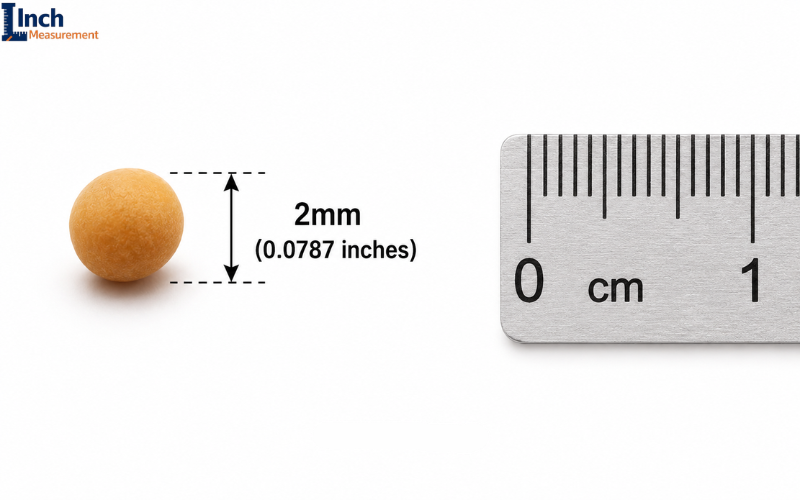
A mustard seed is one of the easiest ways to picture how big 2mm is. These tiny round seeds are commonly used in cooking and spices. Most mustard seeds are close to 2mm in diameter, making them a perfect real-life example of this measurement.
If you place a mustard seed on your fingertip, you can clearly see how small 2mm looks. The seed is tiny enough to fit easily under your fingernail but still large enough to pick up without trouble. This makes it useful when explaining measurements to children or beginners.
People often search for 2mm examples because small measurements are hard to imagine from numbers alone. A mustard seed gives a practical comparison that almost anyone can understand. It also helps when estimating small sizes without tools.
In cooking, these seeds may look very small, but they add strong flavor to food. This shows that even tiny objects can still be important and easy to notice.
2. Pencil Lead Width
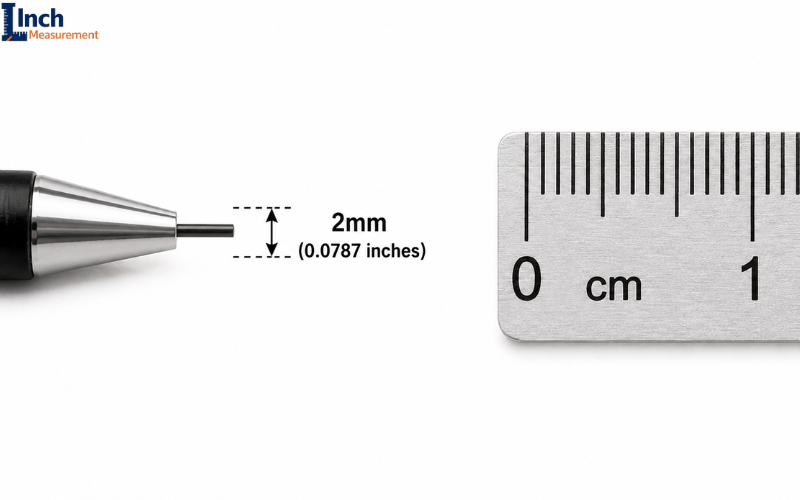
Many mechanical pencil leads are around 2mm thick. This makes them one of the best daily examples for understanding this measurement. If you have used a sketching pencil or thick mechanical pencil, you have probably already seen what 2mm looks like.
A 2mm pencil lead appears narrow but still strong enough for writing and drawing. Artists often use this size because it creates darker and wider lines compared to thinner leads. When held next to a ruler, the lead looks very small, yet it is clearly visible to the eye.
For someone asking what does 2mm look like, this is an easy comparison because pencils are common in homes and schools. You can simply look at the tip of a thick mechanical pencil to estimate the size.
The lead also shows how millimeter measurements are used in real products. Small differences in width can change how a pencil writes or draws. A 2mm lead creates bold marks while still keeping control and accuracy for detailed work.
3. Small Craft Bead Hole
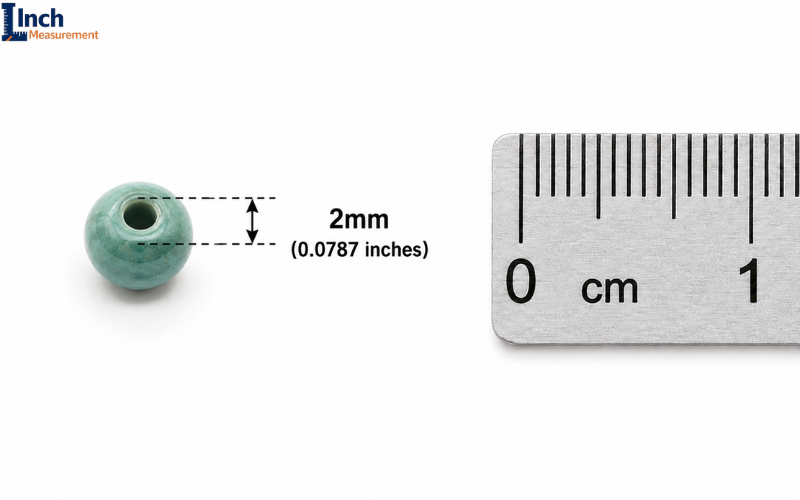
The hole inside many small craft beads is often close to 2mm wide. These beads are commonly used for jewelry making, bracelets, and decoration projects. Because the holes are tiny, they help people understand how small this measurement really is.
When threading string through a bead hole, you may notice that only thin cords or wires can fit. That small opening is usually around 2mm. Even though it seems tiny, it is still large enough for crafting tools and thread to pass through smoothly.
This is a useful comparison for anyone learning how big is 2mm in inches. Seeing a bead hole helps you picture the measurement more clearly than numbers on paper. It also shows how accurate millimeter measurements need to be in arts and crafts.
Bead makers use millimeters because even a tiny change in size affects how the jewelry looks and works. A hole larger than 2mm may make the bead feel loose, while a smaller one may not fit the thread properly.
Related Post: 9 Common Things That Are 1mm Big
4. Two Stacked Credit Cards
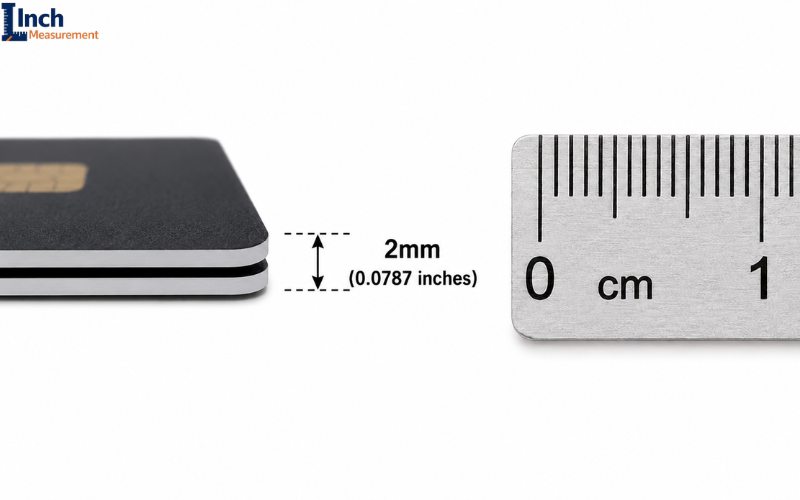
A single credit card is about 1mm thick. If you stack two cards together, the total thickness becomes close to 2mm. This makes credit cards one of the easiest household tools for estimating small measurements.
Most people carry cards in a wallet, so this comparison is simple and practical. Hold two stacked cards between your fingers and you will quickly understand what does 2mm look like. The thickness feels thin but still noticeable.
This comparison is helpful because many people do not own rulers with millimeter markings. Using objects you already have nearby makes size estimation easier and faster. It also helps children and students learn measurements through real examples.
The thickness of cards is carefully controlled during manufacturing. Even a slight difference can affect how cards fit into machines or wallets. That is why millimeter measurements are important in product design and manufacturing.
5. Thin Headphone Wire
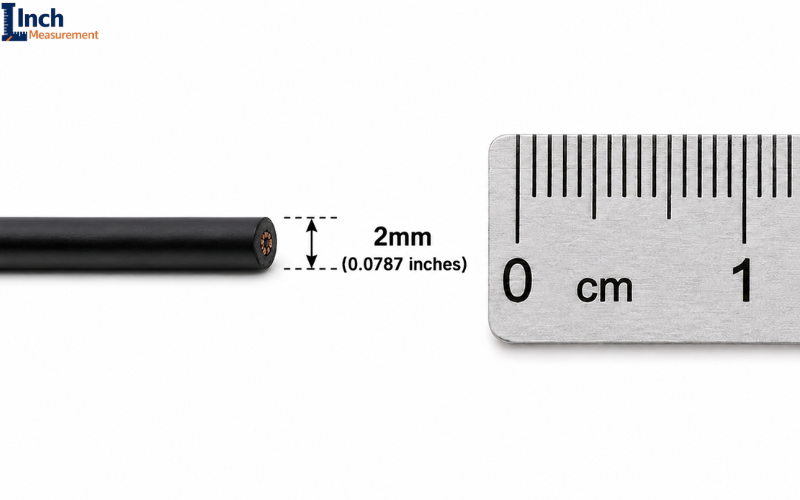
Some thin headphone wires are close to 2mm thick. This includes the outer coating around the wire, not just the metal inside. Looking at these cables can help you understand how small but visible 2mm really is.
Headphone wires need to stay flexible and lightweight, which is why they are usually very thin. Even though the cable is small, it still protects the wiring inside. A thickness of about 2mm gives a balance between strength and flexibility.
If someone asks how big is 2mm, a headphone wire is a useful comparison because most people use earphones or charging cables every day. Simply looking at the width of a thin cable can provide a quick estimate.
This example also shows why millimeters are commonly used in electronics. Small measurements matter when making compact devices. A cable that is too thick may feel heavy, while one that is too thin may break easily.
6. Mechanical Pencil Tip
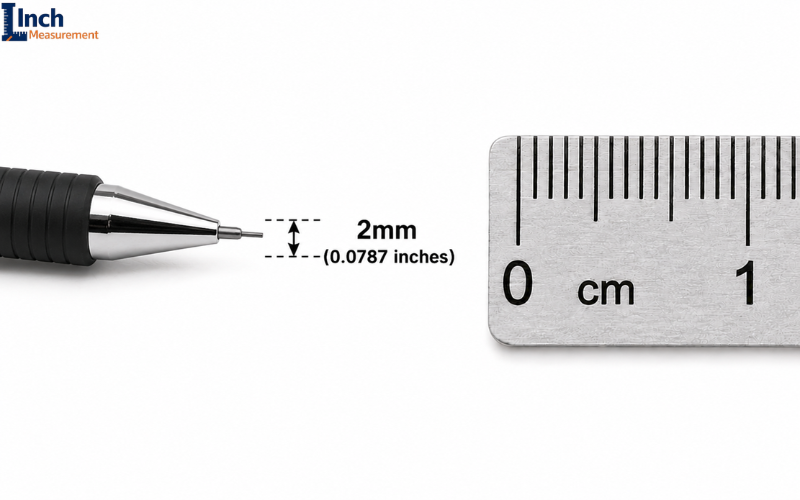
The metal tip of many mechanical pencils is around 2mm wide. This small section holds the lead in place and helps guide it while writing. Because the tip is narrow and easy to see, it makes a great example of a 2mm measurement.
When you look closely at a mechanical pencil tip, you notice how tiny the opening is. Even though it is small, it still allows smooth writing and precise control. This shows how useful a 2mm size can be in tools designed for detail work.
Students, artists, and office workers often use mechanical pencils every day. That makes this comparison simple and familiar. If you are trying to imagine 2mm in inches, looking at the pencil tip can help more than reading measurements alone.
Manufacturers use exact millimeter measurements for writing tools because even tiny differences change how the pencil performs. A tip wider than 2mm may reduce precision, while a smaller one may feel fragile.
7. Tiny Screw Diameter
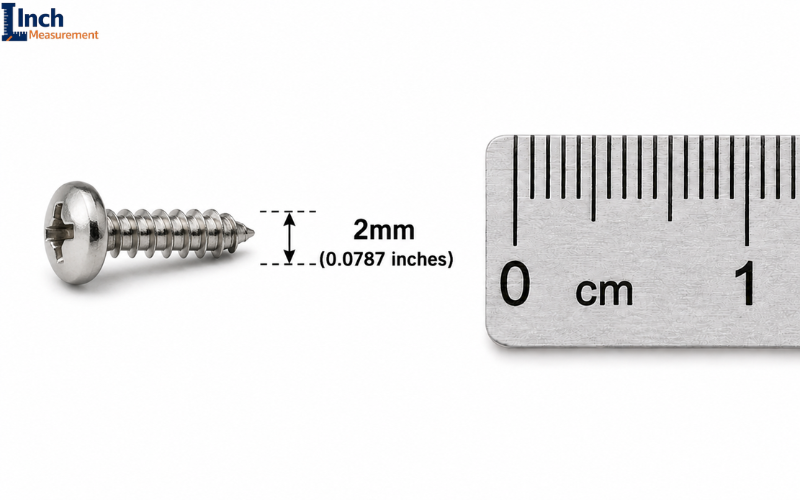
Some tiny screws used in glasses, watches, and electronics have a diameter close to 2mm. These screws are very small but still important because they hold delicate parts together.
When repairing eyeglasses or opening a small electronic device, you may notice these tiny screws. They are small enough to require special tools, yet still visible without magnification. Their size gives a clear idea of what 2mm looks like in real life.
This comparison is useful because it shows how millimeters are used in engineering and repairs. A screw only a few millimeters wide can still provide strong support for lightweight devices.
People searching for 2mm examples often want practical items they can recognize easily. Tiny screws are perfect because they are found in many household products. They also show how small measurements can play a big role in technology and daily use.
8. Thick Grain of Sand Cluster
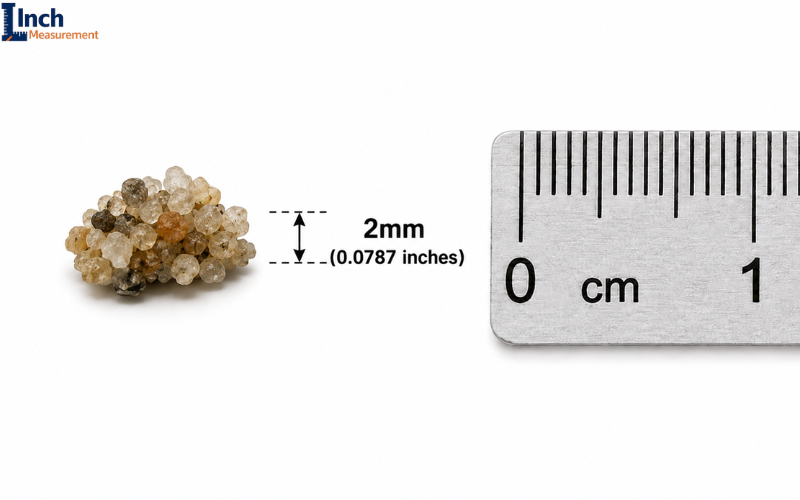
A single grain of sand is usually smaller than 2mm, but a thick grain or tiny cluster of sand can reach about this size. Looking at coarse sand is another simple way to understand the measurement.
Beach sand comes in different sizes. Fine sand feels soft and powdery, while coarse sand has larger grains that are easier to see individually. Some larger grains or grouped particles are around 2mm wide.
This example helps people imagine very small measurements found in nature. If you place a coarse grain of sand on white paper, you can clearly see how tiny 2mm is while still being visible.
Sand measurements are important in construction, science, and landscaping. Different grain sizes affect how materials behave. Even small changes in size can change texture, strength, and appearance.
For anyone wondering what does 2mm look like, coarse sand gives a natural and easy comparison.
9. Edge Thickness of a Coin
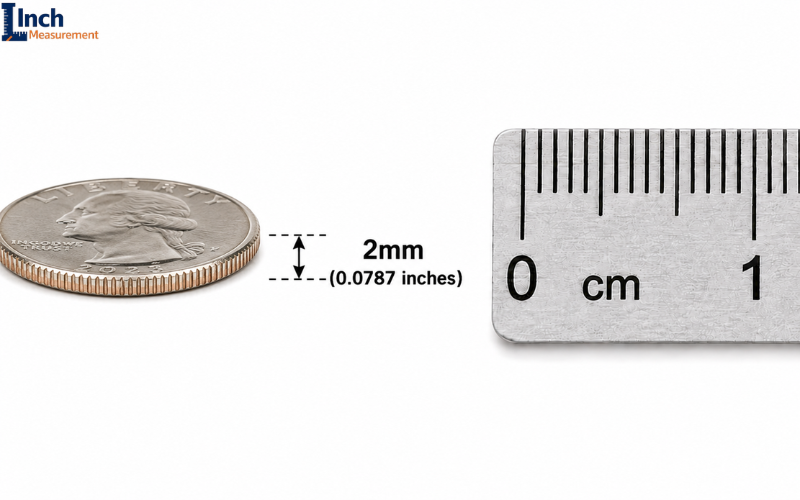
The edge thickness of some small coins is close to 2mm. This makes coins a useful object for comparing tiny measurements because they are easy to find almost anywhere.
When you hold a coin sideways, you can see its edge thickness clearly. Although the exact size depends on the coin type, many coins are close to 2mm thick. This helps you estimate the measurement quickly without tools.
Coins are practical examples because people use them daily. They also provide a solid object that feels easier to measure than soft or flexible items. If someone asks how big is 2mm in inches, comparing it to a coin edge can make the answer easier to picture.
Coin thickness is carefully designed during production. A small change in thickness can affect vending machines, weight, and durability. This is another reason why precise millimeter measurements are important in manufacturing.
If it is helpful for you and want more free guides then here we have more for you:
- 10 Common Things That Are 10cm
- 9 Common Things That Are 5cm Big
- 9 Common Things That Are 3CM Big
- 10 Common Things That Are 2cm Big
- 10 Common Things That Are 1cm Big
FAQs
How big is 2mm in inches?
2mm equals about 0.0787 inches.
What does 2mm look like?
It looks similar to a mustard seed, a thick pencil lead, or two stacked credit cards.
Is 2mm easy to see?
Yes. It is very small, but still clearly visible to the human eye.
How can I measure 2mm without a ruler?
You can estimate it using two stacked credit cards, a fingernail thickness, or a mustard seed.
What common objects are 2mm wide?
Examples include tiny screws, headphone wires, bead holes, and mechanical pencil tips.
Conclusion
Understanding how big is 2mm becomes much easier when you compare it to real-life objects. Even though 2mm is a tiny measurement, it appears in many common items around us every day. Mustard seeds, pencil leads, bead holes, headphone wires, and small screws all help show what this size looks like in a practical way.
A measurement of 2mm equals 0.2 cm or about 0.0787 inches. While that may sound very small, it is still large enough to see clearly and use in many products. Using everyday comparisons is one of the best ways to picture measurements quickly without needing a ruler.
