
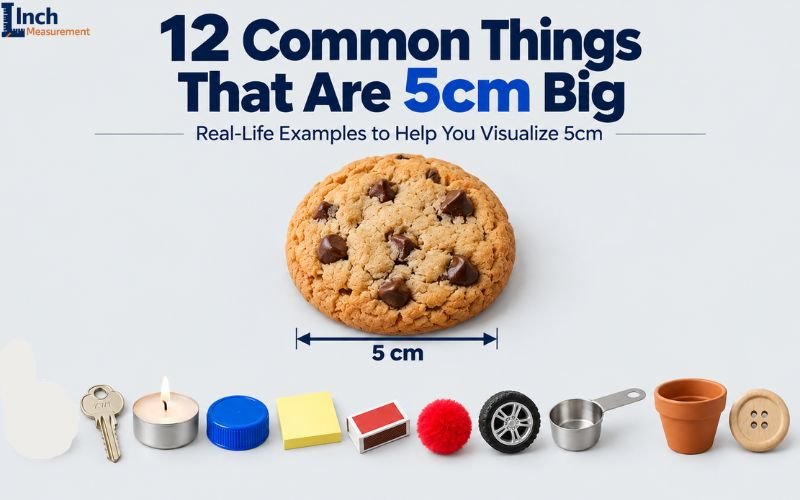
If you are wondering how big is 5 cm, the answer is simple: 5cm equals 50mm and about 1.97 inches. In other words, it is just a little shorter than 2 inches.
That may not mean much until you compare it with something you already know. A small cookie, large paper clip, house key, or bottle cap can give you a much better feel for the size. The exact dimensions of these objects can vary, so they are best used as visual references rather than precise measuring tools.
A 5cm measurement can come up while shopping for small items, doing crafts, checking a product size, working on school projects, or measuring something around the house. If you do not have a ruler nearby, familiar objects can help you make a quick estimate.
What Does 5cm Look Like?
Five centimeters is a fairly small measurement, but it is not tiny. Picture a straight line that is almost 2 inches long. That gives you a useful starting point for understanding the scale.
For a round object, 5cm can describe its diameter. A small cookie that is 5cm across, for example, will look noticeably wider than a coin but still fit comfortably in your hand.
The shape of the object matters too. A 5cm-long key and a 5cm-wide button have the same measurement, but they create very different visual impressions.
If you are checking an online product, do not judge its size from a photograph alone. A 5-inch phone screen or a 10cm storage box can look very different depending on the camera angle and surrounding objects.
How Can You Measure 5cm Without a Ruler?
A ruler is the safest choice for an accurate measurement, but rough estimates are possible without one. Your fingers can provide a convenient reference because 5cm is short enough to compare with part of your hand.
For many adults, two fingers placed side by side may come reasonably close to 5cm. This is only an estimate because everyone’s fingers are different sizes.
You can also compare the object with something whose dimensions you already know. A large paper clip, small cookie, or house key may give you a useful visual reference.
For a craft project where a difference of a few millimeters does not matter, this method can work well. For cutting wood, drilling holes, or buying a replacement part, use an actual measuring tool instead.
12 Common Things That Shows You How Big Is 5CM
The examples below come from everyday categories so you can recognize them easily. Their sizes are approximate because manufacturers do not make every key, button, cookie, or container exactly the same.
| Item | Size |
|---|---|
| Large paper clip | About 5cm |
| Small cookie | About 5cm |
| House key | About 5cm |
| Tea light candle | About 5cm |
| Large bottle cap | About 5cm |
| Small sticky note | About 5cm |
| Small matchbox | About 5cm |
| Craft pom-pom | About 5cm |
| Small toy wheel | About 5cm |
| Measuring spoon bowl | About 5cm |
| Small plant pot | About 5cm |
| Large button | About 5cm |
Large Paper Clip
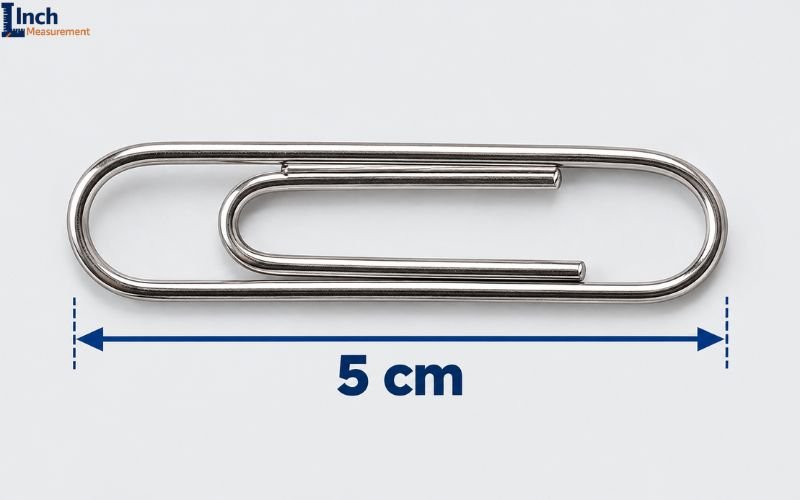
A large paper clip is one of the easiest office items to use as a visual reference for 5cm. Depending on the design, a jumbo paper clip can come close to this length when measured from one end to the other.
This comparison works especially well because the clip is thin and straight. Put it next to another small object and you can quickly judge whether the second item is shorter, longer, or roughly the same size.
Do not use just any paper clip, though. Small standard clips can be much shorter, while oversized clips may be considerably longer. If you need accuracy, measure your particular clip first.
For a quick estimate at a desk, school, or office, a large paper clip is a handy reference to remember.
Small Cookie
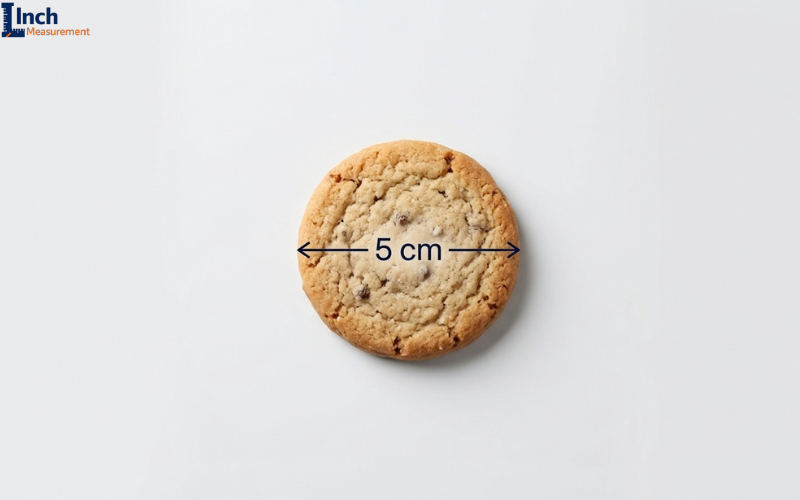
A small cookie measuring about 5cm across provides a simple way to picture the size. Imagine a round biscuit sitting on your palm. Its diameter would be just under 2 inches.
The advantage of using a cookie is that most people already understand its general scale. You do not need to imagine an abstract line because you can picture the entire round shape.
Cookie sizes vary widely, however. A packaged biscuit might measure 4cm, while a bakery cookie could be 7cm or more across. The example is therefore useful for understanding size, not for precise measuring.
If you are making cookies at home, measuring one with a ruler before shaping the rest can help you produce a batch with more consistent sizes.
Related Post: 12 Common Things That Are 3CM Big
House Key
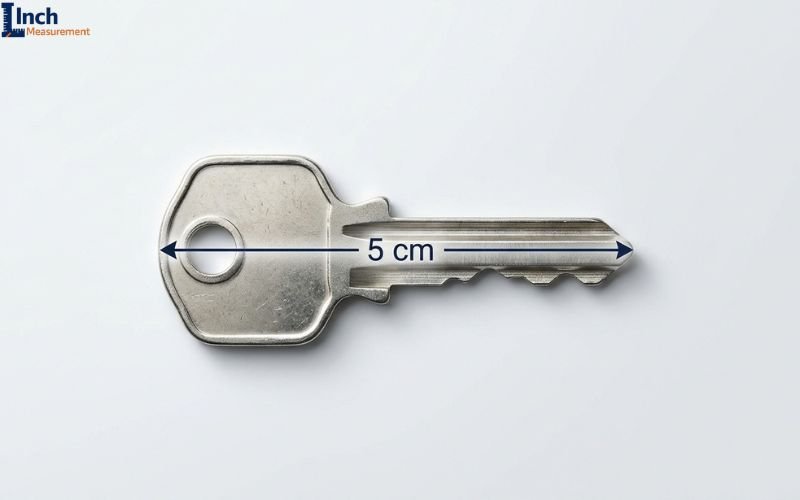
A typical house key can be close to 5cm long, although the complete key may be shorter or longer depending on its design. The metal blade and key head also have separate dimensions.
Keys make good measurement references because they are familiar and easy to hold. If you place a key next to a small object, its overall length gives you a quick idea of whether that object is somewhere near 5cm.
There is one common mistake here: measuring only the blade. If you are comparing the key with another object, measure from the tip to the farthest edge of the key head.
A house key can also help you visualize small hardware pieces, craft parts, and accessories that have similar lengths.
Tea Light Candle
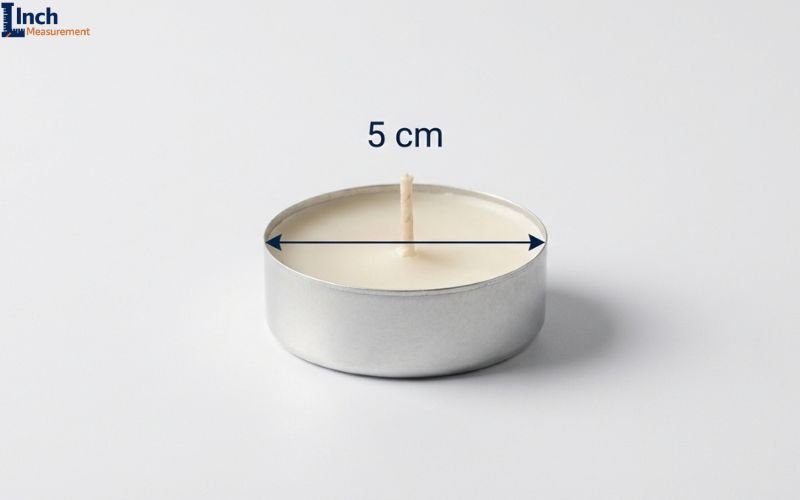
The metal cup of a typical tea light candle is often around 4–5cm in diameter. Its round shape makes it particularly useful when you are trying to understand what 5cm looks like across rather than along a straight line.
Imagine a line passing from one edge of the candle through the center to the opposite edge. That straight distance is the diameter.
Tea lights are manufactured in different sizes, so not every candle will match this measurement. Decorative candles can also have thicker or differently shaped containers.
This reference becomes useful when arranging decorations. If you have a tray with limited space, thinking of each small candle as roughly 5cm wide gives you a quick idea of how much room several candles may need.
Large Bottle Cap
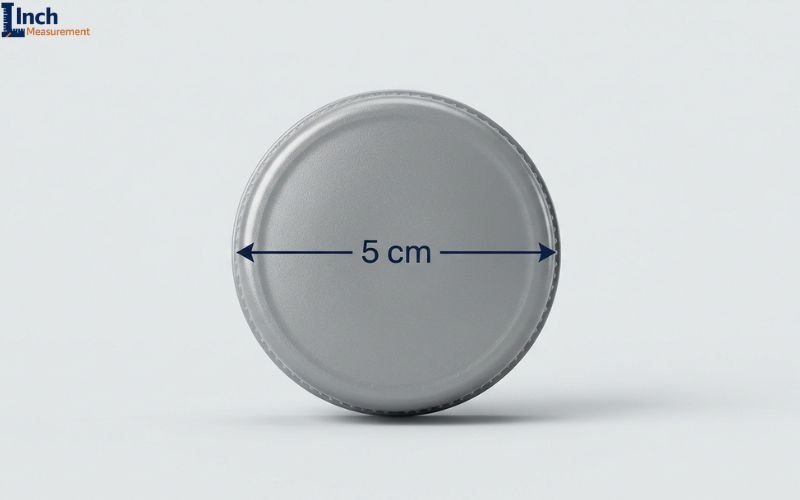
A large bottle cap can be close to 5cm across, particularly caps used on larger bottles, reusable containers, or certain jars. Smaller beverage caps are usually much narrower.
The circular shape makes the cap a good example for understanding diameter. Measure straight across its widest point rather than wrapping a tape around the outside.
Bottle caps also show why size comparisons need a little caution. Two caps may look almost identical in a photograph but have different diameters.
If you are using a cap for a craft project, check its actual measurement first. A difference of even a few millimeters can matter if you are cutting a hole that needs to fit around it.
Small Sticky Note
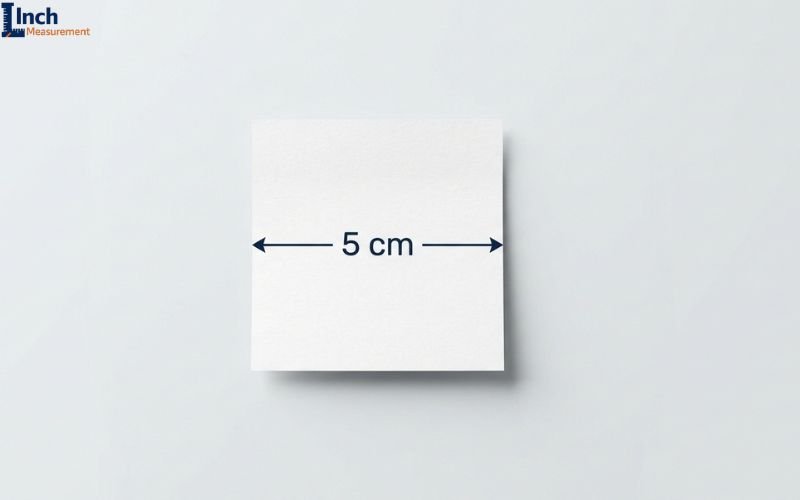
Some small sticky notes are close to 5cm wide. Their square shape gives you a clear straight edge to compare against another object.
A 5cm-wide note is useful for visualizing a short distance because you can see the complete width without needing to imagine a measurement line. It can also help with small labels, craft layouts, and desk organization.
Do not assume every sticky note has this dimension. Common square sticky notes are available in several sizes, and rectangular versions may be even wider or taller.
If you have a small note that measures exactly 5cm, it can become a convenient personal reference. You can compare other objects against it whenever you need a quick estimate around your desk.
Related Post: How Big Is 2 CM? 13 Common Things That Are 2 CM Big
Small Matchbox
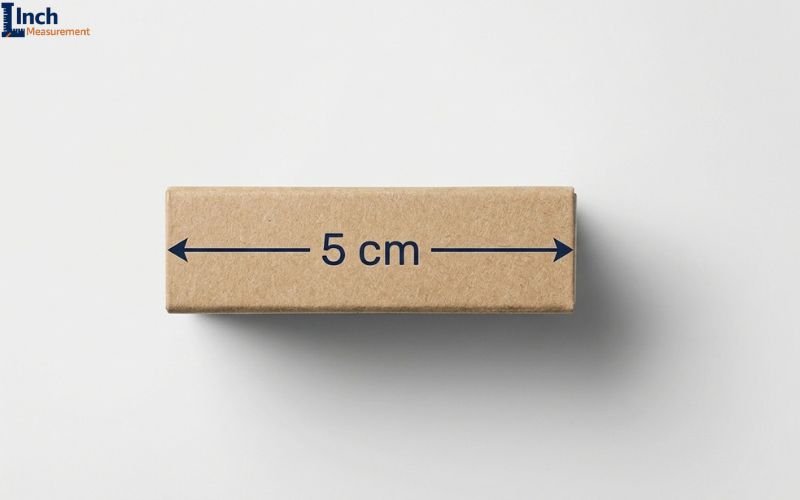
A small matchbox can give you a useful idea of a length close to 5cm. The exact dimensions depend on the manufacturer, country, and type of matchbox.
Its rectangular shape is helpful because it lets you compare different dimensions on the same object. One side might be close to 5cm, while the shorter side is noticeably less.
This makes a matchbox more useful as a general visual reference than as an exact measuring tool. If you have one at home, checking its dimensions once with a ruler tells you exactly how useful it is for future comparisons.
A small box can also make measurement easier for children because it is easier to hold and compare than a number written on paper.
Craft Pom-Pom
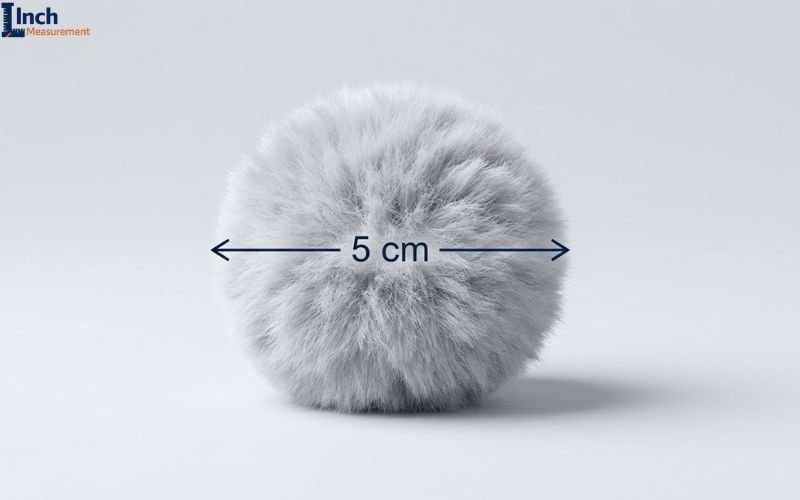
A large craft pom-pom can measure around 5cm across and is a familiar object for anyone who enjoys school crafts, decorations, or DIY projects.
Its soft texture creates one unusual problem: the material can compress. If you squeeze the pom-pom, its apparent diameter becomes smaller, so it should be left in its natural shape when making a comparison.
Look at the widest part of the pom-pom from one side to the other. That gives you a rough idea of its diameter.
Because craft pom-poms are sold in many sizes, check the package dimensions if you need a specific size. A pom-pom listed as 5cm may also look slightly different depending on how tightly its fibers are packed.
Small Toy Wheel
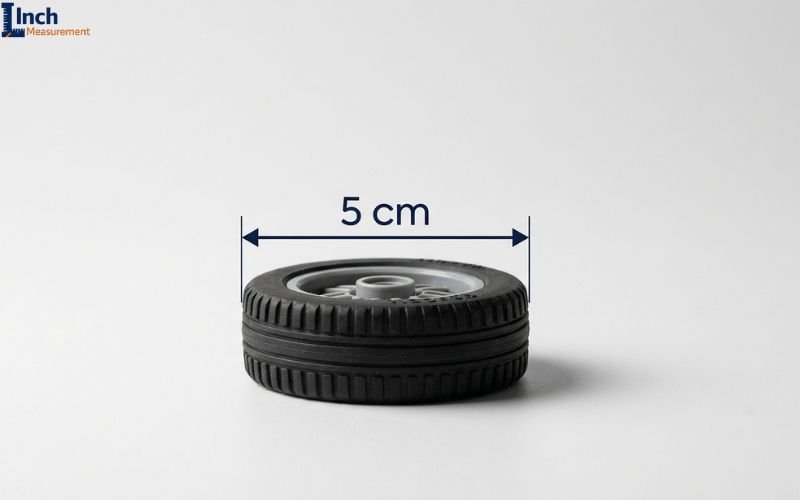
A small toy wheel around 5cm in diameter can be found on miniature cars, trucks, construction toys, and model vehicles.
Wheels provide a useful measurement example because diameter has a clear meaning. Imagine a straight line passing through the wheel’s center from one outside edge to the other. That line is the diameter.
Not every small toy wheel will be 5cm. Some model wheels are only a couple of centimeters wide, while larger toy vehicles can have wheels much bigger than this.
If you are replacing a toy wheel, do not rely on appearance alone. Measure the diameter and also check the center hole and axle size. A wheel can have the correct outside diameter but still fail to fit.
Measuring Spoon Bowl
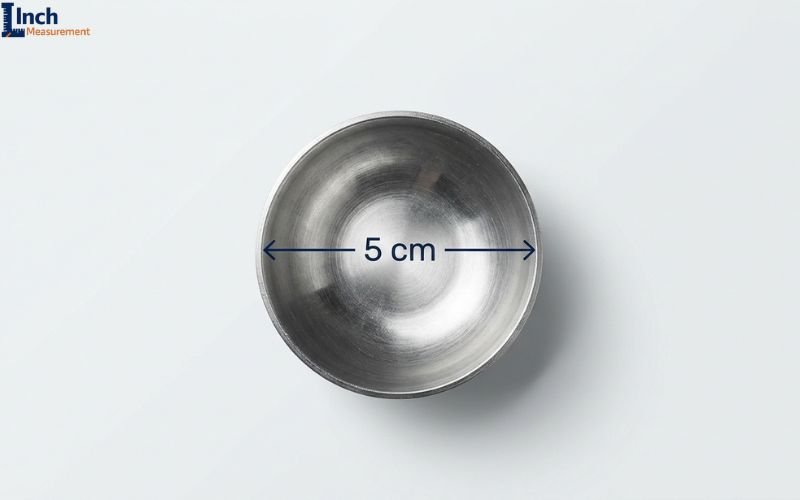
The bowl of a small measuring spoon can be around 5cm wide, depending on its shape and design. The handle will usually be much longer, so only the bowl should be used for this comparison.
This example shows how one object can have several different measurements. You might measure the spoon’s overall length, bowl width, depth, or capacity, and each tells you something different.
Physical width should not be confused with volume. A spoon that appears about 5cm wide does not automatically hold a particular amount of liquid.
That distinction matters in cooking. If a recipe requires a specific amount, follow the stated capacity rather than estimating it from the spoon’s outside dimensions.
Related Post: 10 Common Things That Are 50cm Big
Small Plant Pot
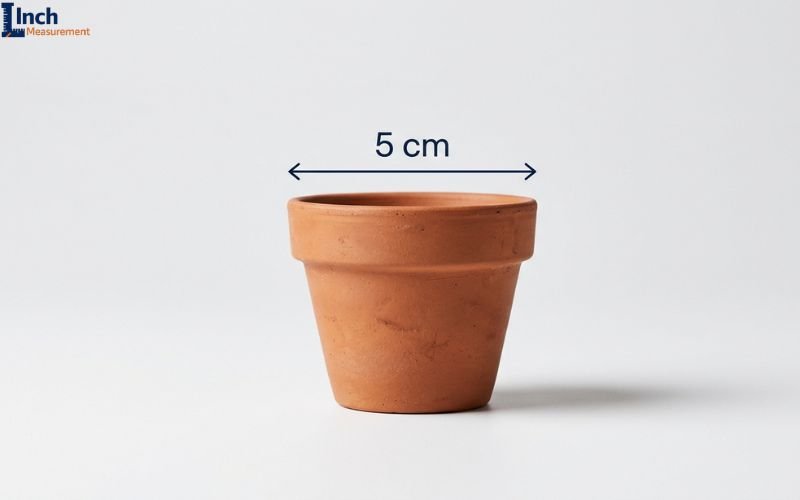
A tiny plant pot can have an opening close to 5cm wide. These miniature containers are often used for seedlings, small decorative plants, classroom projects, and windowsill gardening.
The measurement normally refers to a particular part of the pot, so check what you are measuring. The outside diameter can be larger than the inside opening because of the thickness of the pot’s walls.
This matters if you are buying a plant pot for a specific container or stand. A pot advertised as 5cm wide may not provide exactly 5cm of usable planting space.
For visualizing size, though, a tiny pot gives a strong impression of how compact 5cm really is. Several such pots can fit into a small tray or narrow windowsill area.
Large Button
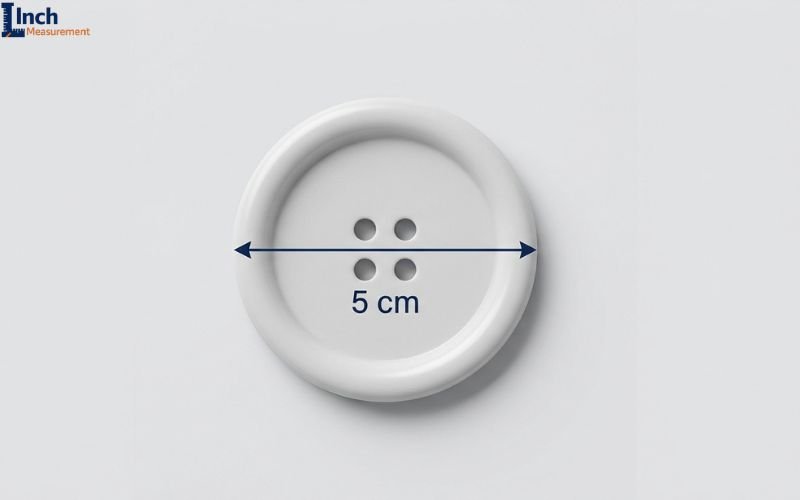
A large button can be close to 5cm across, especially decorative coat buttons and oversized craft buttons. This is much larger than the buttons normally found on a shirt.
Buttons are usually measured across their widest point. If you are buying replacements, compare the diameter rather than judging the size from an online photograph.
A 5cm button can become a noticeable design feature on coats, costumes, bags, cushions, and craft projects. It also provides a useful visual comparison because its circular shape is easy to inspect.
Remember that the word “button” does not tell you much about its actual dimensions. A small shirt button and a large decorative button may look completely different while both are still called buttons.
Tips for Estimating 5cm by Eye
The easiest way to estimate a small measurement is to build a mental reference from something you see often. Instead of trying to imagine exactly 5cm, picture something that is already close to that size.
Start with the fact that 5cm is slightly less than 2 inches. From there, compare the object with a large paper clip, small cookie, house key, or another familiar reference.
Your fingers can help too. Two fingers placed together may look close to 5cm on some adults, but this varies significantly between people.
Photographs are less reliable. An object placed near a camera can appear much larger than it really is, while an item photographed from far away can look tiny. If you are shopping online, look for the listed dimensions and compare them with an object at home.
Common Mistakes When Judging 5cm
A frequent mistake is measuring around a round object instead of straight across it. A 5cm diameter and a 5cm circumference are completely different measurements, so always check which dimension you need.
Another mistake is assuming a familiar object has a fixed size. Paper clips, cookies, keys, bottle caps, and buttons are manufactured in many dimensions.
Perspective can cause problems too. A product photographed beside a large object may look smaller than the same product shown alone. This is why product measurements are more useful than photographs when size matters.
Small errors also become noticeable in practical projects. If you are cutting material, making a hole, choosing a storage box, or replacing a component, measure the actual space rather than relying on an approximate comparison.
Related Post: 10 Common Things That Are 20CM Big
FAQs
How big is 5cm in inches?
5cm is about 1.97 inches, making it slightly shorter than the familiar 2-inch measurement.
Is 5cm a small measurement?
Yes, 5cm is a small length, but it is large enough to notice clearly on everyday objects and household items.
What objects are close to 5cm?
A large paper clip, small cookie, house key, button, or bottle cap can be close to 5cm.
How many millimeters are in 5cm?
There are 50mm in 5cm, because every centimeter contains exactly 10 millimeters.
Can fingers measure 5cm?
Fingers can provide a rough estimate, but individual hand sizes vary, so they should not replace accurate measuring tools.
Is 5cm the same as 2 inches?
No, 5cm is slightly shorter than 2 inches, measuring approximately 1.97 inches in total.
Conclusion
Five centimeters is a compact measurement that becomes much easier to understand when you compare it with familiar objects. How big is 5 cm? Think of a size just under 2 inches, such as a suitable paper clip, small cookie, key, or button.
These comparisons work well for quick estimates, but exact projects need an actual ruler or tape measure. For the best results, measure your reference object once and use it as a personal size guide.
