
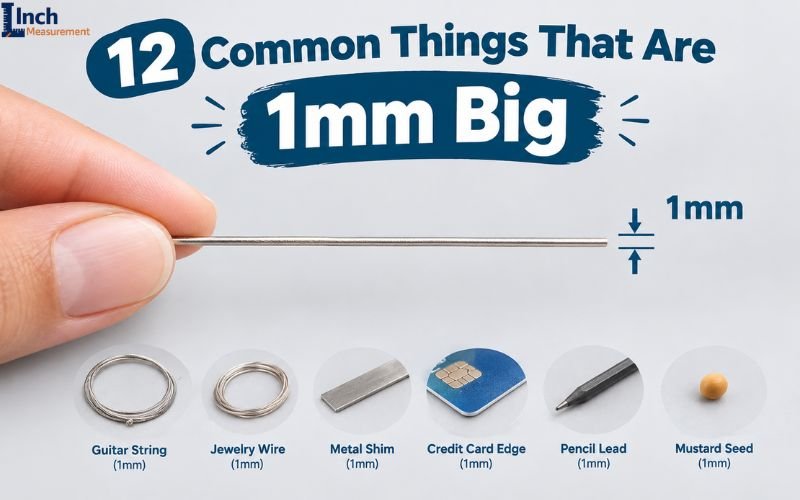
How big is 1mm? One millimeter is extremely small, measuring just 0.1 centimeter or 0.03937 inches. It is about the thickness of a thin plastic card edge or a fine strand of pencil lead, making it a useful reference for understanding tiny measurements.
Although 1mm may seem insignificant, this measurement appears in everyday objects, jewelry, electronics, hardware, crafting materials, and manufacturing. Knowing what 1mm looks like can help you choose the right product, understand technical specifications, or estimate the size of something without a ruler.
This guide explains exactly how big 1mm is, how to visualize it, and how it compares with familiar objects. You will also find 12 common things that are approximately 1mm long or thick, along with practical measuring tips, common mistakes, and answers to frequently asked questions.
How Big Is 1mm?
One millimeter is a unit of length in the metric system. It equals one-thousandth of a meter, making it much smaller than a centimeter or an inch.
To picture this size, imagine dividing a 1-centimeter section on a metric ruler into 10 equal parts. Each part measures exactly 1mm.
That is a very narrow distance. A standard 5-inch smartphone may feel compact in your hand, but its screen width is hundreds of times greater than 1mm. This shows why millimeters are commonly used for small details rather than large objects.
What Does 1mm Look Like in Real Life?
A measurement of 1mm is difficult to judge by eye because it is so narrow. It is thinner than most coins, many sewing threads, and the edges of ordinary household items.
You can imagine 1mm as the thickness of a very thin sheet, a tiny gap between two closely placed surfaces, or a fine line drawn with a technical pen.
For comparison, a 7mm drill bit is seven times wider than 1mm. That difference may sound small, but it is clearly noticeable when you place the two sizes beside each other.
The easiest way to understand 1mm is to use a ruler with millimeter markings. Once you see the distance, familiar objects become more useful reference points.
Common Things That Are 1mm Long or Thick
The following examples show everyday objects that are approximately 1mm in size. Some are close matches, while others provide useful visual references for understanding this tiny measurement.
| Common Item | Approximate Size |
|---|---|
| Fine guitar string | 1 millimeters |
| Small jewelry wire | 1 millimeters |
| Thin metal shim | 1 millimeters |
| Credit card edge | 1 millimeters |
| Mechanical pencil lead | 1 millimeters |
| Mustard seed | 1 millimeters |
| Thick sewing needle | 1 millimeters |
| Grain of coarse salt | 1 millimeters |
| Thin electrical wire | 1 millimeters |
| Smartphone SIM pin tip | 1 millimeters |
| Stack of 10 paper sheets | 1 millimeters |
| Small bead hole | 1 millimeters |
Fine Guitar String
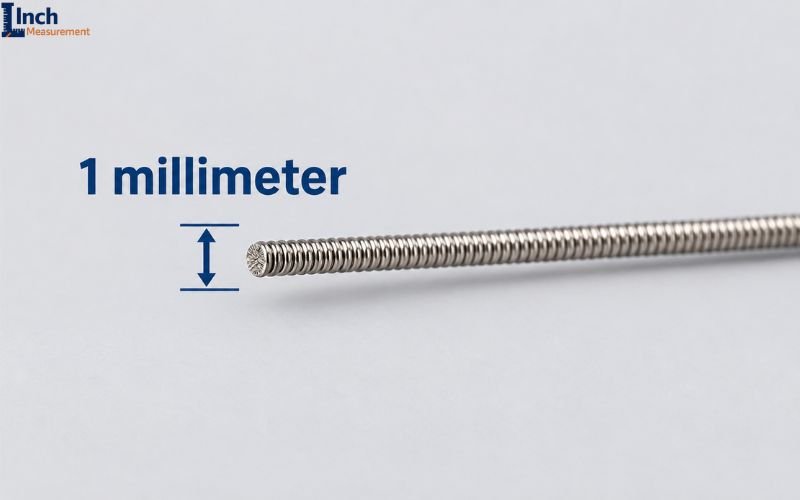
A fine guitar string is a useful example of a thin object that can approach 1mm in diameter. Guitar strings come in different gauges, and some thicker strings measure close to this size.
Despite being narrow, a guitar string must withstand considerable tension while producing sound through vibration. Its metal construction gives it strength without requiring a large diameter.
If you have ever replaced guitar strings, you may have noticed how much thicker some strings feel compared with the high strings. That difference helps demonstrate how small changes in diameter can affect an object’s appearance and function.
Practical comparison: A 1mm guitar string is thin enough to look delicate but substantial enough to feel clearly between your fingers.
Small Jewelry Wire
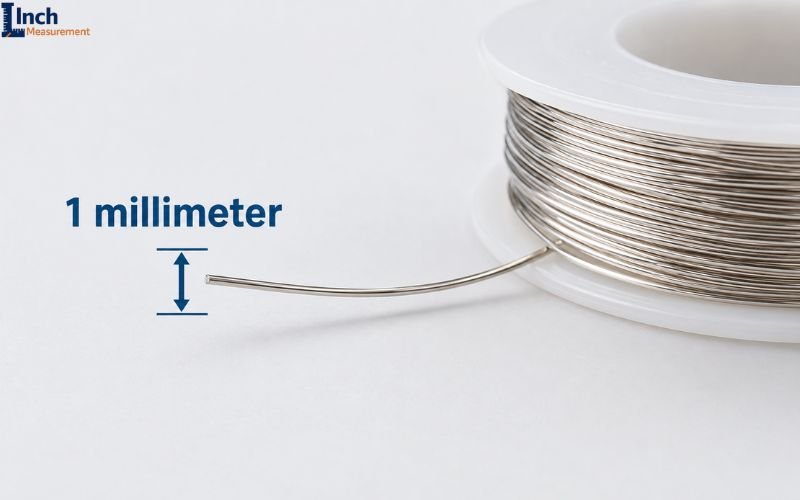
Small jewelry wire is another useful example of something close to 1mm thick. Crafters use wire of this size to create rings, decorative loops, pendants, and other handmade designs.
A 1mm wire is thicker than many delicate jewelry wires, but it remains manageable for shaping with pliers. Its size can influence how sturdy a finished piece feels and how easily the wire bends.
When shopping for jewelry wire, check the diameter listed in millimeters. Two wires that look nearly identical in a photograph may have different thicknesses.
Buying tip: If a project specifically requires 1mm wire, choosing a different diameter may change the final fit and appearance.
Related Post: 12 Common Things That Are 2mm Big
Thin Metal Shim
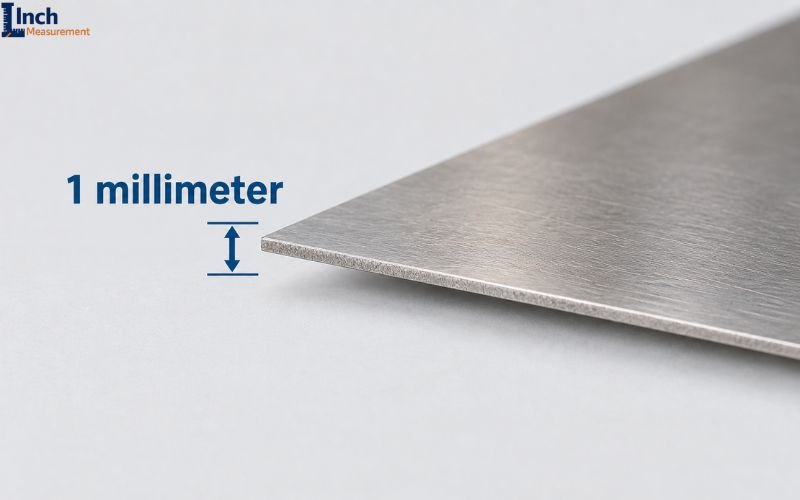
A thin metal shim measuring approximately 1mm thick is used in mechanical repairs, machinery alignment, and fabrication projects.
Shims are designed to fill small gaps or adjust the spacing between components. A 1mm shim may look insignificant, but it can make a meaningful difference when two parts need precise alignment.
Unlike flexible materials such as paper or rubber, a metal shim maintains its shape under normal handling. This makes it useful when a small, controlled adjustment is required.
Practical scenario: A technician may place a thin shim between two machine parts to correct a slight spacing issue without replacing either component.
Credit Card Edge
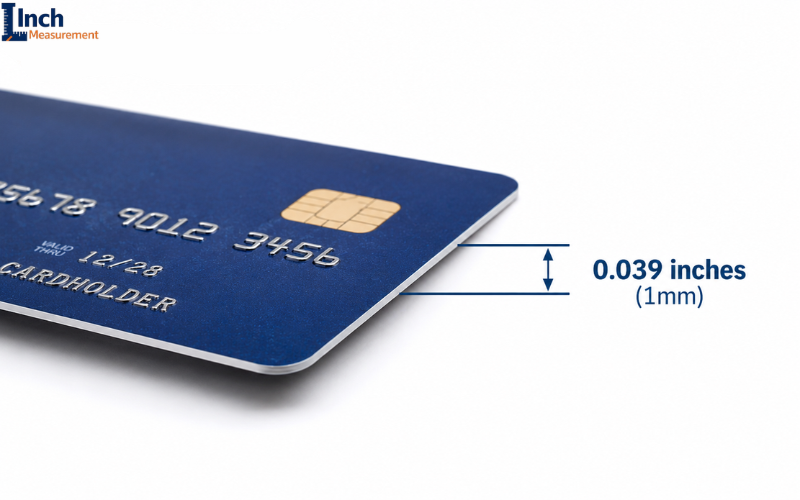
A credit card edge is one of the easiest examples of something that is about 1mm thick. Most standard bank cards, ID cards, and membership cards are made close to this size. When you hold a card sideways and look carefully at its edge, you can clearly see what 1mm looks like in real life.
This example is useful because almost everyone carries a card in their wallet. Instead of trying to imagine tiny measurements, you can simply pick up a card and check its thickness. Since 1mm equals 0.039 inches, the edge of a credit card gives a perfect visual comparison.
Many people searching for “how big is 1mm in inches” find this example very helpful because it turns a hard-to-picture number into something familiar. Credit cards are designed with a standard thickness so they can work properly in ATMs and card readers. That is why their size remains consistent worldwide.
The next time you wonder what 1mm looks like, just look at the side edge of a credit card. It is a quick and simple reference you can use anytime.
Mechanical Pencil Lead
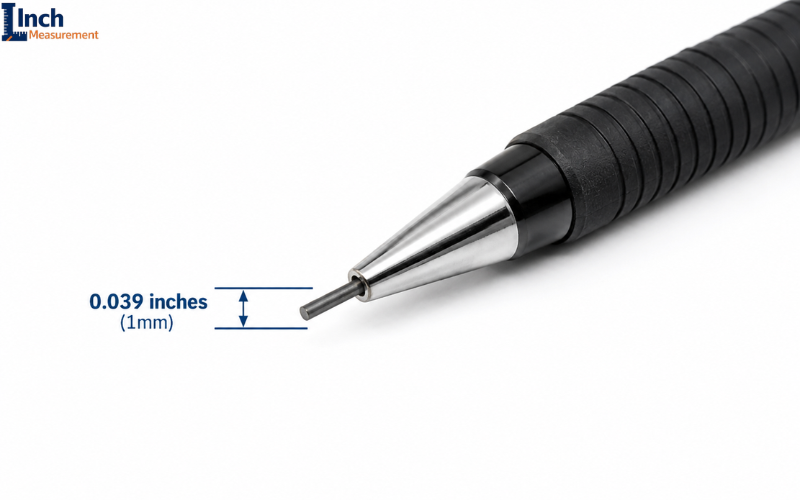
Mechanical pencil lead is another common object close to 1mm in size. Some mechanical pencils use 0.9mm or 1mm lead, making them a useful comparison for this tiny measurement.
When you write with a mechanical pencil, the lead appears thin but still strong enough to make dark marks on paper. If you look closely at the lead tip, you can easily understand how small 1mm really is. This helps answer questions like “what does 1mm look like” in a practical way.
Students, artists, and office workers often use mechanical pencils daily. Because of this, many people already have access to a good 1mm example without realizing it. Compared with an inch, 1mm is extremely small. In fact, it takes many millimeters lined together to match the width of one inch.
Mechanical pencil lead also shows how accurate millimeter measurements can be. Engineers, architects, and designers often use millimeters for detailed work because even small differences matter in precise drawings and designs.
If you want a quick and easy way to picture 1mm, a 1mm pencil lead is one of the best examples available.
Related Post: How Big Is 10 CM
Mustard Seed
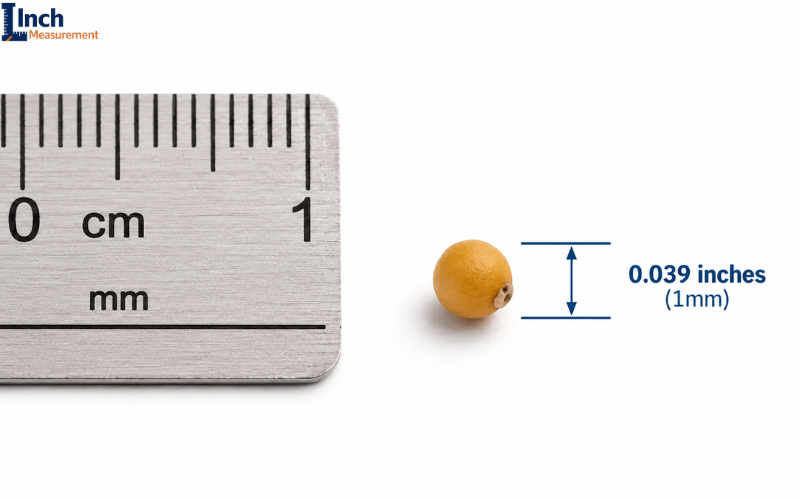
A mustard seed is a tiny seed often used in cooking and gardening. Many mustard seeds measure around 1mm across, making them a great natural example of this small size.
When placed on your fingertip, a mustard seed looks very small but still visible. This helps people better understand how big 1mm is without needing a ruler. Since mustard seeds are common in kitchens and spice containers, they are easy to use for comparison.
People often search for “1mm examples” because small measurements can feel confusing. A mustard seed provides a simple and relatable answer. The seed’s round shape also makes it easier to notice its size compared with flat objects.
In cooking, mustard seeds are used in sauces, pickles, and spice mixes. Even though they are tiny, they add strong flavor to food. Their small size also shows how accurate millimeter measurements can be in nature.
If you ever want to estimate 1mm quickly, looking at a mustard seed is a smart idea. It is one of the simplest ways to understand what a 1mm object looks like in daily life.
Thick Sewing Needle
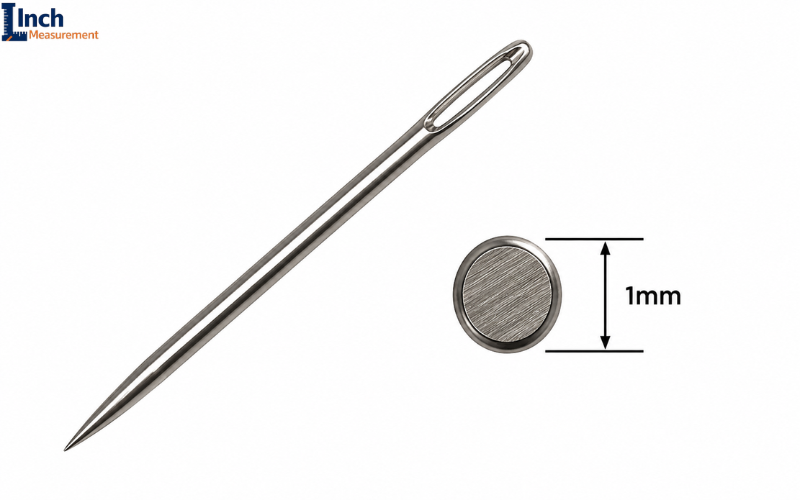
The width of a thick sewing needle is often close to 1mm. Sewing needles come in different sizes, but larger needles used for thicker fabrics can match this measurement closely.
This example is useful because sewing needles are found in many homes. If you look at the body of a thick needle, not the pointed tip, you can get a good idea of how big 1mm is. The thin metal shape makes the size easier to compare visually.
People learning about small measurements often ask “how big is 1mm in real life.” A sewing needle provides a practical answer because it is easy to hold and inspect closely. The width may look tiny, but it is still strong enough to stitch cloth, denim, or canvas.
Millimeter measurements are important in sewing because different fabrics need different needle sizes. A small change in thickness can affect stitching quality and fabric safety.
The next time you use a sewing kit, pay attention to the needle width. It can help you understand what 1mm looks like without using any measuring tools.
Grain of Coarse Salt
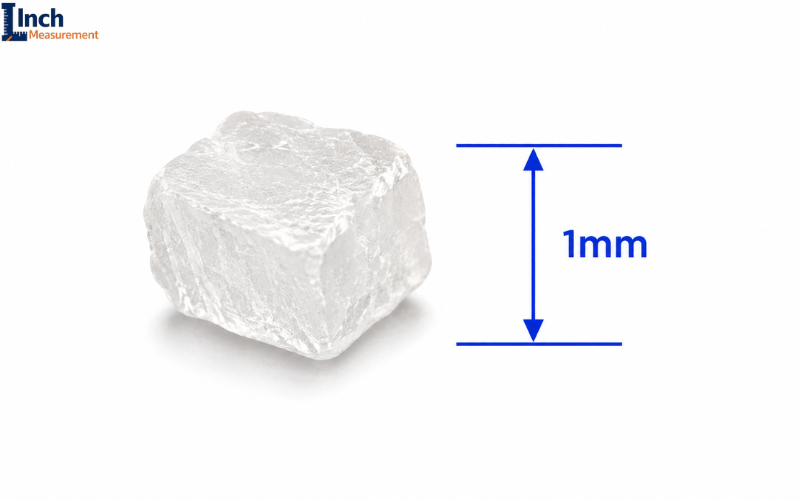
A large grain of coarse salt can measure around 1mm wide. This makes salt a simple household item that can help explain tiny measurements.
When you pour coarse salt into your hand, you may notice some grains are large enough to see clearly. These grains are small, but they are still close to the size of 1mm. Since everyone has salt at home, this comparison is easy and convenient.
Many readers searching for “what does 1mm look like” need examples they can quickly find around them. A grain of salt works well because it is familiar and easy to compare. It also shows how tiny 1mm really is compared to larger objects.
Salt grains vary in size depending on the type of salt. Table salt is usually smaller, while sea salt or coarse salt has larger grains that better match the 1mm measurement.
This example also helps children and students understand measurements more easily. Instead of imagining numbers, they can simply hold a grain of coarse salt and see the size directly.
Thin Electrical Wire
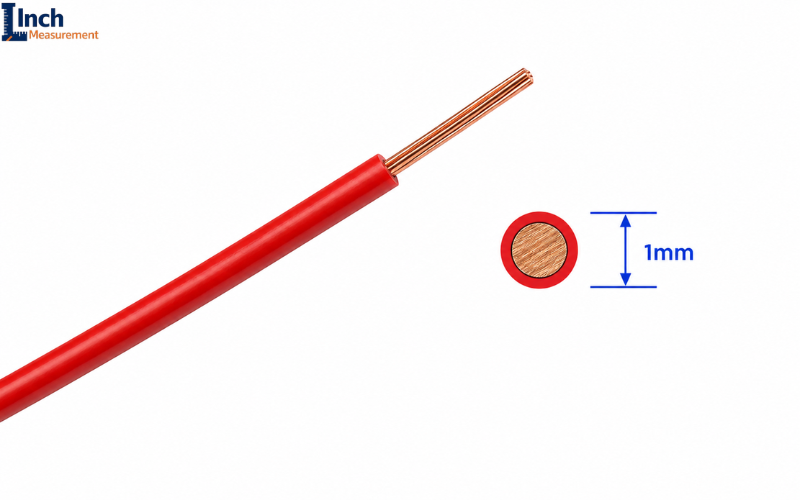
Some thin electrical wires have a diameter close to 1mm. These wires are commonly used in electronics, chargers, and small appliances.
If you look closely at a phone charger wire or small electronic cable, the metal wire inside can help you picture what 1mm looks like. Since electrical parts require accuracy, manufacturers often use millimeter measurements when designing wires and connectors.
This is a helpful example for people asking “how big is 1mm in inches” because wires are something many people see daily. A 1mm wire may look tiny, but it can still carry electricity effectively.
Thin wires are also used in speakers, headphones, and computer devices. Engineers carefully measure wire thickness because it affects performance and safety. Even a small size difference matters in electrical systems.
By comparing 1mm to a wire, people can better understand how small measurements work in real-life products. It also shows why millimeters are important in technology and electronics.
Related Post: 12 Common Things That Are 3mm Big
Smartphone SIM Pin Tip
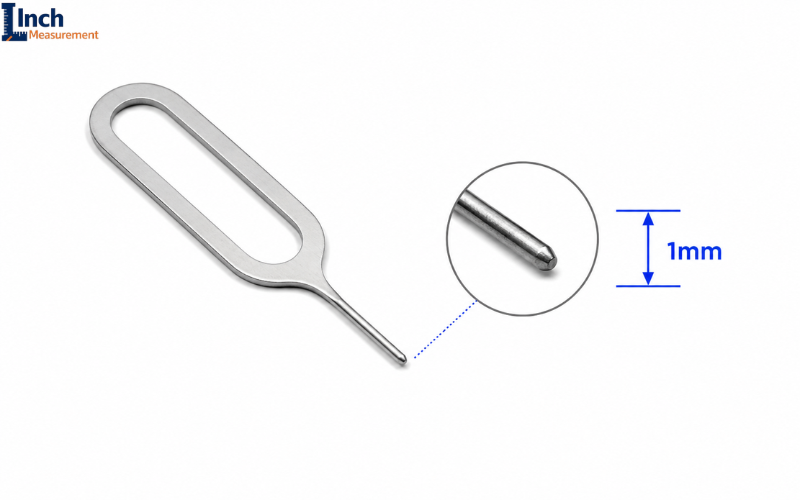
The tip of a smartphone SIM ejector pin is usually around 1mm thick. This small metal tool is used to open the SIM card tray on mobile phones.
Because smartphones are so common, many people already own this tiny tool. If you examine the pointed end closely, you can see a clear example of what 1mm looks like. The size is small enough to fit into the SIM tray hole but still strong enough to press safely.
This example works well for modern readers because it connects millimeter measurements to everyday technology. Many people understand measurements better when linked to objects they use regularly.
SIM pins are designed carefully because the tray opening on phones is very small. A larger pin would not fit properly, while a thinner one could bend too easily. That is why the size stays close to 1mm.
If you are curious about 1mm examples, a smartphone SIM tool is a practical and modern comparison that helps explain the size clearly.
Stack of 10 Paper Sheets
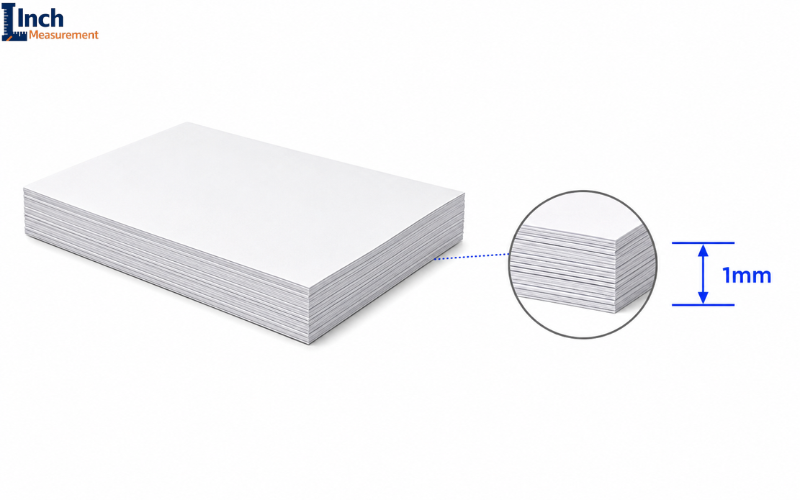
A stack of 10 regular paper sheets is close to 1mm thick. Single sheets of paper are very thin, but stacking several together creates an easy way to estimate this measurement.
This comparison is useful because paper is available almost everywhere. If you place 10 sheets together and hold them from the side, you can get a rough idea of how big 1mm is. Many students and office workers find this example simple and practical.
People often struggle to picture tiny measurements like millimeters. Using paper helps because it turns the measurement into something visible and touchable. Since paper thickness is consistent, the estimate is fairly accurate.
Printers, notebooks, and books all rely on thin paper measurements. Publishers also use millimeters when calculating page thickness and book sizes.
This example is especially helpful for children learning measurements at school. They can easily count paper sheets and compare the thickness themselves.
Small Bead Hole
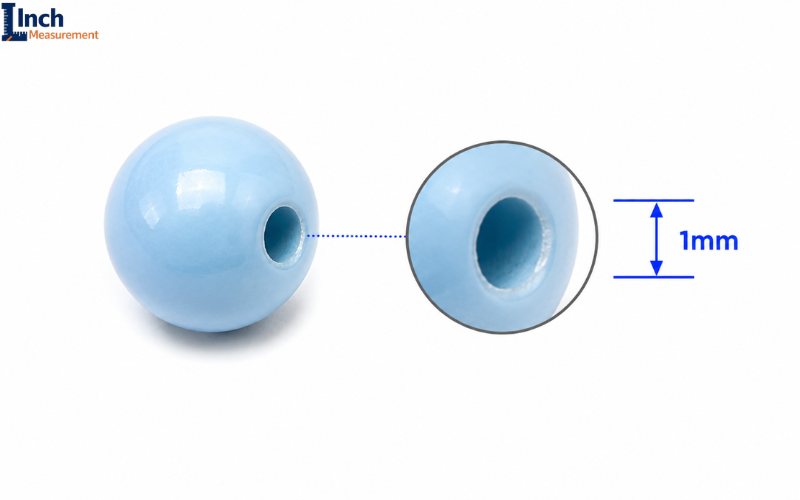
The hole inside a small craft bead is often around 1mm wide. Jewelry makers and craft artists use these tiny openings to thread string or wire through beads.
Even though the hole looks tiny, it is large enough for thin thread or jewelry wire to pass through. This makes it a useful example when learning how big 1mm really is.
Craft stores sell beads in many sizes, but small decorative beads often have openings close to this measurement. Artists need accurate sizes because different threads and wires must fit properly inside the bead holes.
People searching for “1mm examples” usually understand better when they can compare measurements with real objects. Bead holes are excellent for this because they are small, round, and easy to inspect closely.
This example also shows how millimeters are important in jewelry making and crafts. Tiny measurements can affect the final design and how easily materials fit together.
How to Measure 1mm Accurately
Estimating 1mm by eye is difficult, especially when precision matters. The best method depends on the object and how exact the measurement needs to be.
A metric ruler is suitable for basic measurements. Look for the smallest markings, which usually represent 1mm intervals. Place the object beside the ruler rather than trying to hold it above the markings.
For very small objects, a digital caliper is more useful. It can measure thickness, diameter, and depth with greater precision than an ordinary ruler.
A measuring microscope or specialized gauge may be necessary for tiny machine parts or technical work.
Helpful tip: Measure several times and avoid squeezing soft materials. Pressure can compress objects such as foam, rubber, or fabric and produce an inaccurate result.
How Much Difference Does 1mm Make?
One millimeter may seem too small to matter, but it can have a noticeable effect in certain situations.
In jewelry, a 1mm change in wire diameter affects flexibility and appearance. In woodworking, a small measurement difference can create a gap or cause two pieces to fit poorly.
The same applies to electronics, printing, manufacturing, and mechanical repairs. Parts that appear nearly identical may not be interchangeable if their dimensions differ.
For example, a 1mm gap between two surfaces is small enough to overlook at first glance, but it can still affect alignment, movement, or the final appearance of a finished product.
The importance of 1mm depends on the task. For rough visual comparisons, an estimate may be enough. For technical work, exact measurements are essential.
If it is helpful for you and want more free guides then here we have more for you:
- 9 Common Things That Are 5cm Big
- 9 Common Things That Are 3CM Big
- 10 Common Things That Are 2cm Big
- 10 Common Things That Are 1cm Big
- 10 Common Things That Are 5 Meter Long
Frequently Asked Question
Is 1mm smaller than 1cm?
Yes, 1mm is one-tenth of 1cm, making it significantly smaller than a centimeter.
How many inches is 1mm?
One millimeter equals approximately 0.03937 inches, or about 1/25.4 of an inch.
Can you see 1mm with the naked eye?
Yes, you can see 1mm, but judging its exact size without a measuring tool is difficult.
Is a credit card 1mm thick?
A standard bank card is usually about 0.76mm thick, which is close to 1mm.
How thick is a 1mm wire?
A 1mm wire has a diameter of approximately 1mm when measured across its circular cross-section.
What is the easiest way to measure 1mm?
A metric ruler works for basic comparisons, while a digital caliper provides greater accuracy for small objects.
Conclusion
Understanding how big is 1mm becomes easier when you compare it with familiar objects such as a bank card edge, thin paper, fine wire, or small electronic components. One millimeter is a tiny measurement, but it plays an important role in crafts, repairs, manufacturing, and everyday products.
The most useful way to recognize this size is to compare real objects with a metric ruler and pay attention to whether you are measuring length, width, diameter, or thickness. For accurate results, always use a proper measuring tool instead of relying only on visual estimates.
