
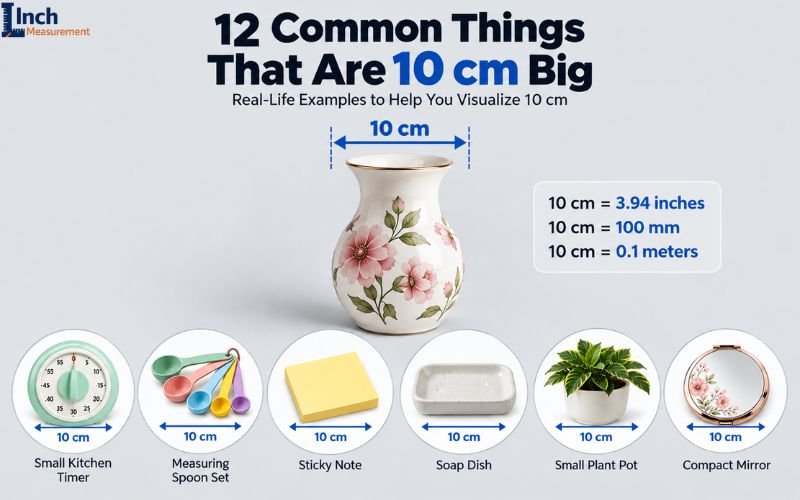
How big is 10 cm? It is 3.94 inches, so you can think of it as just a little shorter than 4 inches. Ten centimeters is also exactly 100 millimeters, making it a handy size for comparing small household objects, stationery, kitchen items, and personal belongings.
If you do not have a ruler nearby, 10 cm can be easier to picture through familiar objects. A 4 × 6 index card, for example, has a short side of about 10.2 cm. A 4-inch photo also has a short side very close to 10 cm.
This measurement is useful when checking whether something will fit in a drawer, choosing a small craft item, comparing product dimensions, or estimating the size of an object from a listing. The examples below focus on objects that have at least one dimension close to 10 cm, rather than pretending every object is exactly that size.
What Does 10 cm Look Like?
A length of 10 cm is small enough to fit comfortably in your hand, but it is not tiny. Imagine a straight line extending about the width of a small notebook or the shorter edge of a 4 × 6 index card.
Another useful reference is a 100mm ruler. Its entire marked length represents exactly 10 cm, which makes it one of the easiest ways to build a mental picture of the measurement.
Keep in mind that objects are rarely manufactured to exactly 10 cm unless that measurement is part of their design. A small plate might be 10 cm across, while another similar plate could be 11 cm or 12 cm. For everyday estimating, those differences matter less than they would for cutting wood, fitting parts, or doing precise craft work.
How Can You Measure 10 cm Without a Ruler?
You can estimate 10 cm using familiar objects or your own hand. These methods are helpful for quick checks, although a ruler is still better when you need an exact measurement.
Use Your Palm
The width across an adult palm can be close to 10 cm. Place your hand flat and compare the widest part of your palm with the object you want to measure. Since hand sizes vary, treat this as a rough estimate.
Compare Four Fingers
Put four fingers together and check their combined width. For some people, this comes close to 10 cm. It is a handy method when you are away from measuring tools, but finger sizes can make the result slightly different.
Use a 4 × 4 Inch Sticky Note
A 4 × 4 inch sticky note is about 10.16 cm on each side, making it a very close reference. Place one edge beside the object and compare the two lengths. This works well for small household, school, and craft projects.
Compare a Common Household Object
A small kitchen timer, compact makeup mirror, or flower vase may have a dimension close to 10 cm. Check the object’s width or diameter rather than guessing from its overall appearance. For precise work, confirm the measurement with a ruler or tape measure.
Common Things That Are 10cm Long
The examples below were chosen because they have a dimension close to 10 cm and are relatively easy to find or picture. Some are manufactured to a standard size, while others vary slightly from one product or household to another.
The table gives the quick answer first, so you can scan it without reading every description.
| Item | Approximate Length |
|---|---|
| 100mm ruler | About 10 cm |
| Short side of a 4 × 6 index card | About 10 cm |
| Tea Cup Diameter | About 10 cm |
| Small drink coaster | About 10 cm |
| Small jar lid | About 10 cm |
| Small dessert plate | About 10 cm |
| Pocket notebook width | About 10 cm |
| Compact Makeup Mirror | About 10 cm |
| Small Flower Vase Width | About 10 cm |
| Large bottle cap | About 10 cm |
| Small kitchen timer | About 10 cm |
| Handheld measuring spoon set | About 10 cm |
Ruler
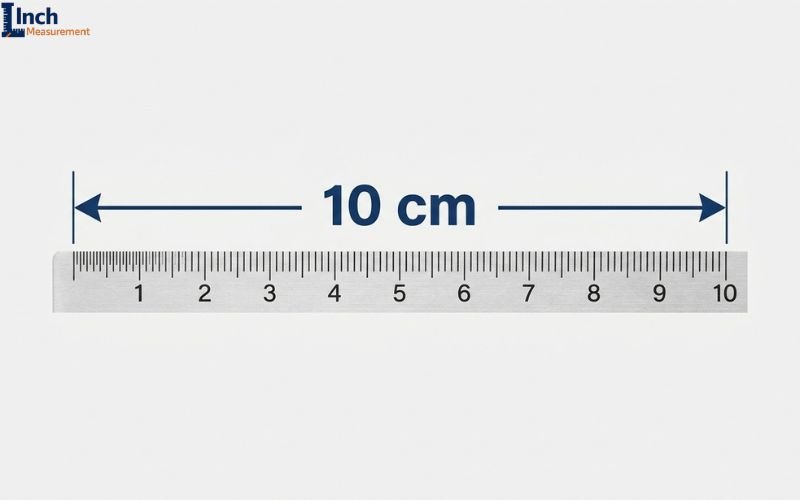
A 10 cm ruler is a small measuring tool designed to show exactly 10 centimeters from one end to the other. Since 10 cm equals 100 mm, a metric ruler with a 10 cm length will normally have millimeter markings from 0 to 100. Each small division represents 1 mm, while larger marks commonly indicate each centimeter.
A 10 cm ruler is useful for measuring small objects such as stationery, craft materials, jewelry, small gaps, and parts of household items. Its compact size also makes it convenient for pencil cases, wallets, sewing kits, and small toolboxes.
For example, if an object reaches the 7 cm mark, it is 7 cm long. If it reaches 100 mm, it has reached the full 10 cm length. This makes a 10 cm ruler especially helpful when learning the relationship between centimeters and millimeters.
If you’re trying to understand how big 10 cm is, placing a real 10 cm ruler beside an object is more reliable than estimating with your hand or another household item.
Short Side of Index Card
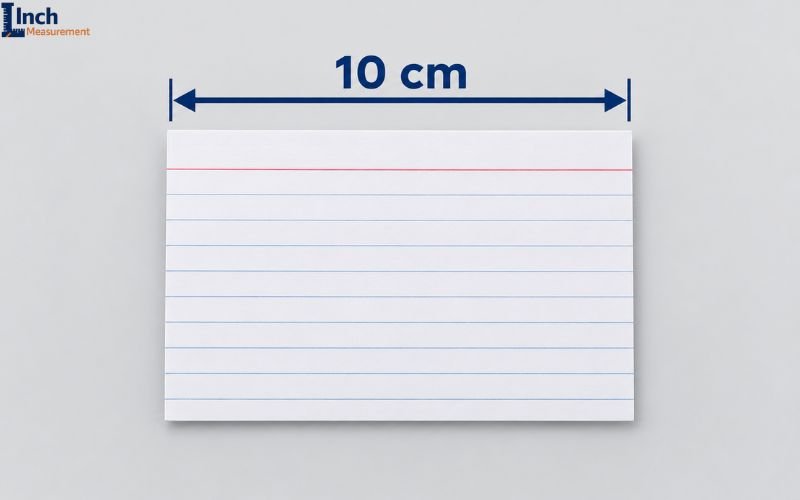
A standard 4 × 6 inch index card has a short side measuring about 10.16 cm. That makes it one of the closest everyday stationery references for understanding 10 cm.
The useful part is that the card is flat and has a straight edge. You can place it beside a book, box, picture frame, or craft project and quickly see how a 10 cm measurement compares.
Index cards also come in different sizes, so check the package before assuming the dimensions. A card labeled 4 × 6 inches is the version that gives you the near-10-cm short edge.
If you’re trying to judge a space on a desk or shelf, this comparison can be more useful than guessing from your hand. The card gives you a consistent reference that is easy to carry around.
Related Post: 10 Common Things That Are 20CM Big
Tea Cup Diameter
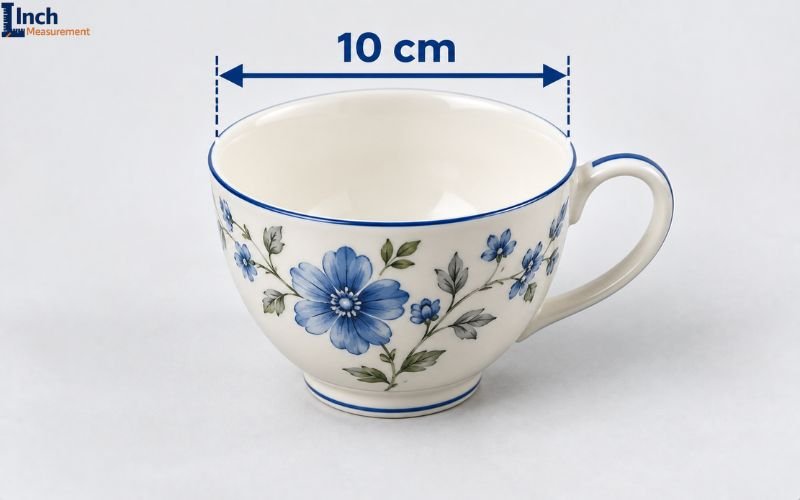
A teacup with an opening close to 10 cm wide is a simple way to picture this measurement in everyday life. Place the cup on a flat surface and look across the top from one edge to the other. The diameter of some smaller teacups falls around the 10 cm range, although cup sizes can vary by style and manufacturer.
This comparison is useful because most people are familiar with the size of a teacup. It also helps you understand that 10 cm is not a tiny measurement. The opening is wide enough to hold a comfortable serving of tea while still fitting easily in one hand.
If you are checking the size of a cup before buying it, measure across the widest part of the opening. Don’t include the handle, since the 10 cm reference applies to the cup’s diameter.
Small Drink Coaster
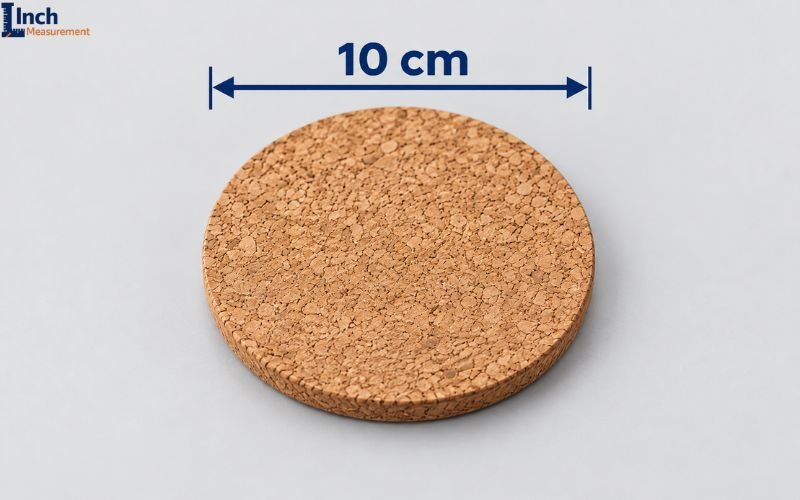
Many small drink coasters measure around 10 cm across, although their exact size depends on the design. Round coasters are particularly easy to picture because you can look directly across their diameter.
Place a coaster on a table and imagine a straight line running from one edge through the center to the opposite edge. If that diameter is close to 10 cm, you have a simple visual example of the measurement.
Coasters are usually made from cork, wood, silicone, stone, or plastic. Their thickness can vary considerably, so only the width or diameter should be used for this comparison.
This is a useful reference when planning a small tabletop space. If a product description says an object is around 10 cm wide, picturing a coaster can give you a quick idea of how much room it may occupy.
Small Jar Lid
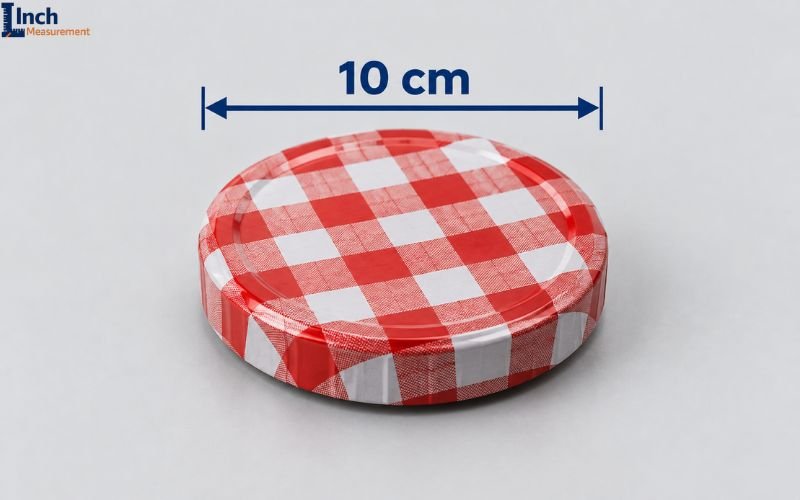
A small jar lid can be close to 10 cm across, especially on larger food-storage or kitchen jars. The exact diameter depends heavily on the jar, so this example is better for visual estimation than exact measuring.
Look at the lid from directly above. The distance from one side to the other through the center is the dimension to compare with 10 cm. A lid around this size feels fairly substantial in your hand without being large enough to cover most of a dinner plate.
Jar lids are useful references because they have a clear circular shape. You can also compare a lid with a container opening to understand how much space a 10 cm diameter actually takes up.
If you’re replacing a lid, though, don’t rely on visual size. Thread patterns and exact diameters matter, so measure the original container before ordering a replacement.
Small Dessert Plate
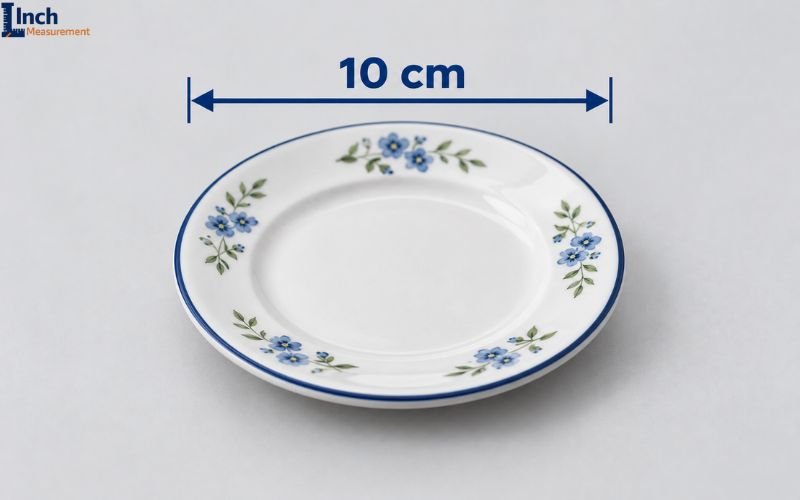
Some small dessert plates or tasting plates have a diameter around 10 to 12 cm. A plate at the smaller end of this range gives you a good visual sense of how big 10 cm is.
The advantage of this comparison is that most people already know what a dinner plate looks like. A 10 cm plate is dramatically smaller, making the scale easy to recognize when you see both sizes together.
Plate dimensions can vary by manufacturer, so don’t assume a small plate is exactly 10 cm. Measuring from one rim across the center to the opposite rim is the correct way to check its diameter.
For shopping, the measurement can help you judge whether a small plate will fit inside a cabinet, display stand, or serving tray. Product photos often make dishes appear larger or smaller than they really are.
Related Post: 12 Common Things That Are 5CM Big
Pocket Notebook Width
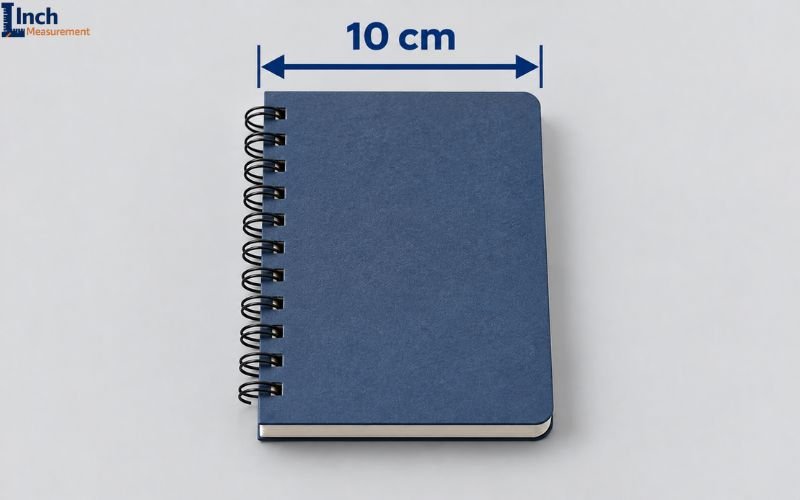
Many pocket notebooks have a width somewhere around 9 to 10 cm, depending on their format. A notebook near the upper end of that range provides a convenient rectangular reference for 10 cm.
Unlike a circular object, a notebook lets you compare a straight horizontal edge directly. Put your finger at one end and look toward the opposite edge to get a rough visual sense of the distance.
Notebook sizes are not universal. Some are designed for pockets, while others use A-series paper or proprietary dimensions. That means you should check the listed measurements if the notebook needs to fit into a particular pocket, case, or organizer.
This comparison is especially useful for shopping. A product described as approximately 10 cm wide will occupy about the same horizontal space as a compact notebook, though its height may be completely different.
Compact Makeup Mirror
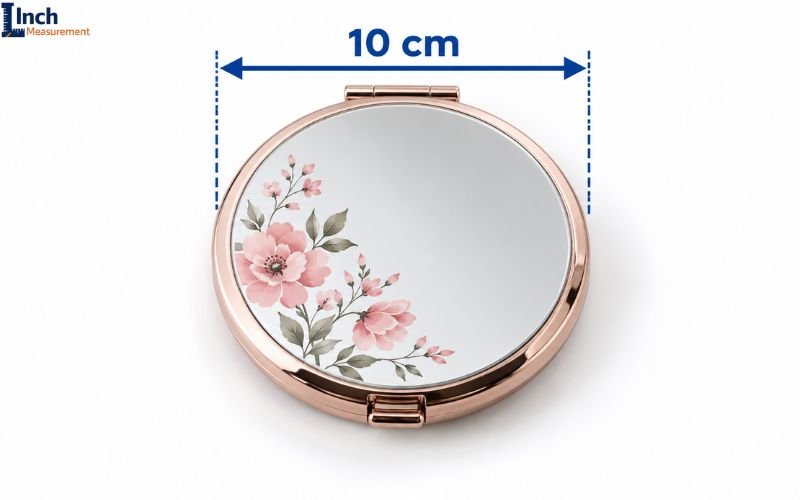
A compact makeup mirror with a diameter close to 10 cm is a practical everyday reference for understanding this measurement. Its round shape makes the comparison simple: imagine a straight line running from one edge of the mirror through the center to the opposite edge. If that distance is about 10 cm, you have a clear visual example of the size.
Compact mirrors are small enough to carry in a handbag, pouch, or travel case, yet their reflective surface is large enough for quick touch-ups. Sizes vary by brand, so some mirrors may be slightly smaller or larger than 10 cm.
This example is also useful when comparing small round objects. If you are buying a mirror, case, or similar item, check the listed diameter rather than relying only on the product photo.
Small Flower Vase Width
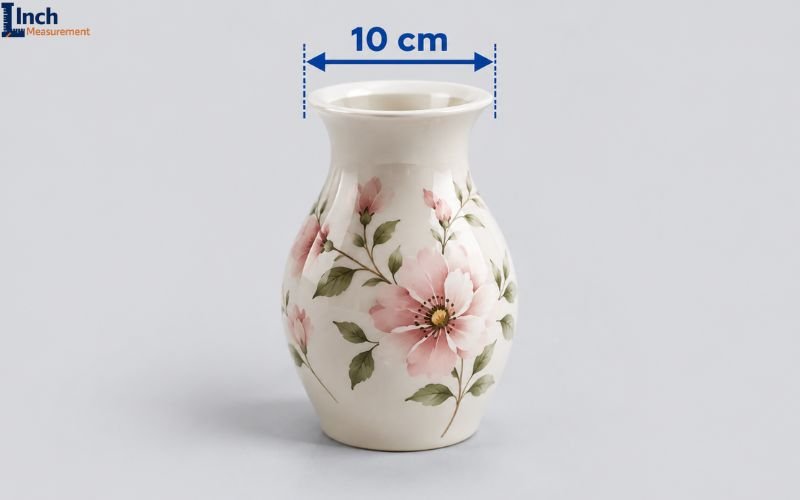
A small flower vase with a width close to 10 cm provides a useful household reference for understanding this measurement. The vase’s widest section can be compared with a 10 cm line, giving you a quick visual idea of how much space that distance covers.
Small vases come in many shapes, so their width is not always exactly 10 cm. A narrow vase may be only a few centimeters wide, while a round decorative vase can be wider. For this comparison, focus on the widest part of the vase rather than the height or opening.
This example is also useful when planning shelf or table space. If a vase is listed as approximately 10 cm wide, you can picture it taking up about the same horizontal space as the measurement shown in the image.
Related Post: 12 Common Things That Are 1cm Big
Large Bottle Cap
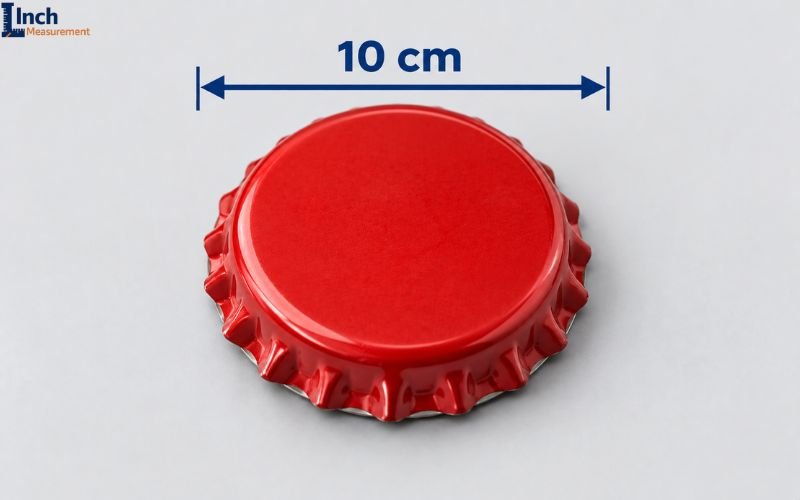
Some large bottle caps and jar-style closures can approach 9 to 10 cm across. They are not as universal as ordinary drink caps, which are much smaller, so this comparison should be treated as approximate.
The easiest way to judge the size is to look at the entire top surface. A large closure around this size is noticeably bigger than the cap on a normal water bottle.
This example is useful when you’re comparing storage containers. If you see a container advertised with a roughly 10 cm opening, imagining a large lid of similar width can help you understand the scale.
Don’t confuse the cap’s outside diameter with the container’s opening. The cap may extend beyond the threaded opening, and manufacturers can measure different parts of a closure. Always check the seller’s stated dimension when compatibility matters.
Small Kitchen Timer
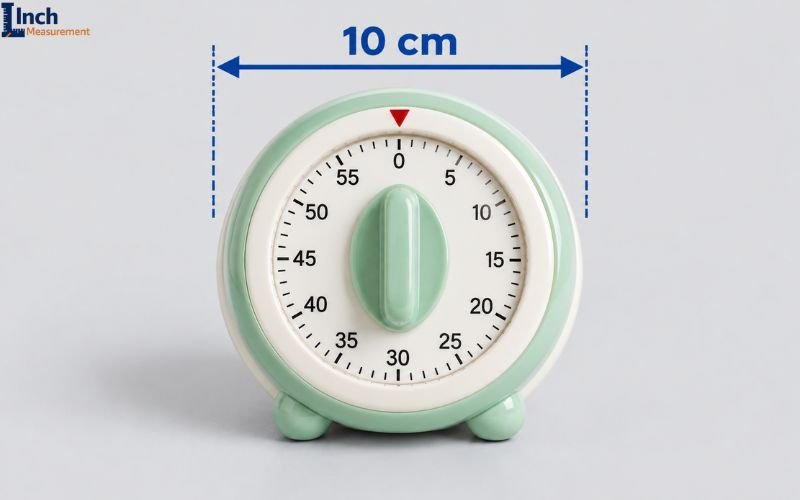
Some compact kitchen timers have a width or diameter close to 10 cm. This varies by design, but larger countertop timers can occupy about this much space.
A round timer gives you another easy diameter reference. Imagine placing a straight line across its face from one side to the other. If the face measures around 10 cm, that line is a practical representation of the target length.
This example works well for people comparing appliances on a crowded kitchen counter. Ten centimeters does not sound like much, but several small devices placed side by side can quickly use up valuable space.
Timer dimensions also show why height, width, and depth should not be mixed together. A device could be 10 cm wide while being only 3 cm deep. Product specifications usually list these measurements separately for a reason.
Handheld Measuring Spoon Set
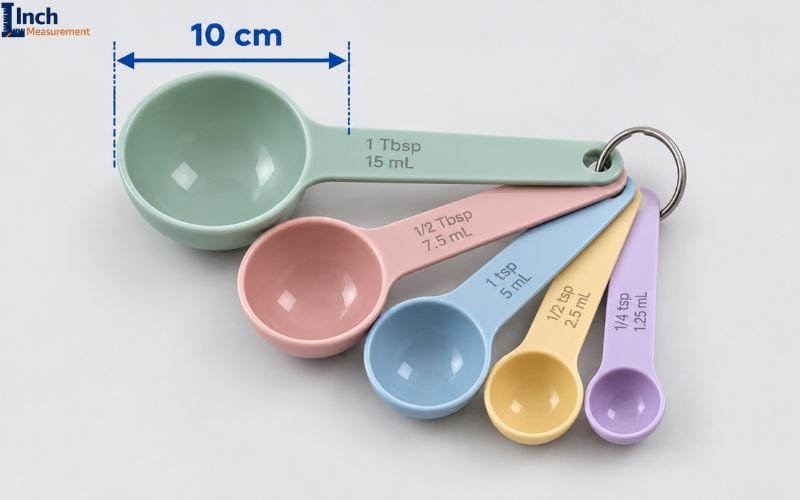
Some compact measuring spoon sets, especially those designed to nest together, can be around 10 cm long when stored. The exact length depends on the handle design and the number of spoons included.
This is a useful comparison because measuring spoons are familiar kitchen tools and are often kept in drawers or containers. A nested set around 10 cm long gives you a quick sense of how much space that measurement occupies.
The individual spoons may be much shorter than the entire assembled set. That distinction matters if you’re trying to compare a 10 cm object with a single spoon rather than the whole group.
For kitchen organization, this example can help when checking whether a utensil will fit inside a drawer divider or small storage box. Measure the longest part of the assembled set if you’re checking actual fit.
Tips for Estimating 10 cm by Eye
Visual estimates become easier when you use the same reference repeatedly. A 100mm ruler is the most reliable mental anchor, while a 4 × 6 index card or 4 × 6 photo gives you a familiar everyday comparison.
Pay attention to whether the measurement describes length, width, height, or diameter. A round object measuring 10 cm across is different from a rectangular object that is 10 cm long but only 3 cm wide.
For example, a 10-foot ceiling and a 10 cm object have nothing in common beyond the number. The unit changes the actual size dramatically, so read the unit before picturing the measurement.
For casual jobs such as arranging objects or judging a package, visual estimation is usually enough. For drilling, cutting, sewing, furniture fitting, or buying replacement parts, use a proper measuring tool.
Common Mistakes When Judging 10 cm
The biggest mistake is assuming a familiar object has a standard size when it does not. Phones, notebooks, mugs, jar lids, and plates all come in many dimensions. A phone with a 6.5-inch display, for example, cannot be treated as though its width is 6.5 inches.
Another common error is measuring the wrong part of an object. With a plate, you normally care about its diameter; with a book, you might care about its width; with a box, you may need width, height, and depth separately.
People also tend to underestimate how much a few centimeters can matter. A gap of 10 cm and a gap of 12 cm may look similar in a photograph, but that difference can decide whether an object fits.
If the measurement affects a purchase or construction task, stop estimating and measure the actual space. A quick ruler check can prevent an expensive mistake.
Related Post: 10 Common Things That Are 50cm Big
FAQs
How big is 10 cm in inches?
10 cm is 3.94 inches, making it just slightly shorter than 4 inches.
Is 10 cm close to 4 inches?
Yes, 10 cm is very close to 4 inches, falling just 0.06 inch short.
What does 10 cm look like?
10 cm looks roughly like a 100mm ruler section or the short edge of a 4 × 6 inch card.
Can I measure 10 cm with my hand?
Yes, your hand can provide an estimate, but palm widths differ, so it is not suitable for precise measurements.
Is a 4 × 6 photo about 10 cm wide?
Yes, its short side is about 10.2 cm, which makes it a useful visual reference.
What is exactly 10 cm?
100 millimeters equals exactly 10 cm, so a 100mm measurement provides an exact reference.
Conclusion
Knowing how big is 10 cm becomes much easier when you compare it with familiar objects. A 100mm ruler gives you an exact reference, while items such as a small flower vase, compact makeup mirror, kitchen timer, or teacup can help you picture the size in everyday settings.
These examples are useful for estimating space when shopping, organizing a room, working on crafts, or checking whether a small object will fit in a particular spot. Keep in mind that household products can vary in size, so they are best used for visual comparison rather than precise measurement.
For an exact result, place a ruler or measuring tape alongside the object and measure the specific length, width, or diameter you need.
