
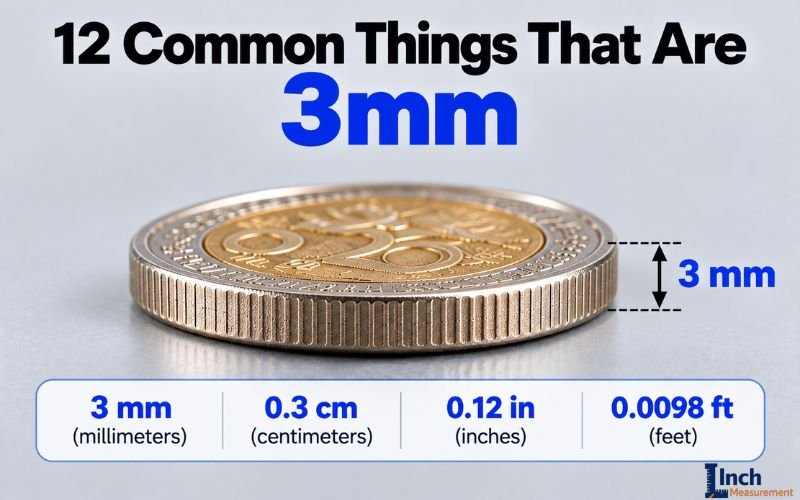
How big is 3mm? Three millimeters is a very small measurement equal to 0.3 centimeters or about 0.118 inches. It is just under one-eighth of an inch, yet it is large enough to see clearly without magnification.
A measurement this small shows up in plenty of places. You may see 3mm listed for jewelry, screws, craft beads, electronic parts, drill bits, wires, and small hardware. The number itself can be difficult to picture, especially when shopping online and there is no physical object beside you for comparison.
That is why everyday examples are useful. A peppercorn, small bead, thick pencil tip, or tiny screw can give you a much better mental picture of 3mm than a decimal number alone.
The examples below are approximate. Natural objects vary in size, and manufactured products come in different specifications, so use them for visual reference rather than precision measuring.
How Big Is 3mm in Inches?
Three millimeters equals 0.118 inches. It is slightly smaller than one-eighth of an inch, which is 0.125 inches.
That difference may look tiny on paper, but it becomes easier to understand if you place a 3mm object beside something larger. For example, a 7mm drill bit is more than twice the diameter of a 3mm one. A 3mm object can look surprisingly small next to ordinary household items.
Millimeters are especially useful for describing small parts because inches often require fractions or several decimal places. A product listed as 3mm immediately gives you a compact metric measurement.
The shape also matters. A 3mm bead is about 3mm across, while a 3mm coin edge is about 3mm thick. Both use the same number, but they describe different dimensions.
How to Measure 3mm Without a Ruler
You can make a rough estimate of 3mm with familiar objects, although an actual ruler or caliper is better when accuracy matters.
One simple comparison is three standard credit cards stacked together. A typical card is close to 1mm thick, so three stacked cards give you a rough visual reference for 3mm. Card thickness can vary slightly, so this is not a precision method.
A small peppercorn can also help. Many peppercorns are close to a few millimeters across, making them useful for judging the general scale. A small bead or thick pencil tip can serve a similar purpose.
Avoid using your fingertip as an exact measuring tool. Human fingers vary greatly, and even a small difference can be significant at this scale. If you need to choose a replacement part, drill bit, screw, or jewelry component, check its stated dimensions instead.
Common Things That Are About 3mm in Size
The examples below cover food, crafts, electronics, tools, clothing, and small hardware. They were selected because they provide familiar visual references for a measurement that is otherwise difficult to picture.
Some examples are naturally close to 3mm, while others describe one particular part or dimension of a manufactured object.
| Common Item | Approximate Size |
|---|---|
| Peppercorn | 3 Millimeters |
| Small craft bead | 3 Millimeters |
| Thick pencil tip | 3 Millimeters |
| Sesame seed cluster | 3 Millimeters |
| Earbud speaker hole | 3 Millimeters |
| Small screw | 3 Millimeters |
| Charging pin | 3 Millimeters |
| Thick coin edge | 3 Millimeters |
| Thin zipper tooth | 3 Millimeters |
| 3mm drill bit | 3 Millimeters |
| Small jewelry wire | 3 Millimeters |
| Thin rubber O-ring | 3 Millimeters |
Peppercorn
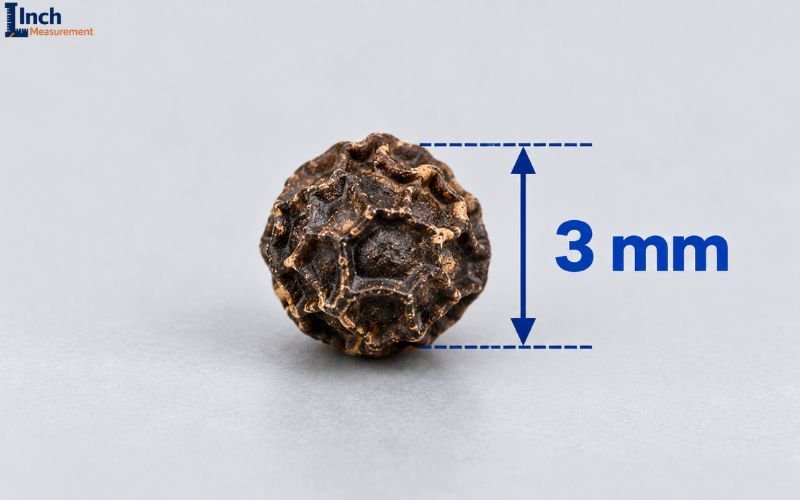
A peppercorn is one of the easiest objects to use when trying to picture a measurement around 3mm. Many whole black peppercorns are a few millimeters across, although their size is not perfectly uniform.
Its round shape makes the comparison particularly simple. Place a peppercorn on your fingertip and look at it closely. It is clearly visible, but it occupies very little space compared with something like a pea or marble.
Peppercorns also give you a useful sense of scale because they are familiar kitchen items. You do not need special equipment to understand their approximate size.
There is one catch: peppercorns are natural products. One may be closer to 2mm while another could be larger than 3mm. For that reason, a peppercorn is best used to answer a visual question such as “what does 3mm look like?” rather than to verify an exact measurement.
Small Craft Bead
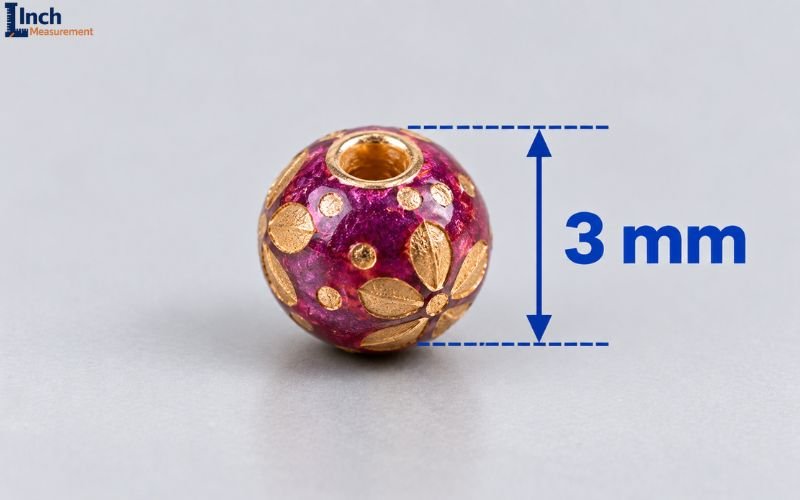
Small craft beads can be around 3mm wide and are common in bracelets, necklaces, embroidery, and decorative projects. Their small size makes them a practical example of how much space 3mm actually occupies.
A 3mm bead is tiny enough to create delicate jewelry patterns without making the finished piece look bulky. At the same time, it is still large enough to pick up and handle without specialized equipment.
If you are shopping for beads online, pay attention to whether the listed measurement refers to the bead’s outside diameter or its hole. A bead could be 3mm across while its opening is much smaller.
That distinction matters if you are trying to thread wire or cord through it. A 2mm cord, for example, may not fit comfortably through a hole that looks large enough in a photograph.
Related Post: 12 Common Things That Are 10cm Big
Thick Pencil Tip
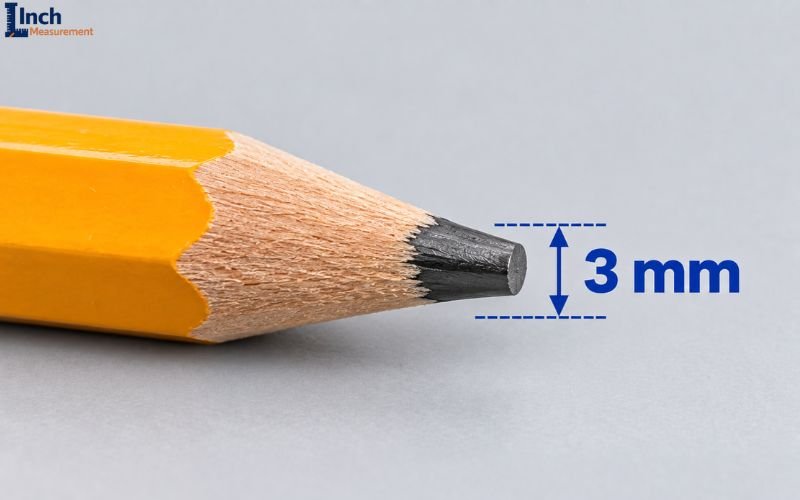
A thick pencil tip can provide a familiar comparison for 3mm. As a pencil is used and its point becomes worn, the graphite and surrounding wood can form a broader tip that looks noticeably thicker than a freshly sharpened point.
This is easy to picture because pencils are common in homes, schools, and offices. A fine writing point is much narrower, while a worn or deliberately thick point gives you a better sense of the 3mm range.
Artists also work with different pencil widths for sketching and shading. A broad pencil mark can cover more paper than a fine point, which shows how a small change in diameter affects the way a tool behaves.
Do not assume every pencil tip is exactly 3mm. Pencil design, sharpening style, and how much the tip has worn all affect its size. It is a visual comparison, not a substitute for measuring equipment.
Sesame Seed Cluster
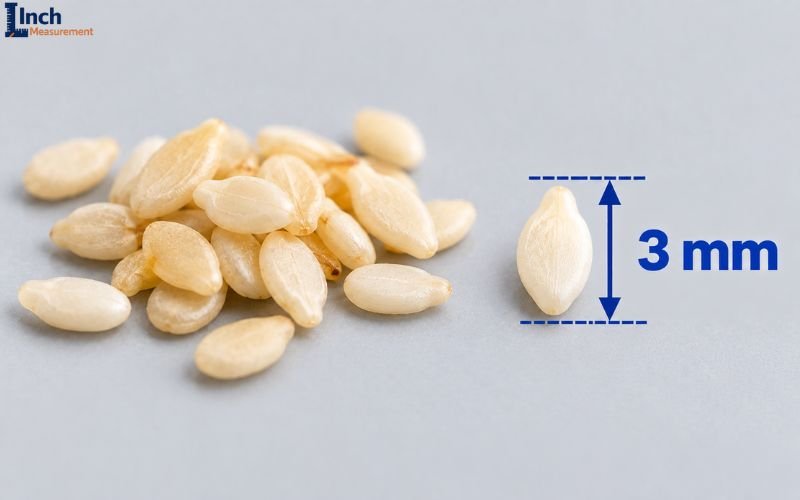
A single sesame seed is generally smaller than 3mm, but several seeds placed close together can span roughly this distance. This makes a small cluster more useful than one individual seed for understanding the measurement.
Sesame seeds are easy to recognize because they appear on bread, burger buns, crackers, and snacks. Put a few beside one another on your fingertip and the combined width gives you a quick sense of how little 3mm really is.
This example also highlights an important point about measurements: an object’s arrangement can change the dimension you are looking at. Three tiny seeds in a row can cover 3mm without any individual seed being 3mm long.
Because seeds vary in shape and size, treat this comparison as approximate. It works best when you want a quick visual reference rather than an exact measurement.
Earbud Speaker Hole
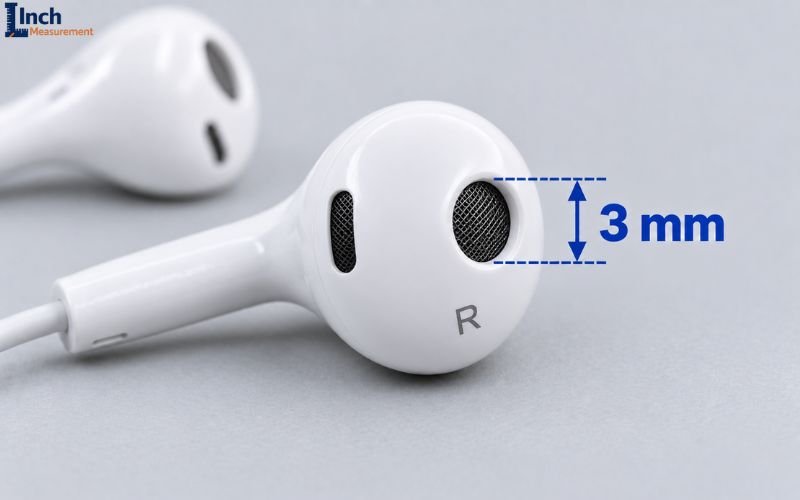
Tiny openings on earbuds provide a modern example of a measurement in the few-millimeter range. Some speaker or acoustic openings can be around 3mm, although their exact dimensions depend on the earbud design.
Look closely at a pair of earbuds and you will see how much engineering is packed into a very small space. A small opening has to allow sound to pass while fitting neatly into a compact housing.
This is one reason millimeters are commonly used in electronics. A difference of even 1mm can matter when several components must fit inside a small device.
If you are replacing an earbud part or protective mesh, do not rely on appearance alone. Manufacturers use different shapes and hole patterns, so the stated dimensions of the replacement part are more useful than simply comparing it with a photograph.
Small Screw
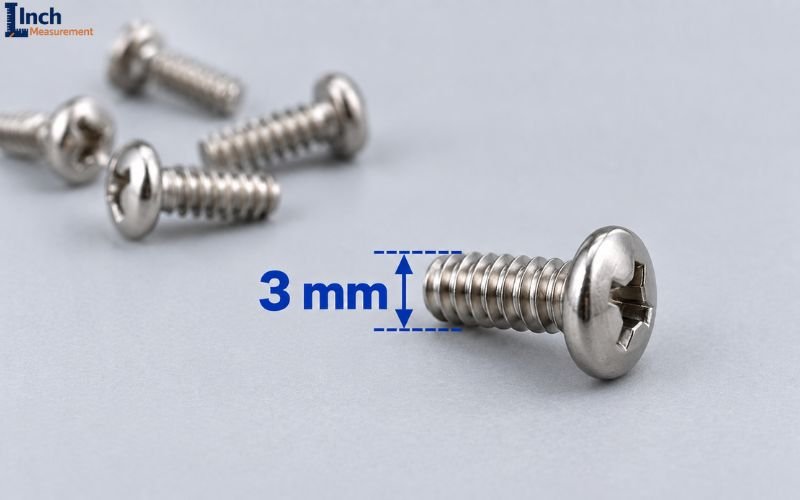
A small screw with a shaft diameter close to 3mm is another practical way to picture this size. Screws in this range can appear in electronics, toys, appliances, glasses, and other small products.
The cylindrical shaft makes the measurement easy to understand. If the shaft is about 3mm across, its diameter is only a fraction of the width of a typical fingertip.
Small screws can be surprisingly strong for their size. They are designed to hold lightweight components together without taking up much room inside the product.
If you are replacing a screw, diameter alone is not enough. A 3mm screw can have different lengths, thread pitches, head shapes, and materials. Match all of the relevant specifications before buying a replacement.
Related Post: 10 Common Things That Are 3mm Big
Charging Pin
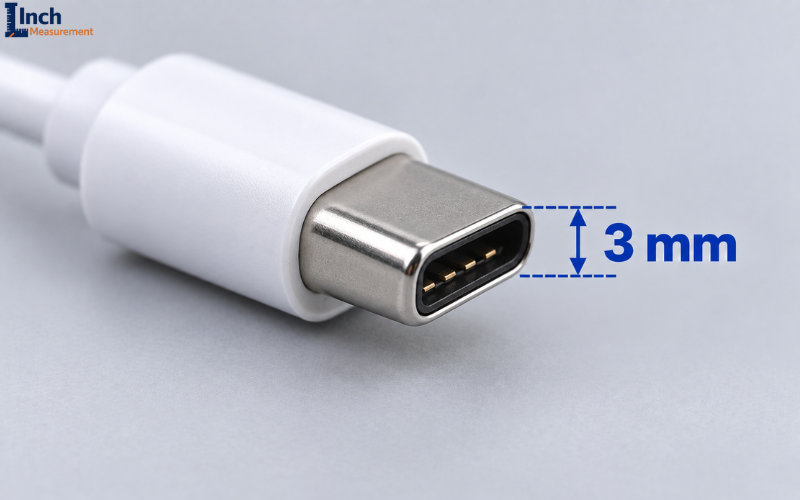
Some small electronic connector pins can be close to 3mm in thickness or diameter. These pins are designed to carry electrical connections while remaining compact enough for the device or connector housing.
You can see how narrow these parts are when compared with the much larger body of a charger or adapter. Even though a pin may be only a few millimeters across, it still needs enough strength to withstand repeated plugging and unplugging.
This is another situation where metric measurements are useful. Electronic manufacturers often work with tight dimensions because components need to fit together precisely.
If you are buying a replacement connector, check the manufacturer’s specifications rather than assuming all charging pins have the same dimensions. Different connectors can look similar while using different sizes.
Thick Coin Edge
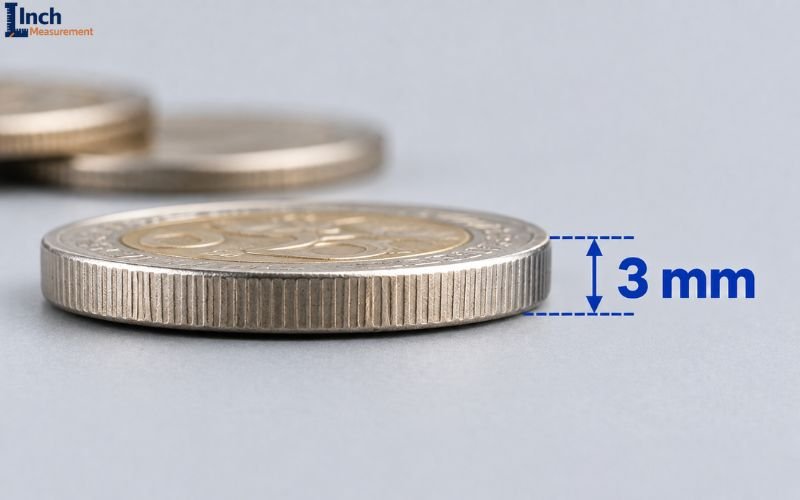
The edge of a relatively thick coin can be around 3mm, giving you a solid object that is easy to hold and inspect. Turn a coin sideways and the thickness becomes much more obvious than when looking at its face.
This is useful because most people have handled coins before. You can compare the edge with other thin objects and quickly see that 3mm is small but not paper-thin.
Coin dimensions vary by denomination and country. Some coins are thinner than 3mm, while others are thicker, so you should not assume that every coin provides an exact reference.
For visualizing the measurement, though, a coin edge works well. It also helps distinguish thickness from width: the coin may be several centimeters across while its edge is only a few millimeters thick.
Thin Zipper Tooth
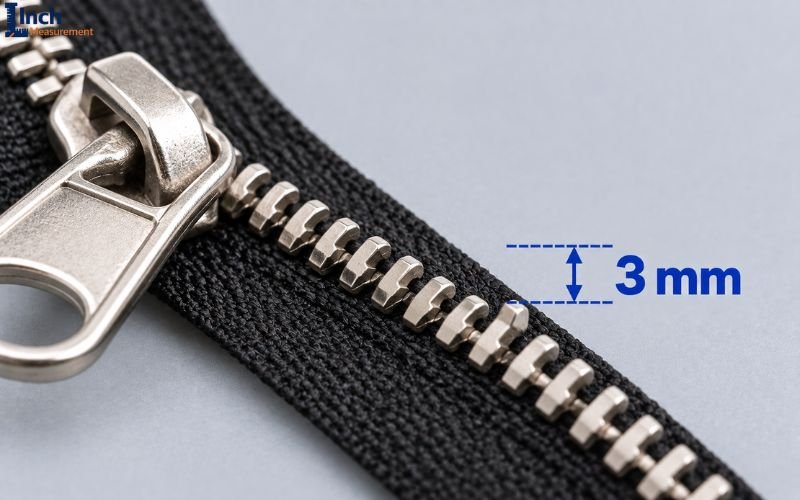
A small zipper tooth can be close to 3mm in one of its dimensions, especially on lightweight clothing, bags, and accessories. Zippers contain many tiny teeth, so their small size becomes obvious when you examine them closely.
Run your finger along a zipper and you can feel how tightly the teeth are arranged. Each tooth is small, yet hundreds of them can work together to keep a jacket or bag securely closed.
Zipper sizing varies, so not every tooth will measure 3mm. Heavy-duty luggage zippers can be considerably larger than the teeth used on lightweight clothing.
This makes the example more useful for understanding scale than for choosing a replacement zipper. If you are repairing a zipper, use the manufacturer’s size or measure the original components rather than relying on a visual comparison.
3mm Drill Bit
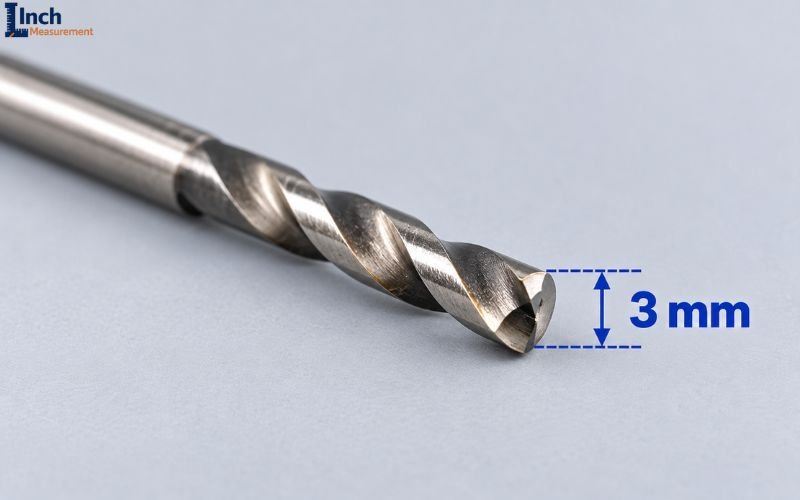
A 3mm drill bit is one of the clearest examples because its diameter is intentionally specified. Unlike a peppercorn or seed, the drill bit is manufactured to a particular nominal size.
Look directly at the cutting end and imagine the full width of the circular bit. That diameter is only 3mm, which makes the bit look extremely narrow when compared with larger woodworking or construction bits.
Small drill bits are useful for model making, electronics projects, crafts, woodworking, and other detailed work. Their size allows you to create relatively small holes without removing a large amount of material.
If you are buying drill bits, pay attention to the unit. A 3mm bit is not the same as a 3-inch bit, and listings can contain several measurements for the same tool. Check the diameter before placing an order.
Related Post: How Big Is 4mm? 10 Common Things That Are About 4mm
Small Jewelry Wire
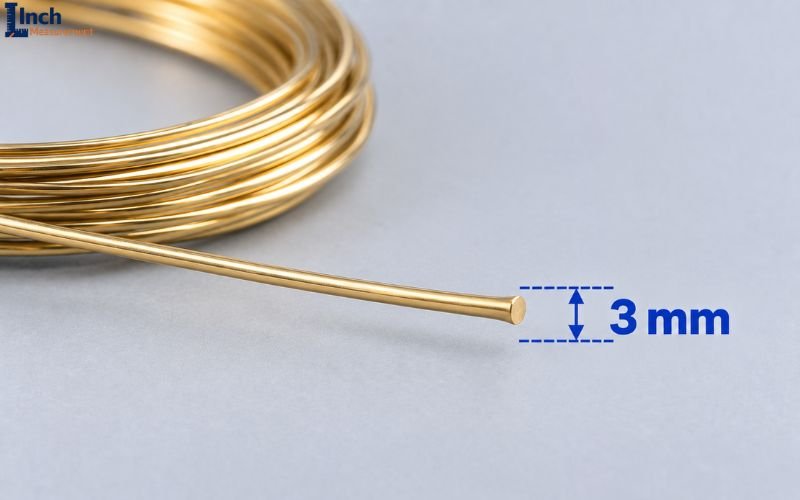
Some thicker jewelry wire and craft wire can be around 3mm in diameter, although many jewelry wires are much thinner. A 3mm wire would feel substantially heavier than the fine wire commonly used for delicate jewelry.
The circular cross-section makes wire a useful way to understand diameter. Imagine cutting the wire straight across and looking directly at the end. The circle you see would measure about 3mm from one side to the other.
Wire size affects flexibility, strength, and how easily it passes through beads or findings. A thicker wire may hold its shape better but can be harder to bend.
If you are making jewelry, always check the stated wire diameter before buying. A photograph can make thin wire look surprisingly thick depending on the camera angle and background.
Thin Rubber O-Ring
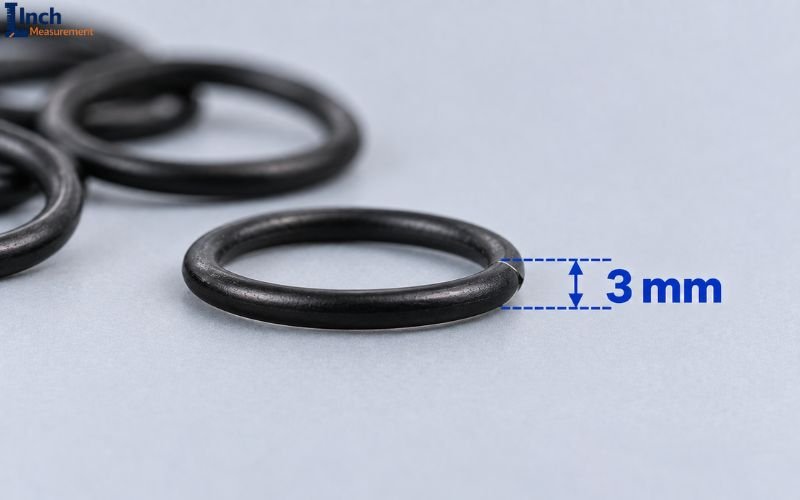
A small rubber O-ring can have a cross-section around 3mm thick. O-rings are used as seals in machinery, plumbing components, tools, bottles, and many other products.
The 3mm measurement here refers to the thickness of the rubber itself, not the overall diameter of the ring. That difference is easy to miss when shopping for replacement seals.
Rubber can also compress when squeezed. Measuring a compressed O-ring may give you a smaller number than its actual cross-sectional thickness.
For a replacement part, use the manufacturer’s dimensions whenever possible. You usually need more than one measurement, including the inside diameter and cross-section. A visual comparison with a 3mm O-ring is helpful, but it should not be the final check.
Tips for Estimating 3mm by Eye
Estimating 3mm becomes easier once you have seen the measurement beside several familiar objects. Start with something rigid and reasonably uniform, such as a drill bit, bead, or small screw.
Lighting and viewing distance can affect your judgment. A tiny object photographed in close-up may look much larger than it really is, while a real 3mm part can almost disappear when placed beside a large object.
Try to compare like with like. If you are checking thickness, compare the thickness of two objects rather than comparing the length of one with the width of another.
A ruler with millimeter markings is still the better choice for anything that needs to fit precisely. For example, if a replacement component must fit inside a 4mm opening, guessing that another part “looks about right” can easily lead to a poor fit.
Common Mistakes When Judging 3mm
One of the biggest mistakes is confusing diameter with length. A 3mm screw may have a 3mm shaft diameter but be much longer. Likewise, a 3mm bead describes its width, not necessarily the size of its hole.
Another mistake is treating natural objects as exact standards. Peppercorns, sesame seeds, and other food items vary naturally. One peppercorn may be close to 3mm while another is noticeably larger.
Product photographs can also create false impressions. A 5-inch object photographed beside a 3mm component may make the small component look even smaller than it would in person.
Finally, watch the units. Millimeters, centimeters, and inches are different scales. A listing that says 3mm is describing a measurement much smaller than 3cm. Check the unit before comparing products or ordering replacement parts.
Related Post: How Big Is 6mm? 10 Common Things That Are About 6mm Wide
FAQs: People Also Ask
How big is 3mm in inches?
3mm equals approximately 0.118 inches, which is slightly smaller than one-eighth of an inch.
What does 3mm look like?
3mm looks similar in scale to a peppercorn, small bead, thick pencil tip, or tiny hardware component.
Is 3mm easy to see?
Yes, 3mm is clearly visible to the human eye, although judging its exact size without a ruler can be difficult.
How can I measure 3mm without a ruler?
You can estimate 3mm using three stacked cards, a small bead, peppercorn, or another familiar object.
What common objects are about 3mm?
Common examples include peppercorns, small beads, screw shafts, zipper teeth, drill bits, and some electronic pins.
Is 3mm the same as 0.3cm?
Yes, 3mm equals 0.3cm because one centimeter contains exactly 10 millimeters.
Conclusion
A 3mm measurement is small, but it is easier to picture once you compare it with familiar objects. Peppercorns, beads, pencil tips, screws, zipper teeth, drill bits, and small electronic parts all show how this measurement appears in everyday products.
Three millimeters equals 0.3 centimeters or about 0.118 inches. For a quick visual estimate, compare your object with a known 3mm reference; for an exact fit, use a millimeter ruler or caliper.
