
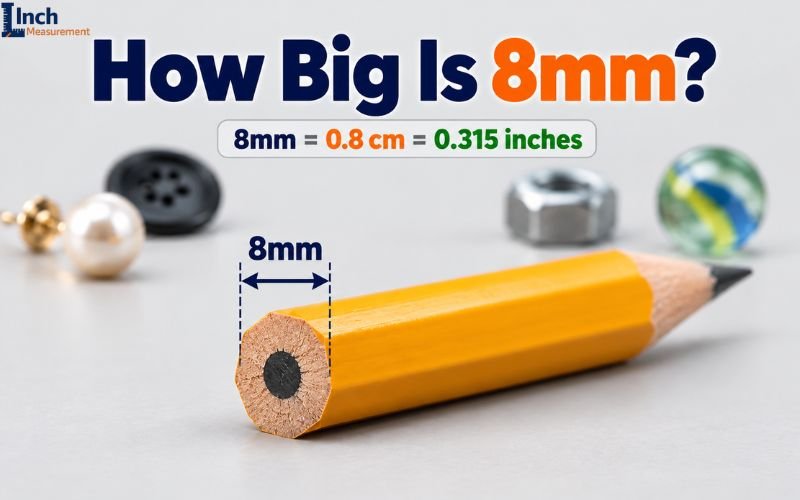
8mm is equal to 0.8 centimeters (cm) or about 0.315 inches. It is a little less than one-third of an inch, so it is a small measurement that can be hard to picture without a familiar object nearby. If you are wondering how big is 8mm, think about the width of a pencil, a small bead, or a tiny screw head.
An 8mm measurement shows up in plenty of everyday products. You may see it listed for jewelry, craft beads, hardware, pencil parts, buttons, and other small objects. The exact size can vary between manufacturers, so these examples are best used as visual references rather than precision measuring tools.
This guide gives you 12 common things that can help you recognize 8mm by sight. It also explains how to estimate the size without a ruler and what mistakes to avoid when judging small measurements.
How Big Is 8mm?
8mm is equal to 0.8 centimeters (cm) or about 0.315 inches. It is slightly larger than 1/4 inch and smaller than 3/8 inch, making it a small measurement that can be difficult to picture. A standard pencil, small craft bead, or pearl bead can give you a useful visual idea of this size.
You may see 8mm used for the diameter, width, thickness, or opening of small objects. It is common in jewelry, crafts, buttons, pencils, and hardware. An 8mm bead, for example, measures about 8mm across its widest point. Once you compare a real 8mm object with your fingers or other familiar items, the measurement becomes much easier to recognize.
What Does 8mm Look Like?
An 8mm measurement is small enough to fit easily between your fingertips, but it is still large enough to see clearly. In inches, 8mm is approximately 0.315 inches, placing it between 1/4 inch and 3/8 inch.
A useful comparison is a regular wooden pencil. Many pencils measure around 7mm to 8mm across, although the shape and manufacturer can change the exact diameter. An 8mm craft bead gives another easy reference because its round shape makes the measurement simple to picture.
For jewelry shoppers, an 8mm pearl or bead is a familiar size. It is noticeably larger than tiny seed beads but much smaller than oversized decorative beads. You might also encounter 8mm measurements in screws, washers, buttons, and small hardware.
The key thing to remember is that 8mm describes a distance of 8 millimeters. An object can have an 8mm diameter, width, thickness, or opening. It does not mean the entire object must be exactly 8mm in every direction.
12 Common Things That Are 8mm Big
The following objects were chosen because they are familiar, easy to visualize, or commonly sold in sizes close to 8mm. Their dimensions can vary, so treat them as practical comparisons rather than guaranteed measurements.
| Item | Approximate Length |
|---|---|
| Standard Pencil Diameter | 8mm |
| Small Craft Bead | 8mm |
| Shirt Button | 8mm |
| Ear Stud | 8mm |
| Small Marble | 8mm |
| Mechanical Pencil Grip | 8mm |
| Medium Screw Head | 8mm |
| Small Rubber Grommet | 8mm |
| Jewelry Pearl Bead | 8mm |
| Pencil Eraser | 8mm |
| 8mm Washer | 8mm |
| 8mm Hex Nut | 8mm |
Standard Pencil Diameter
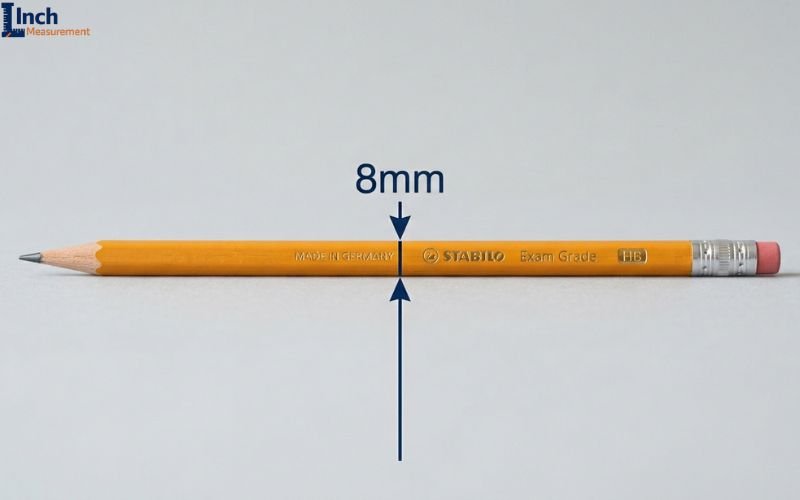
A regular wooden pencil is one of the easiest objects to use when picturing 8mm. Many standard pencils have a body diameter close to 7mm or 8mm, depending on their design. Hexagonal pencils may feel slightly different from round pencils even when their overall width is similar.
Place a pencil on a flat surface and look at its cross-section. The distance from one side of the pencil body to the opposite side gives you a useful visual idea of 8mm.
This comparison is especially handy for students and parents because pencils are common household and school items. You do not need a special measuring tool to get a rough sense of the size.
A pencil can also help when shopping for small accessories. If a product description says a grip or tube is about 8mm wide, comparing it mentally with a pencil gives you a quick idea of its scale.
Small Craft Bead
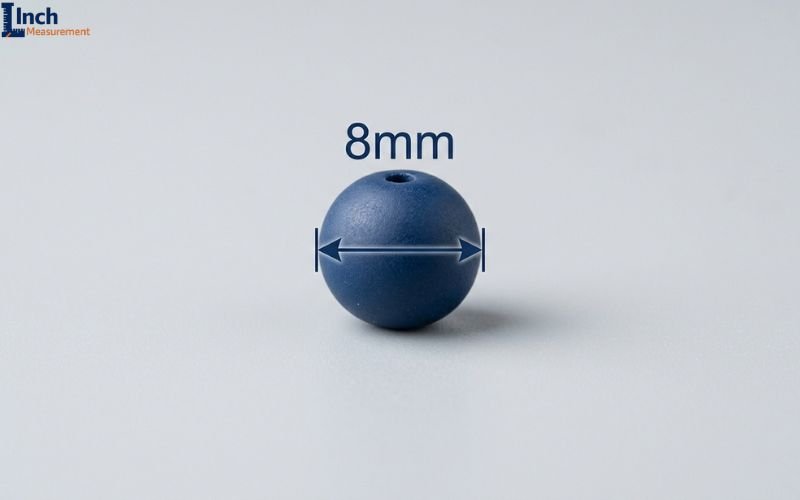
An 8mm craft bead is a much more exact reference because beads are commonly sold by diameter. Round craft beads in this size are popular for bracelets, necklaces, keychains, and other DIY projects.
Hold an 8mm bead between your fingertips and you will notice that it is small but not tiny. It is large enough to thread easily while still creating a relatively delicate look in a finished piece.
Beads are also useful for understanding why diameter matters. A round bead measuring 8mm across has a maximum width of 8mm, but the hole through its center will normally be much smaller.
If you are ordering beads online, check whether the listed 8mm measurement refers to the bead diameter. Some sellers list the hole size separately, and confusing those two measurements can lead to ordering the wrong product.
Related Post: How Big Is 7mm? 12 Common Things That Are 7mm Big
Shirt Button
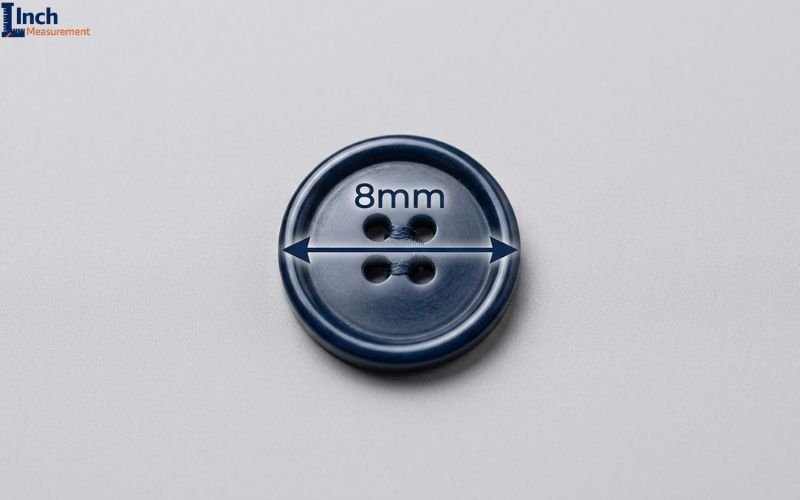
Small shirt buttons can provide another visual reference for 8mm. Button sizes vary widely, so not every shirt button will measure this much. Smaller buttons used on some shirts, cuffs, and children’s clothing can come close.
The useful part of this comparison is that buttons are flat and easy to see. If you place a small button next to a ruler, you can compare its width directly with the millimeter markings.
An 8mm button is compact enough to blend into clothing without becoming a major visual feature. Larger buttons can measure 15mm, 20mm, or more, which makes the difference easier to appreciate.
If you are replacing a missing button, do not rely only on appearance. Measure the existing buttons across their widest point before buying replacements. A few millimeters can make a replacement look noticeably different.
Ear Stud
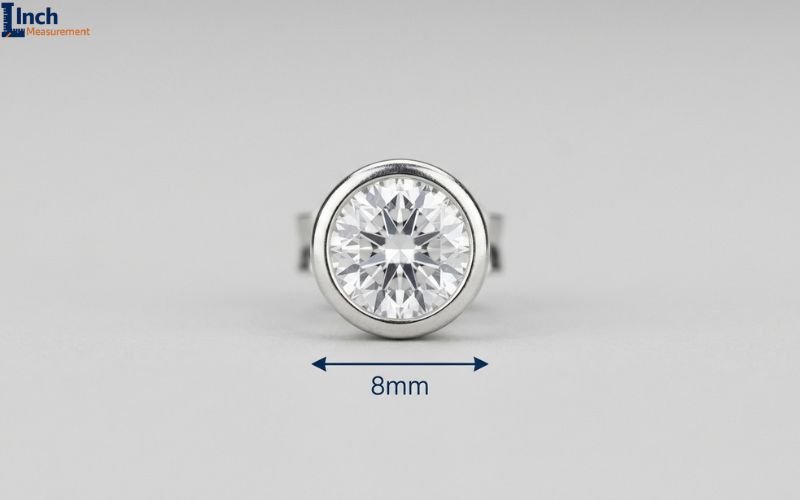
Some ear studs have a decorative front section measuring around 8mm across. This is large enough to be visible from a short distance while remaining relatively compact.
Jewelry measurements can be confusing because a listing may describe the diameter of the decorative piece, the length of the post, or the total size of the earring. These measurements are not interchangeable.
For example, an earring may have an 8mm decorative face while the post is considerably longer. If you are trying to picture how much of the earring will be visible on the ear, focus on the measurement given for the front design.
An 8mm stud is therefore a good example of how a small measurement can have a noticeable effect. The number looks tiny on paper, but an 8mm circular design is easy to see when worn.
Small Marble
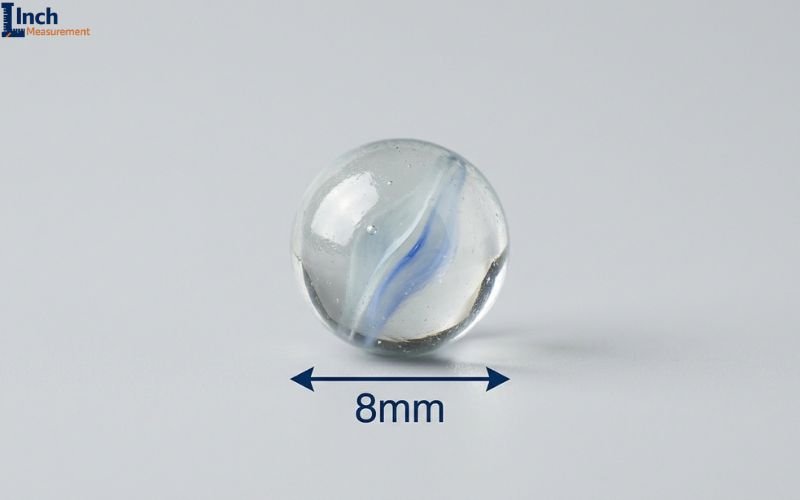
Small marbles can be useful for understanding 8mm because their round shape makes diameter easy to imagine. However, marble sizes vary considerably, so only some small marbles will be close to this measurement.
An 8mm sphere is roughly the width represented by the distance across the widest part of the ball. Looking at a small round object makes it easier to understand that millimeters measure straight-line distance rather than the amount of material in an object.
If you collect marbles or small glass beads, comparing several sizes side by side can make 8mm much easier to recognize. A difference of 2mm may seem insignificant in a written specification but can be obvious between small round objects.
This is particularly useful for crafts and miniature projects where choosing the right diameter affects how the finished design looks.
Mechanical Pencil Grip
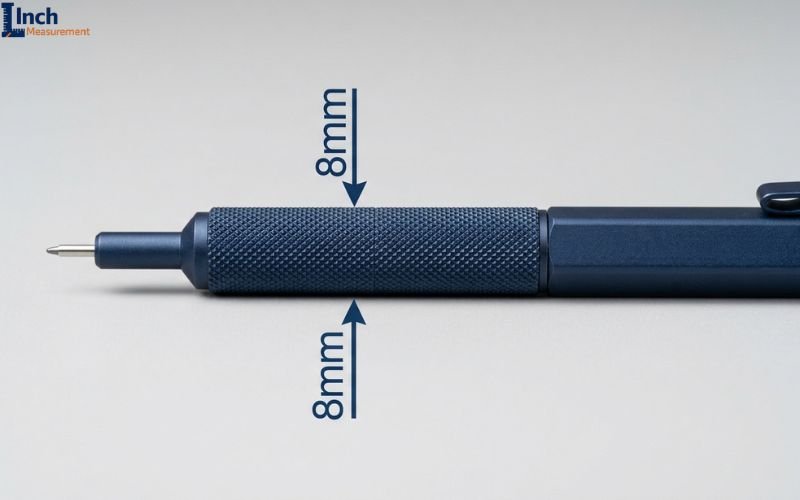
The grip section of some mechanical pencils can be close to 8mm across. This makes a mechanical pencil another familiar object for visualizing the measurement.
Grip dimensions vary because manufacturers design pencils for different writing styles and hand sizes. Some models have narrow bodies, while others use wider rubberized sections for comfort.
An 8mm grip feels fairly slim in the hand. Compare it with a wider marker or a thick pen and the difference becomes easier to notice. The measurement is small, but it can change how a writing instrument feels during extended use.
When buying replacement pencil grips or sleeves, check the diameter carefully. A product designed for an 8mm barrel may not fit a pencil that is slightly wider or narrower.
Related Post: How Big Is 6mm? 10 Common Things That Are 6mm Big
Medium Screw Head
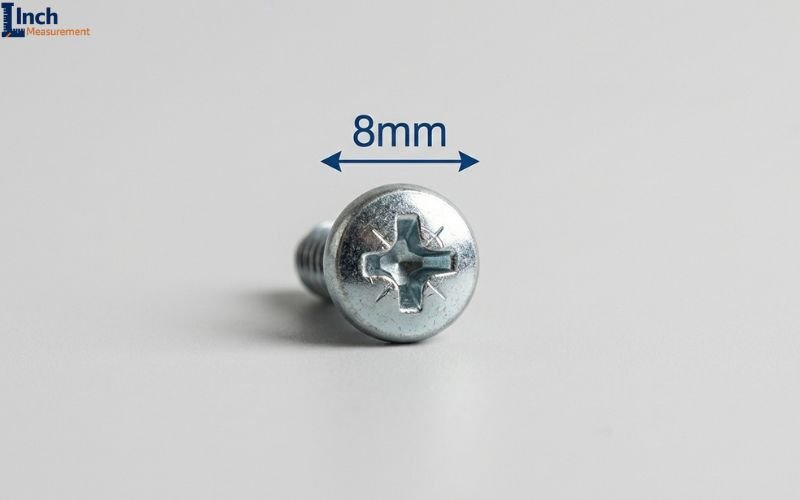
Small screws and bolts often use measurements in millimeters, and an 8mm dimension is common in hardware. The important detail is identifying which part of the fastener is actually being measured.
An 8mm screw head does not mean the entire screw is 8mm long. A screw could have an 8mm head while its shaft is 20mm, 30mm, or 50mm long.
This distinction matters during furniture assembly and repairs. Hardware listings may specify head diameter, thread diameter, shaft length, or wrench size, depending on the product.
If you have a small screw at home, look closely at its head and compare it with an 8mm measurement. For replacement hardware, though, use the manufacturer’s specifications or a caliper rather than relying on visual estimation.
Small Rubber Grommet
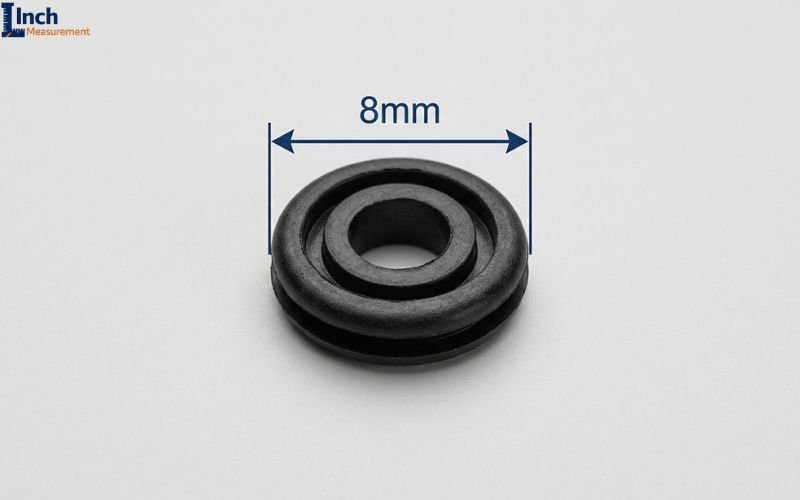
Rubber grommets are used to protect wires and cables where they pass through holes in panels. Small grommets can have dimensions close to 8mm, although the exact measurement depends on the design.
Unlike a solid bead, a grommet has an opening. That means an 8mm grommet could refer to its outside diameter, inside diameter, or the panel hole it is designed to fit.
This is a common source of mistakes when ordering replacement parts. Two grommets can both be described with an 8mm measurement while referring to completely different dimensions.
If you need one for a repair project, check the product diagram carefully. Look for outside diameter, inside diameter, and panel thickness rather than focusing on one number.
Jewelry Pearl Bead
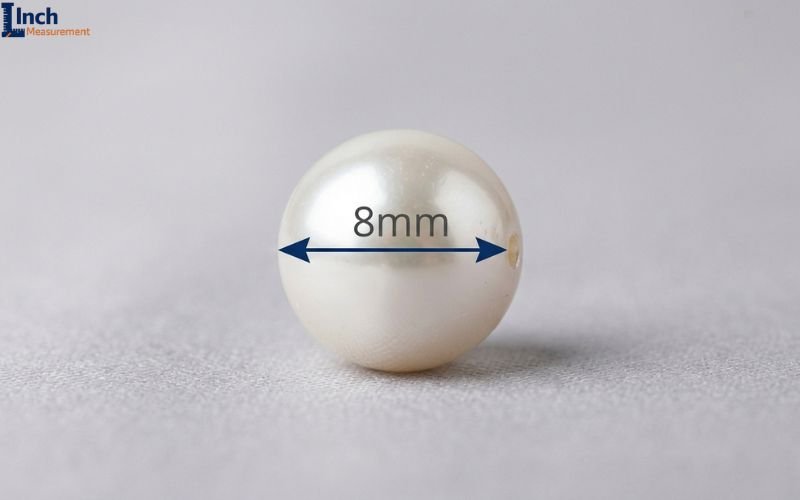
An 8mm pearl bead is a popular reference for understanding the size of small jewelry components. Round pearl beads are usually described by their diameter, making the measurement straightforward.
An 8mm pearl has a noticeable presence in a bracelet or necklace without taking up a large amount of space. Smaller pearls can look more delicate, while larger sizes create a bolder appearance.
Pearl sizes can also affect the total length of a finished necklace. For example, a strand made from many 8mm beads will occupy more space than one made from much smaller beads, even when both use the same number of pieces.
If you are shopping for pearl beads, pay attention to the stated range. Natural and irregularly shaped materials may not be perfectly identical, while manufactured beads are generally more consistent.
Pencil Eraser
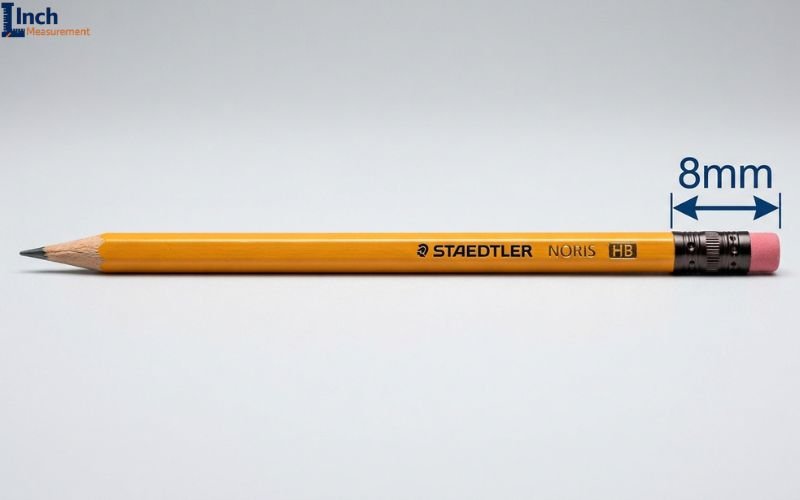
The eraser attached to a pencil can give you another familiar visual reference for a measurement close to 8mm. However, eraser dimensions differ between pencil brands and designs.
Some erasers are narrow cylinders, while others are wider or shaped differently. If you look at the end of a slim pencil, the eraser may appear close to the width of the pencil body.
This example is especially useful because pencils are easy to find. If someone tells you that a small part is about 8mm wide, imagining the width of a pencil eraser can provide a rough mental picture.
Do not use an eraser as a precision measuring tool, though. Erasers wear down over time, and their original dimensions can vary even when they come from the same type of pencil.
Related Post: 12 Common Things That Are 9MM Big
8mm Washer
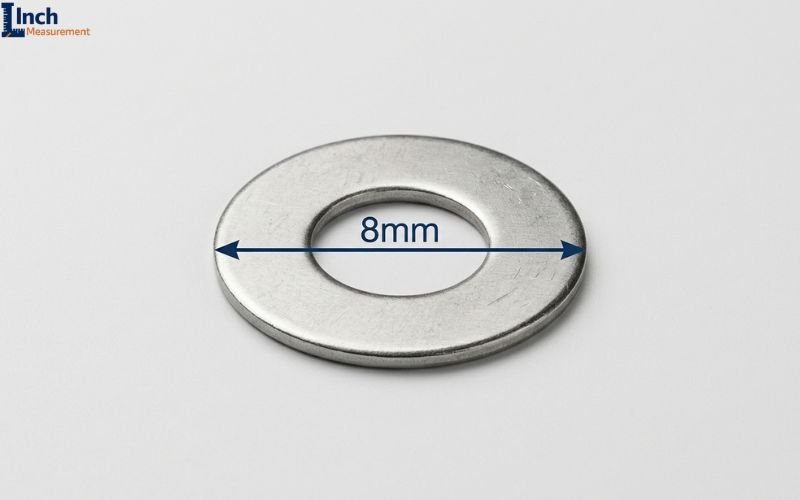
An 8mm washer is a useful hardware reference because washers are commonly identified by their dimensions. Depending on the manufacturer, an 8mm washer may refer to the size of the bolt or screw it is designed to fit rather than its complete outside diameter.
A washer is a flat metal ring with a central hole. This makes it different from a bead or button because several measurements can matter at once.
If you are trying to picture 8mm, look at the center or specified diameter in the product description rather than assuming the entire washer is 8mm across.
Washers are used in furniture, machinery, construction, and repair work. Their small size can seem insignificant, but selecting the wrong washer size can prevent a fastener from fitting properly.
8mm Hex Nut
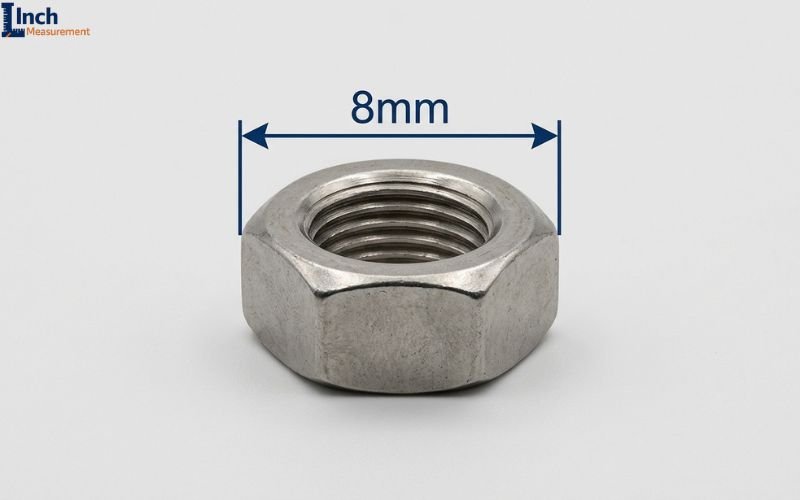
An 8mm hex nut gives you another practical example from the hardware world. The number 8mm can refer to the thread size or compatible bolt size, while the distance across the outside faces of the nut can be different.
This is an important distinction because hardware specifications are not always describing the same physical dimension. An 8mm nut is not necessarily an object that measures exactly 8mm from one outer edge to the opposite edge.
The six-sided shape makes the nut easy to recognize. If you have several nuts in different sizes, placing them next to each other provides a useful comparison.
For repair work, always match the thread specification rather than choosing a nut simply because it looks close in size. A nut that appears almost right may still have the wrong thread.
Tips for Estimating 8mm by Eye
Small measurements are harder to judge than larger ones because tiny differences become significant. An object that looks like 8mm might actually be 7mm or 10mm, and that difference can matter for hardware or jewelry.
Start with an object you know well. A pencil, small bead, or other familiar reference can help establish the general scale. Once you have seen an actual 8mm object, it becomes easier to recognize similar dimensions later.
Try not to judge size from a photograph alone. Camera distance, zoom, perspective, and screen size can make an object appear larger or smaller than it really is. A picture of an 8mm bead displayed on a large monitor does not mean the bead is physically that wide on your screen.
For online shopping, read the full dimensions rather than relying on product photos. A 5-inch phone or a 12-inch ruler shown beside a small object can provide useful context, but the manufacturer’s listed dimensions should be your main reference.
Common Mistakes When Judging 8mm Size
One of the biggest mistakes is confusing diameter with circumference. An 8mm diameter means a straight line across a round object through its center measures 8mm. It does not mean the distance around the object is 8mm.
Another mistake is treating every object in the examples as exactly 8mm. A pencil, button, or eraser can vary by brand and model. These items are useful for visual comparison, but they should not replace an actual measurement when accuracy matters.
People also sometimes confuse millimeters with centimeters. Since 10mm equals 1cm, an 8mm measurement is less than 1cm. Writing down the unit before comparing measurements can prevent simple ordering and measuring errors.
Finally, check which dimension a product listing describes. A component may be 8mm wide but 25mm long. Looking at only the first number can result in buying an item that is much different from what you expected.
Related Post: 12 Common Things That Are 10cm Big
People Also Ask: How Big Is 8mm?
Is 8mm bigger than 1/4 inch?
Yes. 8mm is larger than 1/4 inch because 1/4 inch equals approximately 6.35mm.
How many inches is 8mm?
8mm is approximately 0.315 inches, which is slightly less than one-third of an inch.
Is 8mm the same as 1cm?
No. 8mm equals 0.8cm, while 1cm equals 10mm, making 8mm smaller.
What does an 8mm bead look like?
An 8mm round bead is small, noticeable, and roughly comparable to the width of many pencils.
Can I measure 8mm without a ruler?
Yes. You can make a rough estimate using an 8mm bead, pencil, fingernail, or other familiar small object.
Is an 8mm screw 8mm long?
No. An 8mm screw specification may describe its diameter or compatible hardware, not necessarily its overall length.
Conclusion
How big is 8mm? It is a small measurement equal to 0.8cm or about 0.315 inches. You can picture it using familiar references such as a pencil, small bead, pearl, button, screw head, washer, or hex nut.
The exact dimensions of everyday objects vary, so use these examples to build a visual sense of the size rather than for precision work. When an exact fit matters, check the listed dimension or measure the object directly with a ruler or caliper.
For a quick estimate, keep an actual 8mm bead or marked measuring reference nearby and compare small objects against it.
