
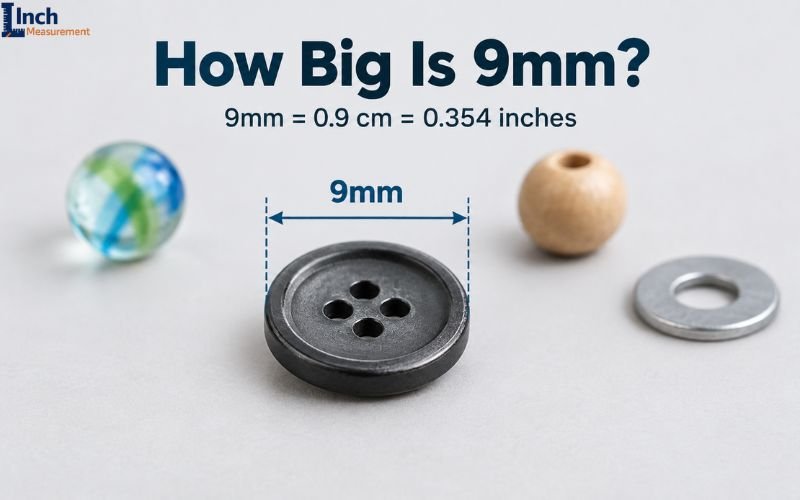
How big is 9mm? 9mm is equal to 0.9 centimeters (cm) or about 0.354 inches. It is just under 1 centimeter and a little more than one-third of an inch. Because millimeters are small units, it can be difficult to picture 9mm from the number alone.
A real object makes the measurement much easier to understand. A small pencil eraser, button, craft bead, marble, or screw head can give you a useful idea of what 9mm looks like. These references are especially helpful when shopping online, choosing hardware, working on crafts, or checking the size of a small part.
The exact dimensions of everyday objects vary, so the examples below should be treated as visual comparisons rather than precision measuring tools. If an exact fit matters, use a ruler or caliper to confirm the measurement.
How Big Is 9mm?
9mm measures 9 millimeters, 0.9 centimeters, or approximately 0.354 inches. Since 1 centimeter contains 10 millimeters, 9mm is only 1mm short of a full centimeter. It is also slightly larger than 1/4 inch and slightly smaller than 3/8 inch.
For a quick visual idea, imagine a small round button or the width of a pencil eraser. These objects can be close to 9mm, although their actual measurements depend on the product. A 9mm object is small enough to sit comfortably on your fingertip but large enough to be clearly visible.
You may see 9mm used to describe different parts of an object. It could refer to a diameter, width, thickness, opening, or another specific dimension. Always check what the measurement describes before comparing it with another item.
What Does 9mm Look Like in Everyday Life?
Nine millimeters is easier to picture when you compare it with objects you already know. A small craft bead with a 9mm diameter, for example, gives you a much better visual reference than the number by itself.
Your pinky fingernail can also provide a rough comparison for some people. The width varies from person to person, so it should only be used as a quick estimate. A small pencil eraser or button can work in a similar way.
Nine millimeters is still a small measurement, but it is not microscopic. You can easily see an object this size without magnification. A 5mm bead would look noticeably smaller, while a 15mm object would be considerably larger.
That difference matters when buying small parts. A few millimeters can change whether a component fits inside a device, attaches to another part, or looks right in a craft project.
12 Common Things That Are 9mm Big
The following 12 objects provide familiar ways to visualize a measurement close to 9mm. They come from everyday items, crafts, electronics, and hardware, giving you several different ways to recognize the size.
Keep in mind that manufactured objects are not always exactly the same size. Use the table as a quick visual reference, then check the manufacturer’s dimensions when accuracy matters.
| Common Thing | Approximate Size |
|---|---|
| Pencil Eraser Width | 9mm |
| Small Button Diameter | 9mm |
| Headphone Jack Tip/Section | 9mm |
| Small Marble | 9mm |
| Medium Craft Bead | 9mm |
| Small Battery Thickness | 9mm |
| Thick Drinking Straw Width | 9mm |
| Marker Cap Thickness | 9mm |
| Small Screw Head | 9mm |
| Pinky Fingernail Width | 9mm |
| Small Metal Washer | 9mm |
| Small Hex Nut | 9mm |
Pencil Eraser Width
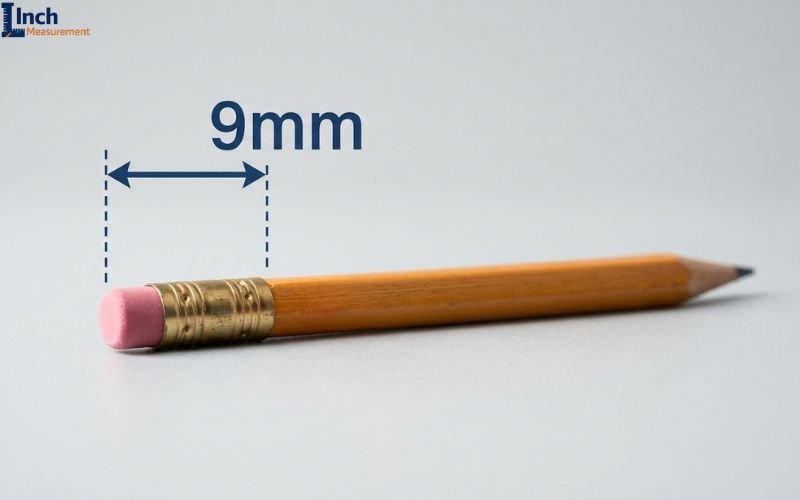
A small pencil eraser is one of the easiest objects to use when trying to picture 9mm. Many standard wooden pencils have an eraser attached to the top, and some erasers are close to this width.
Look directly at the circular end of the eraser. The distance from one side to the opposite side gives you a simple visual idea of the measurement. Since pencils are common in homes, classrooms, and offices, you may already have a useful reference sitting on your desk.
The exact size can vary between pencil brands. Some erasers are narrower, while others are noticeably wider. An eraser that looks close to 9mm should therefore be treated as an estimate.
This comparison is also useful because it shows how small 9mm really is. A pencil may have a body only around this general width, yet it is still comfortable to hold and use.
Small Button Diameter
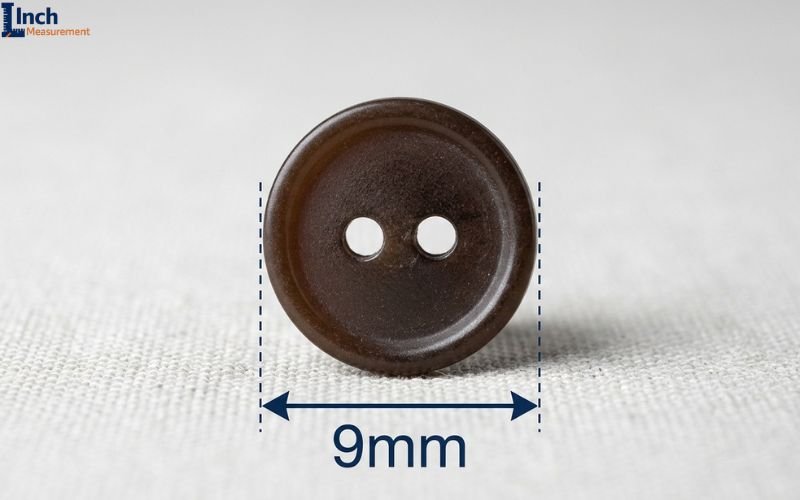
A small clothing button can be close to 9mm across. Buttons are available in many sizes, so this comparison works best with smaller buttons found on lightweight shirts, children’s clothing, and some decorative garments.
The round shape makes a button particularly easy to compare with a measurement. If you place a small button beside a millimeter scale, you can see how its diameter relates to 9mm.
A button also shows why the word “diameter” matters. If a round button is 9mm across, the measurement describes the straight distance through its center, not the distance around its edge.
If you are replacing buttons, avoid choosing a replacement based only on appearance. Measure the original button first. A difference of a few millimeters can make the replacement look noticeably larger or smaller.
Related Post: How Big Is 8mm? 12 Common Things That Are 8mm Big
Headphone Jack Tip
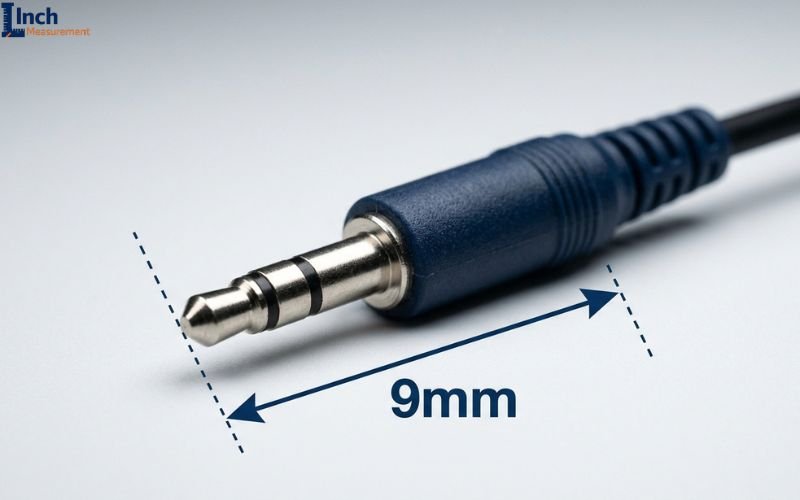
Small audio connectors contain several compact components that can be close to the 9mm range. The exact dimensions depend on the connector design, so this is best used as a general visual reference rather than a fixed measurement.
Electronic parts often use millimeters because small differences can affect how components fit together. A connector that is slightly too large may not fit into the intended opening, while one that is too small may not connect securely.
Looking at a wired headphone connector can help you understand the scale. The metal section is small enough to hold between two fingers but large enough to see its individual parts.
If you are buying an audio replacement part, check the full specification instead of assuming every similar-looking connector has the same dimensions. Connector measurements can describe different sections of the part.
Small Marble
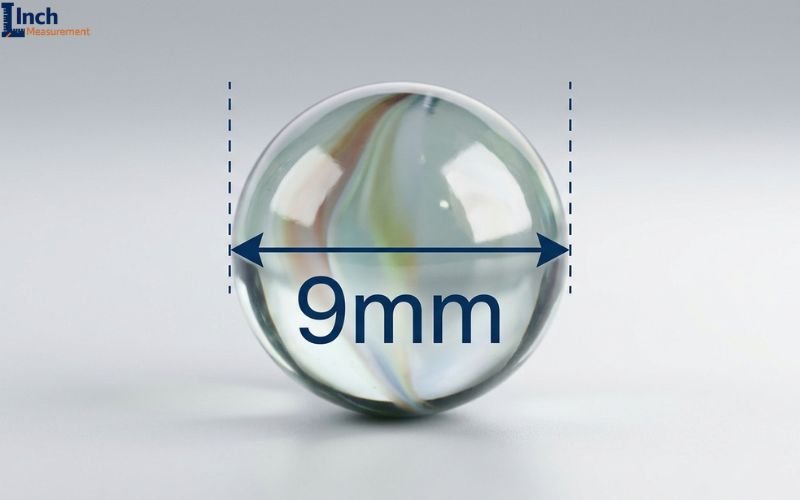
A small marble can be around 9mm in diameter, although marble sizes vary considerably. Its round shape makes it particularly useful for understanding how a diameter works.
Hold a small marble between your fingertips and look at its widest point. That distance across the sphere provides a simple mental picture of a measurement around 9mm.
The smooth glass surface also makes the size easy to recognize. Unlike a flat button, a marble has the same general round shape from different viewing angles, so its width is straightforward to visualize.
If you have several marbles in different sizes, place them beside each other. A small marble around 9mm will look noticeably smaller than a standard larger marble. This side-by-side comparison can make small differences much easier to see.
Medium Craft Bead
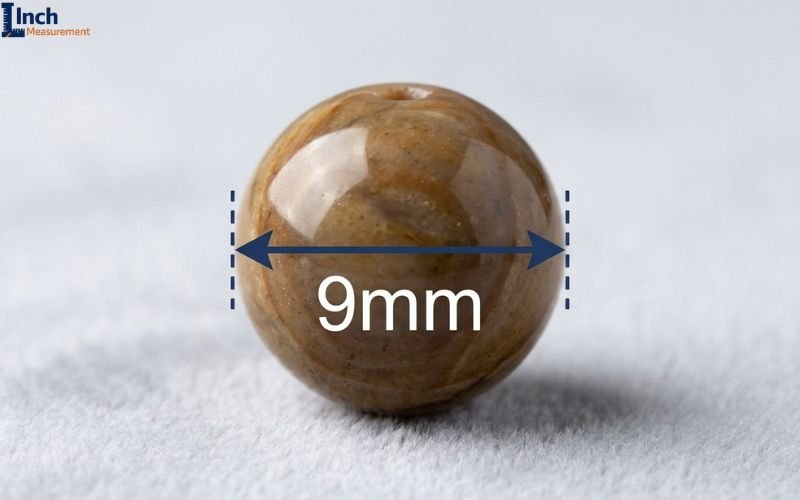
A medium craft bead is another useful example because beads are commonly sold according to their diameter in millimeters. A round bead measuring 9mm across provides a fairly direct representation of the size.
Craft beads are used for bracelets, necklaces, keychains, decorations, and other DIY projects. Their standard sizing makes millimeters familiar to people who regularly work with jewelry supplies.
A 9mm bead has enough presence to be noticeable in a finished bracelet without being extremely large. Smaller beads create a more delicate appearance, while larger beads take up more space and become more prominent.
If you are purchasing beads online, check whether the listed measurement refers to the outside diameter. The hole through the bead will normally have a separate, smaller measurement.
Small Battery Thickness
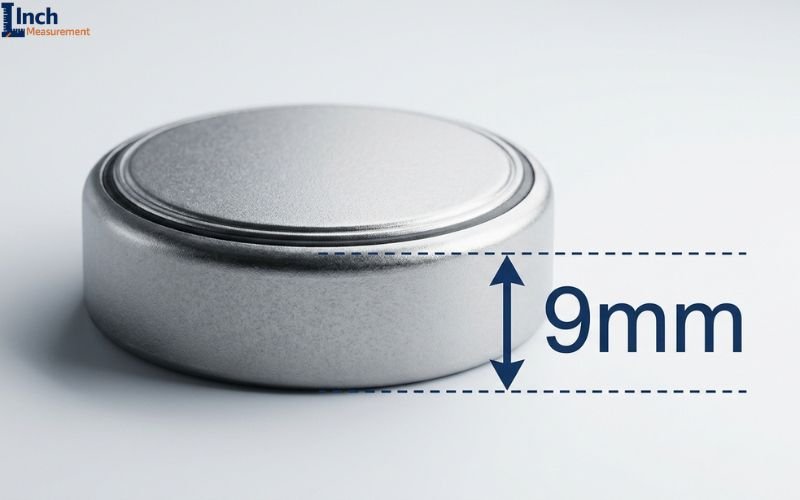
Some compact batteries and electronic components can have dimensions close to 9mm in one direction. The exact size depends heavily on the battery type, so the important point here is the scale rather than a specific battery standard.
Batteries are useful examples because they demonstrate how a few millimeters can affect whether something fits inside a device. A compartment designed for a particular battery size may not have enough room for a thicker replacement.
You may encounter millimeter measurements when buying batteries, electronic components, or replacement parts online. Reading the full specification is essential because a product may have several different dimensions.
A battery that is 9mm thick is still quite slim. It can fit inside many compact products while providing enough physical space for its internal components.
Related Post: How Big Is 7mm? 12 Common Things That Are 7mm Big
Thick Drinking Straw
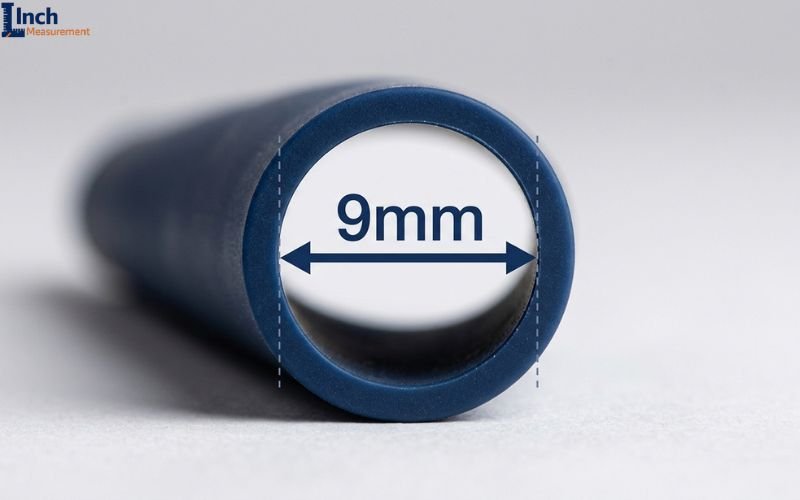
A thick reusable drinking straw can provide another familiar comparison for a measurement close to 9mm. Some straws are designed with wider openings, especially those used for thicker drinks.
The width of a straw is easy to picture because you can see the opening directly. Looking at the circular opening gives you a useful idea of how a small diameter appears in everyday life.
Straws vary widely in size. A thin straw may be considerably narrower, while a smoothie or milkshake straw can be much wider. This makes it useful to compare the opening rather than assuming every drinking straw is around 9mm.
For a simple visual reference, look at the opening of a narrow-to-medium reusable straw. It gives you a practical sense of how much space 9mm represents.
Marker Cap Thickness
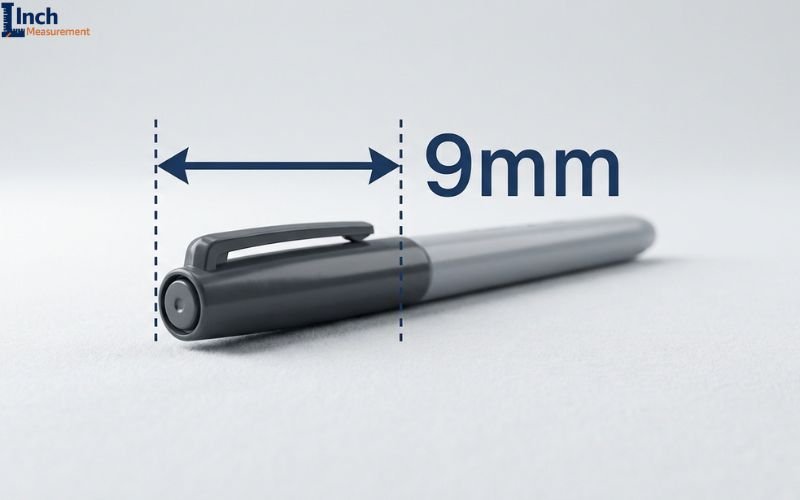
Some slim marker caps can be close to 9mm thick. Markers come in many shapes and sizes, but narrow writing markers can provide a familiar reference for this measurement.
A marker cap needs to protect the writing tip while remaining easy to remove. A relatively slim cap can keep the overall marker compact enough to carry in a pencil case, desk drawer, or pocket.
This example also shows that the same measurement can appear in completely different products. A 9mm dimension might describe a bead in one situation and part of a writing tool in another.
If you compare several markers, you will probably notice that their caps are not identical. Some are noticeably wider, so this should be considered an approximate reference only.
Small Screw Head
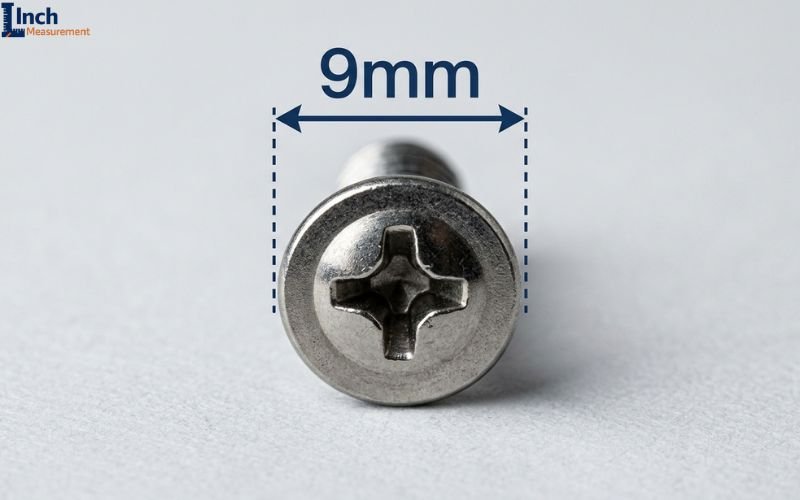
A small screw head can measure around 9mm across, making it a useful hardware comparison. Screws are commonly specified in millimeters, particularly in mechanical, furniture, automotive, and DIY applications.
The key is to identify which part of the screw is being measured. A 9mm screw head does not necessarily mean the screw is 9mm long. The shaft, thread, head, and overall length can all have different measurements.
This distinction matters when buying replacement hardware. A screw might have a head close to 9mm while its total length is several times greater.
If you are working on a repair, use the manufacturer’s specifications or measure the existing screw. Visual comparison can help you understand scale, but it should not be the only method used when an exact fit is required.
Pinky Fingernail Width
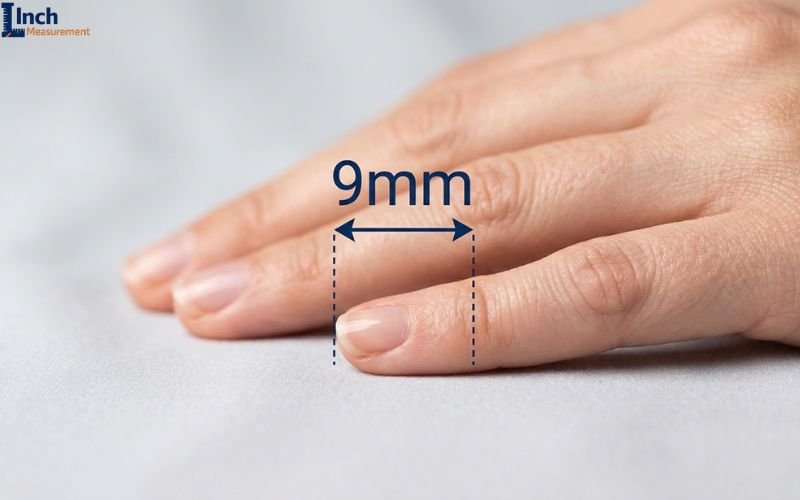
For some adults, the width of the pinky fingernail can be close to 9mm. This makes your own hand a convenient reference when you do not have a measuring tool nearby.
Simply look at the widest part of your pinky fingernail and compare it with the object you are trying to estimate. If they appear similar, the object may be somewhere around the 9mm range.
This method is convenient because your hand is always available. You do not need to carry a ruler when making a quick estimate while shopping or checking a small object.
There is one obvious limitation: everyone’s hands are different. Your pinky nail might be narrower or wider than 9mm, so use this technique only for an approximate comparison.
Related Post: 12 Common Things That Are 10MM Big
Small Metal Washer
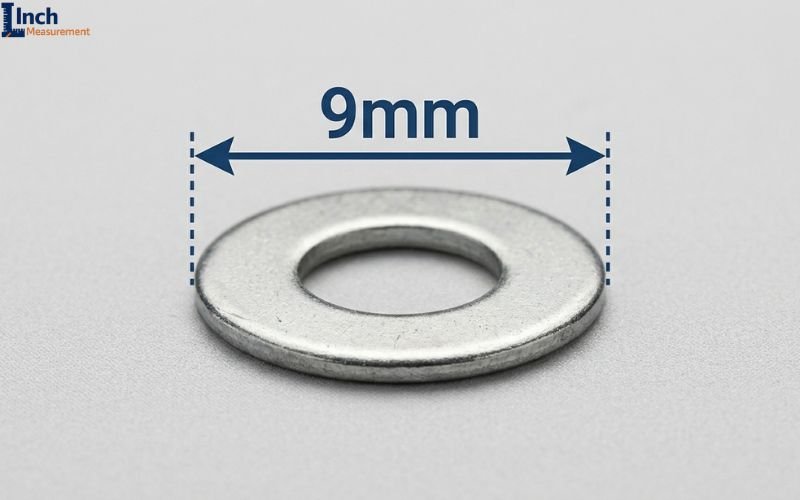
A small metal washer is a helpful hardware reference because washers are designed with several precise dimensions. A washer that uses a 9mm dimension can help you visualize the scale, but you need to check which part of the washer the specification describes.
A washer is a flat metal ring with a hole in the center. It can have an inside diameter, outside diameter, and thickness, all of which are different measurements.
This is a good example of why product specifications need to be read carefully. Seeing “9mm washer” does not always mean the washer’s entire outside diameter is exactly 9mm.
If you are buying washers for a repair, compare the hole size with the bolt or screw being used. The correct match matters more than simply choosing a washer that looks approximately the right size.
Small Hex Nut
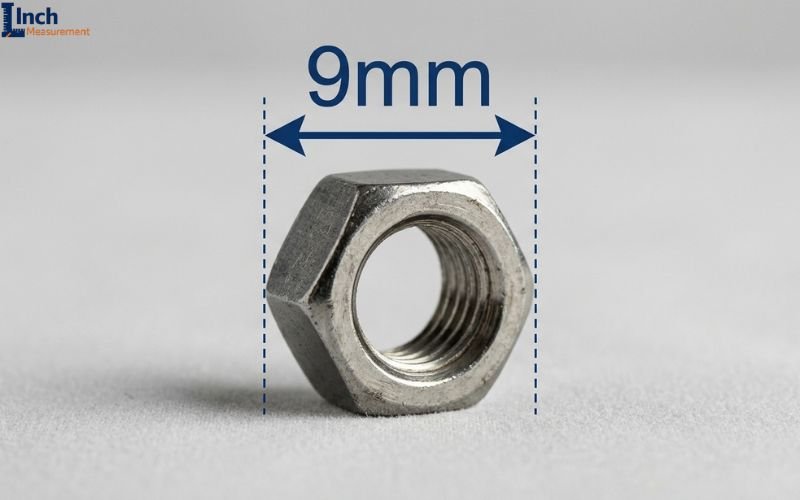
A small hex nut can also help you visualize the 9mm range. Its six-sided shape makes it easy to recognize, and hardware stores commonly sell nuts in many different metric sizes.
There is an important detail here: the number associated with a nut can refer to its thread specification rather than the distance across its outer faces. The outside measurement can therefore be different from the number you see in the product name.
Place several nuts of different sizes together and the differences become obvious. A small change in size can affect which bolt fits and which wrench or socket is needed.
For DIY projects, always match the nut to the correct bolt and thread. A visual comparison is helpful for understanding scale, but the listed specifications should determine which part you purchase.
How Can You Estimate 9mm Without a Ruler?
You can get a rough idea of 9mm by comparing it with familiar everyday objects. These methods are useful when you only need an estimate.
Compare It With a Small Button
A small shirt or craft button can be close to 9mm wide. Compare the object with the button to see if they are about the same size.
Use a Standard Pencil
A standard pencil is usually around 7–8mm thick, so 9mm is slightly wider. Place the object beside the pencil for a quick comparison.
Compare It With Your Fingernail
Your pinky fingernail may be close to 9mm wide. Compare its width with the object to get a rough estimate.
Use a Small Craft Bead
A 9mm craft bead provides a simple physical reference. Compare your object with the bead to judge whether it is around 9mm.
Tips for Judging 9mm by Eye
Small measurements can be surprisingly difficult to estimate. A difference between 8mm and 9mm is only 1mm, but that difference represents more than 10% of the smaller measurement.
Try to compare objects from the same angle. Looking at a round object from the side, for example, can make it appear different from viewing it directly across its diameter. A consistent viewing angle makes comparisons more useful.
Photos can also be misleading. An object shown next to a large phone screen or displayed at a different zoom level may appear much larger than it really is. Online product pictures should give you an idea of the shape, while the written specifications provide the actual dimensions.
Once you have handled a real 9mm object, remembering the size becomes easier. Keeping a known-size bead, washer, or other small reference nearby can help when you frequently work with millimeter measurements.
Related Post: How Big Is 3mm? 12 Common Things That Are 3mm
People Also Ask: How Big Is 9mm?
How big is 9mm in inches?
9mm is approximately 0.354 inches, making it slightly more than one-third of an inch.
Is 9mm smaller than 1 centimeter?
Yes, 9mm is smaller than 1 centimeter because 1 centimeter equals exactly 10mm.
What does 9mm look like?
9mm looks similar to the width of some small pencil erasers, buttons, beads, and fingernails.
How can I measure 9mm without a ruler?
Compare the object with a small bead, pencil eraser, button, or your pinky fingernail for a rough estimate.
Is 9mm bigger than 1/4 inch?
Yes, 9mm is larger than 1/4 inch, which measures approximately 6.35mm.
What common objects are about 9mm?
Small buttons, craft beads, pencil erasers, screw heads, washers, and some marker caps can be close to 9mm.
Conclusion
How Big Is 9mm? It is a small measurement equal to 0.9cm or approximately 0.354 inches. Familiar objects make it easier to picture than the number alone, especially when you compare it with a pencil eraser, button, bead, marble, or small piece of hardware.
Remember that these objects can vary in size, so use them for visual reference rather than precision measuring. When an exact dimension matters, check the manufacturer’s specifications or measure the object directly with a ruler or caliper.
