
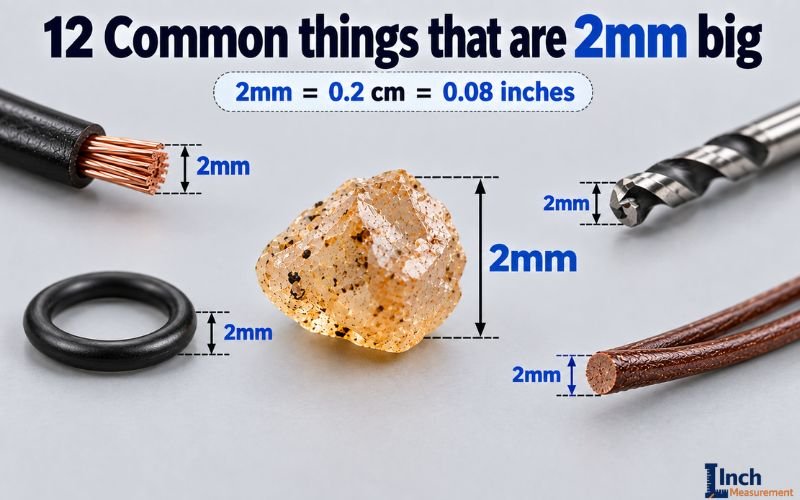
How big is 2mm? Two millimeters is a very small measurement equal to 0.2 centimeters or about 0.0787 inches. It is less than one-tenth of an inch, so it can be hard to picture until you compare it with something familiar.
You may come across 2mm while shopping for craft supplies, checking a small screw, choosing wire, looking at jewelry, or measuring a tiny gap. A ruler with millimeter markings makes it easy to check, but everyday objects can also give you a useful visual reference.
Below, I’ll show you 12 common things that are close to 2mm in size. Some are about 2mm thick, while others have a width, hole, or diameter near this measurement. Since natural and manufactured objects vary, these examples should be treated as visual comparisons rather than exact measuring tools.
How Big Is 2mm in Inches?
Two millimeters equals 0.0787 inches, which is a little smaller than 0.08 inches. That sounds extremely small because it is. If you look at the markings on a metric ruler, 2mm is only two of the tiny spaces between centimeter marks.
A useful way to picture it is to look at a small seed, thin wire, or tiny screw. These objects can give your eyes a better sense of scale than the number alone. A 2mm measurement is also much smaller than a 5-inch phone screen or a 7mm drill bit, so those larger measurements can help put it into perspective.
The exact appearance depends on what you are measuring. A 2mm hole looks different from a 2mm-thick object, even though both have the same measurement. That distinction matters when buying craft materials, hardware, jewelry components, or replacement parts.
How to Measure 2mm Without a Ruler
You can estimate 2mm even if you do not have a ruler nearby.
Using Your Fingers
The thickness of a fingernail is often close to 1mm. Two fingernail thicknesses together are about 2mm.
Using Common Objects
A mustard seed is around 2mm wide. Looking at one can help you estimate this tiny size quickly.
Using Paper or Cards
A standard credit card is about 1mm thick. Stacking two cards together gives you a good idea of what 2mm looks like.
Common Things That Are About 2mm in Size
The examples below were chosen because they give you practical ways to picture a very small measurement. Some are objects you may already have at home, while others are common in crafts, electronics, tools, or everyday products.
The sizes are approximate because manufactured products and natural objects are not all identical. Use the table as a quick visual reference before reading the individual examples.
| Common Item | Approximate Size |
|---|---|
| Mustard seed | 2 Millimeters |
| Thick pencil lead | 2 Millimeters |
| Small craft bead hole | 2 Millimeters |
| Thin headphone wire | 2 Millimeters |
| Mechanical pencil tip | 2 Millimeters |
| Tiny screw | 2 Millimeters |
| Small coin edge | 2 Millimeters |
| Coarse sand grain | 2 Millimeters |
| Small jewelry cord | 2 Millimeters |
| Small drill bit | 2 Millimeters |
| Thin rubber O-ring | 2 Millimeters |
| Small electronic cable | 2 Millimeters |
Mustard Seed
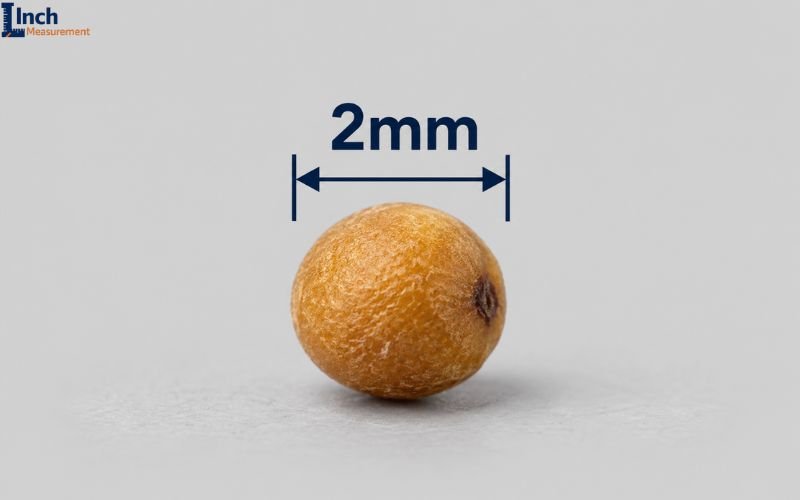
A mustard seed is one of the easiest natural objects to use when you want a rough idea of 2mm. Many mustard seeds are only a few millimeters across, with some varieties sitting close to the 2mm range.
Place one on a fingertip and its size becomes much easier to understand. It is small enough to look almost like a tiny dot from a short distance, yet you can still pick it up between your fingers. That makes it a handy comparison for people who are unfamiliar with millimeter measurements.
There is plenty of variation between different types of mustard seeds, so do not use one as a precision measuring tool. A seed may be smaller or larger than 2mm.
Still, for a simple question such as what does 2mm look like, a mustard seed gives you a surprisingly useful reference. It also works well for explaining tiny measurements to children because the object is familiar and easy to handle.
Thick Pencil Lead
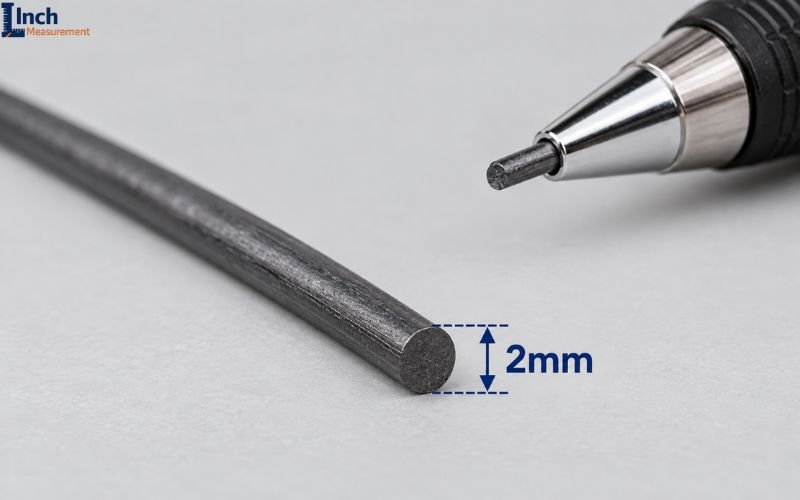
Some thick mechanical and drawing pencil leads are around 2mm in diameter. If you have used a drafting pencil or an art pencil with a chunky lead, you may already have a 2mm comparison sitting on your desk.
The lead looks narrow when viewed by itself, but its round diameter becomes easier to appreciate beside an ordinary pencil. A standard thin writing lead is much smaller, so placing different leads side by side can show how much difference a millimeter or two makes.
Artists sometimes prefer thicker leads for sketching because they can produce broader marks and can be sharpened or shaped for different effects. A 2mm lead is also sturdy enough for repeated use without feeling overly bulky.
If you are shopping for replacement leads, check the diameter carefully. A lead designed for a 2mm holder will not necessarily fit a pencil made for a smaller lead size.
Related Post: How Big Is 1mm? 12 Common Things That Are 1mm Long
Small Craft Bead Hole
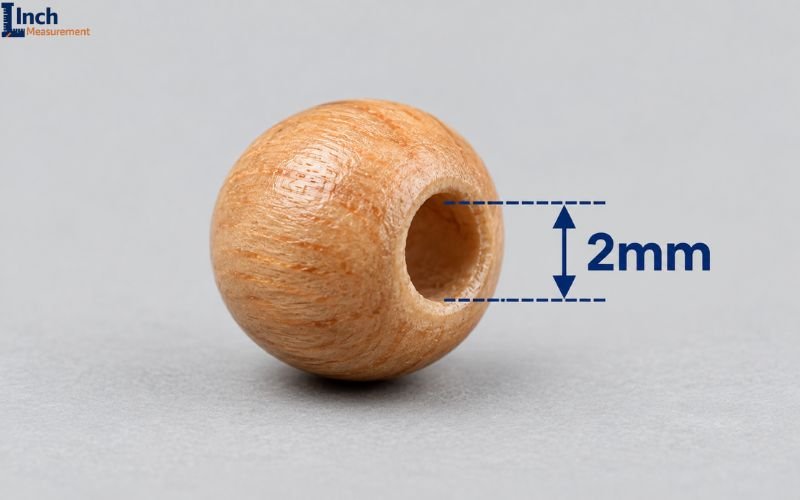
The hole through a small craft bead can be close to 2mm, especially in beads designed for thin jewelry cord or wire. The hole is tiny, but it is large enough to see clearly when you hold the bead close to your eyes.
This example is particularly useful because it shows that 2mm does not always describe the outside size of an object. Here, the measurement refers to an opening. A bead itself could be much larger than 2mm while its central hole is approximately this wide.
Anyone making bracelets, necklaces, or small decorative projects knows how much a tiny size difference can matter. A cord that is just slightly too thick may refuse to pass through the bead.
For craft shopping, look at both the bead size and hole size. They describe different parts of the product and should not be treated as the same measurement.
Thin Headphone Wire
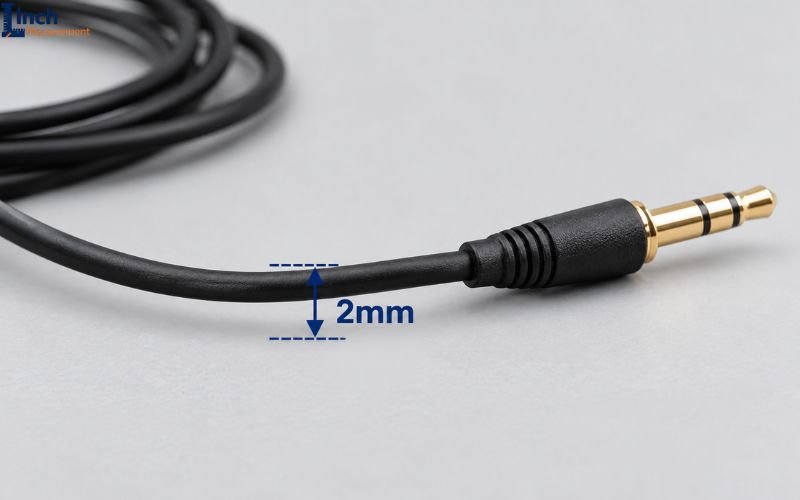
Some thin headphone and audio cables have an outer diameter close to 2mm. The measurement refers to the entire cable, including its protective outer covering, rather than the metal conductor hidden inside.
A cable this thin can feel almost weightless in your hand. It is flexible enough to bend easily, which is useful for earphones and other small audio devices that need to move with the user.
Cable thickness varies widely, though, so not every headphone wire will be 2mm. A modern cable may be thinner, thicker, or have additional insulation and shielding that changes its outside diameter.
Still, a thin cable is a convenient household reference. If you are trying to judge how big is 2mm, look at a narrow wire from the side rather than from the end. The side view gives you a better sense of its diameter.
Mechanical Pencil Tip
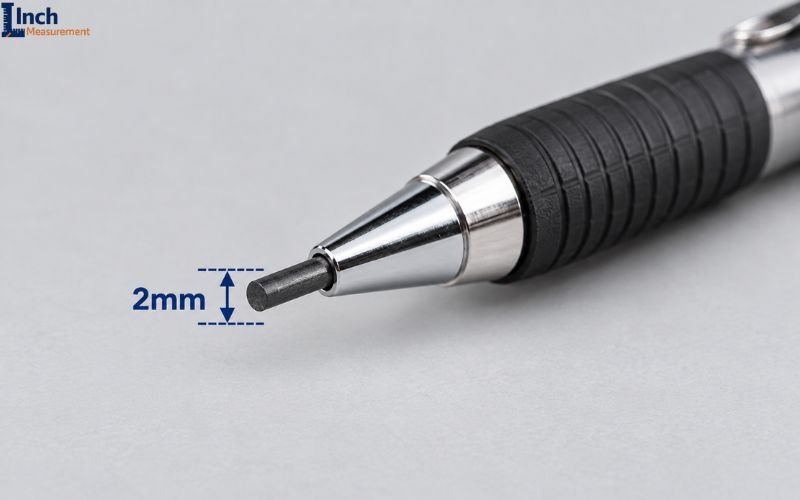
The metal tip of a mechanical pencil can provide another useful comparison for 2mm. Some thicker drawing pencils have a noticeably broader tip than the tiny tips found on ordinary mechanical pencils.
Look closely at the metal section where the lead comes out. Its opening and surrounding parts are small enough to show how little space 2mm actually represents.
This example is especially helpful for students, artists, and office workers because pencils are familiar objects. You do not need to imagine an abstract measurement; you can simply inspect the tool in your hand.
Keep in mind that pencil tips come in different designs. A 0.5mm mechanical pencil, for example, has a much smaller lead size than a 2mm drafting pencil. Checking the product specification is the safest way to know the actual size.
Tiny Screw
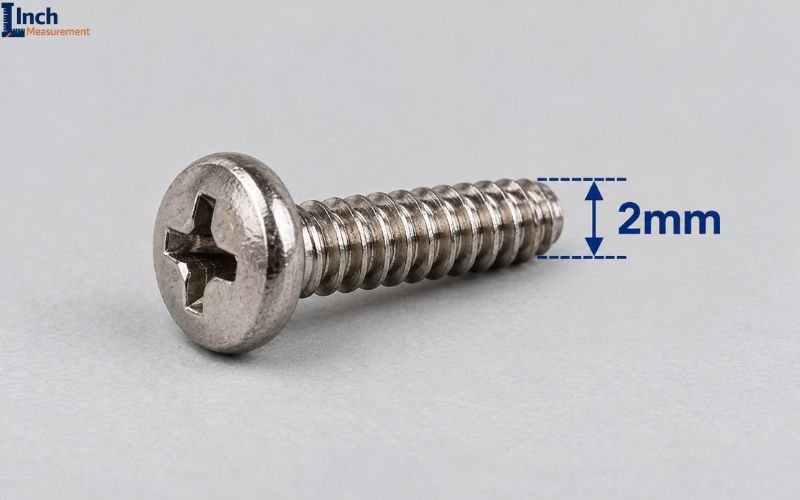
Small screws used in electronics, watches, glasses, toys, and other delicate products can have a diameter close to 2mm. Their size makes them a good example of how millimeters are used in small hardware.
Pick up a tiny screw and compare its shaft with the edge of a ruler. The difference between 1mm and 2mm can seem surprisingly large once you see both sizes beside each other.
These screws are usually designed for specific products, so appearance alone is not enough when replacing one. Thread size, length, head shape, and pitch can all matter.
A screw that looks close to 2mm may still be the wrong replacement. If you are repairing glasses or electronics, take the original screw with you or check the manufacturer’s specifications before buying another.
Related Post: 9 Common Things That Are 3mm Big
Small Coin Edge
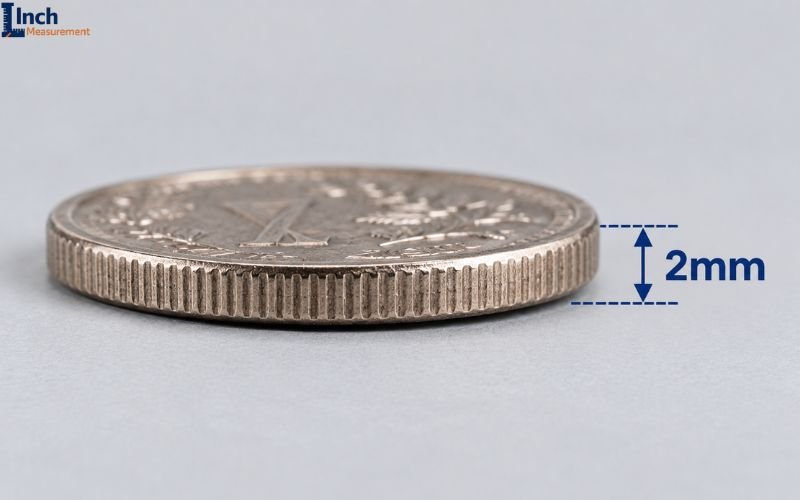
The edge of some coins can be around 2mm thick, making a coin a convenient object for understanding this tiny measurement. Coins are easy to find and have a solid, clearly defined edge.
Hold a coin sideways and look directly at its thickness. You will notice that the edge is very thin compared with the coin’s overall diameter. That difference helps show why a 2mm measurement can be difficult to estimate from a normal front view.
Coin dimensions vary by country, denomination, and design, so one particular coin should not automatically be treated as exactly 2mm. Some are thinner and some are thicker.
Even with that limitation, a coin works well for a quick visual comparison. It is especially useful when you need to decide whether an object is closer to 1mm, 2mm, or several millimeters thick.
Coarse Sand Grain
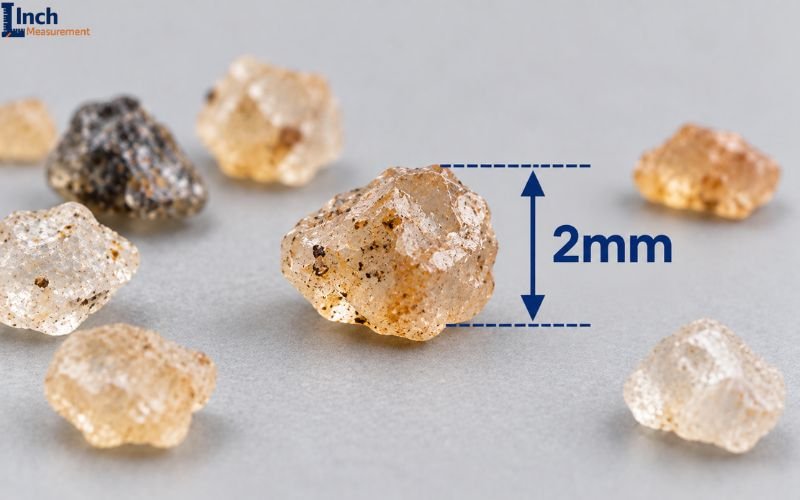
Fine sand grains are usually much smaller than 2mm, but some coarse sand particles can approach this size. Larger grains are easier to see individually and make a useful natural comparison.
Try placing a little coarse sand on a sheet of white paper. The larger pieces stand out more clearly than they do against a beach or dirt surface. This gives you a better sense of just how small 2mm really is.
Sand is not uniform, so this example should only be used for estimation. Grain size changes depending on where the sand comes from and how it was processed.
The comparison is still useful because it shows the scale of millimeters in nature. A grain that looks tiny from across a room can become surprisingly noticeable when viewed closely.
Small Jewelry Cord
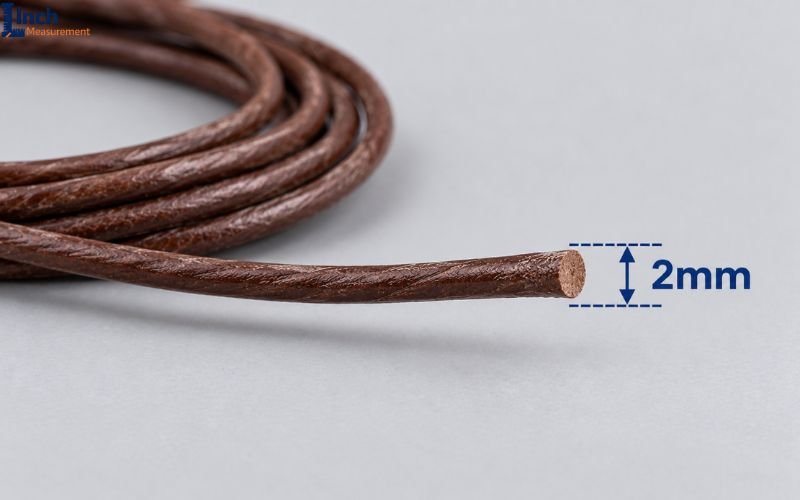
Thin jewelry cord, elastic string, and craft cord can sometimes be around 2mm thick. This size is common enough in craft projects to make cord a useful comparison when judging small thicknesses.
Lay a piece of cord flat on a table and look at it from the side. Its diameter can be difficult to judge because flexible materials flatten or bend. That is one reason product listings usually give the stated diameter in millimeters.
A 2mm cord is noticeably thicker than very fine jewelry thread but still small enough to pass through many craft components. The right size depends on the bead hole, clasp, and type of project.
If you are buying cord online, do not rely only on photographs. A picture can make a 2mm cord appear much thicker or thinner depending on the camera angle and surrounding objects.
2mm Drill Bit
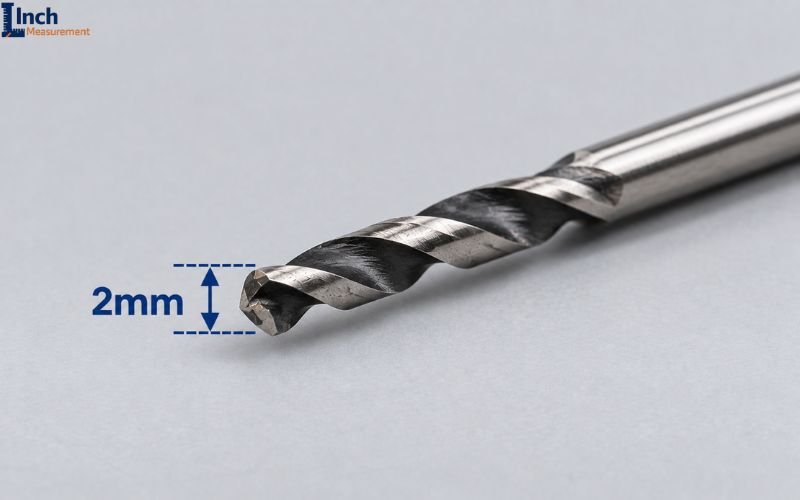
A 2mm drill bit is an exact manufactured example of this measurement. Unlike a mustard seed or piece of sand, the diameter is intentionally made to a specific size.
Place the bit beside a ruler with metric markings and the 2mm diameter becomes much easier to understand. It is extremely narrow compared with a 10mm drill bit, yet large enough to make a small, controlled hole in suitable material.
Small drill bits are commonly used for detailed work, model making, electronics projects, jewelry, and other precision tasks. They must be handled carefully because thin bits can bend or break if used incorrectly.
This example also shows why millimeters are useful. Saying that a drill bit is 2mm immediately communicates a level of precision that would be awkward to express using a fraction of an inch.
Related Post: 10 Common Things That Are 5mm Big
Thin Rubber O-Ring
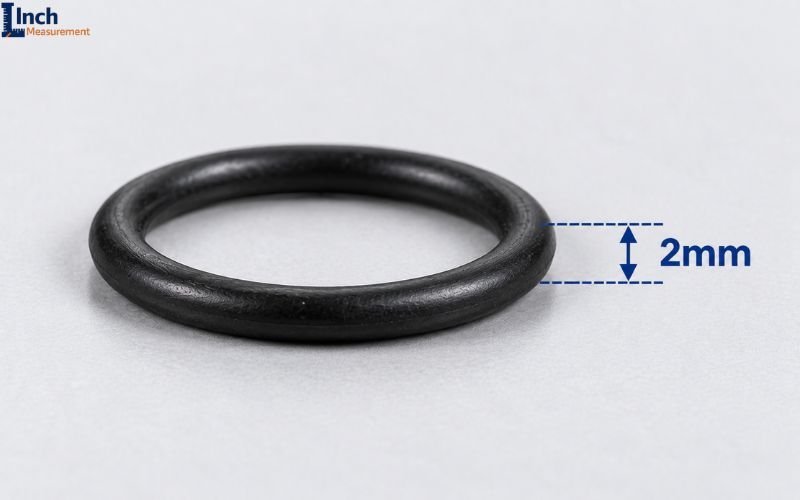
A small rubber O-ring can have a cross-section close to 2mm. O-rings are used to create seals in plumbing parts, machinery, tools, bottles, and many other products.
The important measurement here is the thickness of the rubber ring itself, not the overall diameter of the circle. A small O-ring might have an outside diameter of several millimeters while the rubber material is only around 2mm thick.
Rubber also changes shape when squeezed, so measuring it while compressed can give you a misleading result. For replacement parts, use the manufacturer’s stated dimensions whenever possible.
If you are holding one in your hand, however, an O-ring can provide a clear visual example of a small but solid 2mm-sized material thickness.
Small Electronic Cable
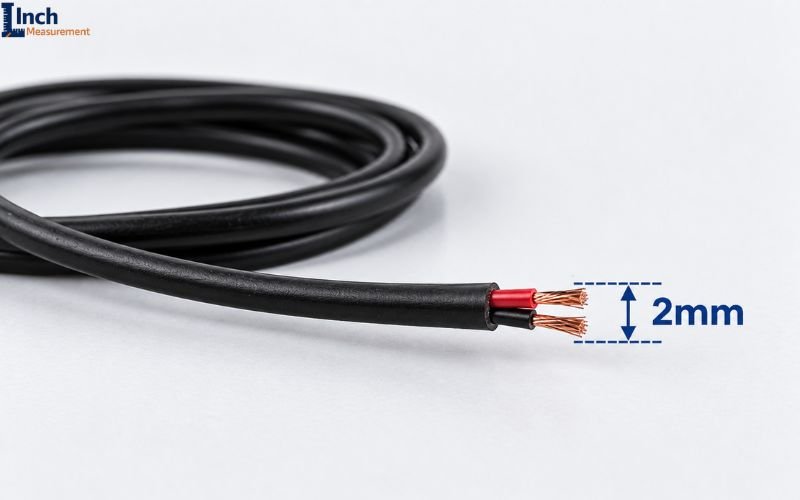
A small electronic cable can have an outer diameter of about 2mm, depending on its construction and purpose. You may see cables of this size in small devices, accessories, sensors, and other compact electronics.
The outside diameter includes the insulation surrounding the internal wires. That means the actual metal conductor inside can be much thinner than 2mm.
Cable measurements matter because space inside electronics is limited. A cable that is slightly too thick may be difficult to route through a narrow opening or around a compact component.
For a quick visual comparison, hold a thin cable beside a standard ruler. You may be surprised by how little 2mm looks when viewed against centimeter markings. It is small, but it is still clearly visible.
Tips for Estimating 2mm by Eye
Judging a 2mm measurement by eye takes some practice. Start with objects that have a reasonably consistent shape, such as a drill bit, pencil lead, or small piece of wire.
Lighting also makes a difference. A tiny object viewed in poor light may look smaller than it really is, while a close-up view can make it seem much larger. Place the object next to a ruler, coin, or other familiar reference when possible.
Try not to judge flexible objects while they are bent or compressed. A rubber ring, cord, or cable can change shape and make its thickness difficult to estimate.
For a quick check, compare the object with something known to be near 2mm. If the measurement affects a purchase, repair, or technical project, switch from estimation to an actual measuring tool.
Common Mistakes When Judging 2mm
One common mistake is confusing length, width, thickness, and diameter. An object can be 2mm thick while being 20mm long. Those are completely different measurements.
Another mistake is assuming every example listed as “about 2mm” is exactly 2mm. Natural objects such as seeds and sand vary in size, while manufactured products can have different specifications from one brand to another.
Photos can also be misleading. A close-up photograph may make a tiny bead look large, while a wide photograph can make a 2mm cable almost disappear.
If you are buying something based on size, read the product dimensions carefully. A listing might give measurements in millimeters, centimeters, or inches, and sometimes it gives several dimensions for the same object.
Related Post: 8 Common Things That Are 7mm Big
FAQs: People Also Ask
How big is 2mm in inches?
2mm equals about 0.0787 inches, which is slightly less than one-tenth of an inch.
What does 2mm look like?
2mm looks very small, similar in scale to a mustard seed, thin cord, tiny screw, or narrow pencil lead.
Is 2mm visible to the human eye?
Yes, 2mm is visible, although its small size makes it difficult to judge accurately without a reference.
Can I measure 2mm without a ruler?
You can estimate 2mm without a ruler by comparing it with a small seed, thin wire, or another familiar object.
Is 2mm the same as 0.2cm?
Yes, 2mm is exactly 0.2cm, because there are 10 millimeters in one centimeter.
Is a 2mm drill bit really 2mm wide?
A 2mm drill bit is designed to have a 2mm diameter, although manufacturing tolerances can cause tiny differences.
Conclusion
A measurement of 2mm is tiny, but it becomes much easier to understand when you see it beside familiar objects. A mustard seed, pencil lead, small screw, cable, bead hole, or 2mm drill bit can all give you a useful sense of scale.
Remember that everyday comparisons are approximate. If you need an exact measurement for a repair, craft project, or purchase, use a ruler or caliper rather than relying on your eyes. For a quick estimate, place the object beside a known 2mm reference and compare them directly.
