
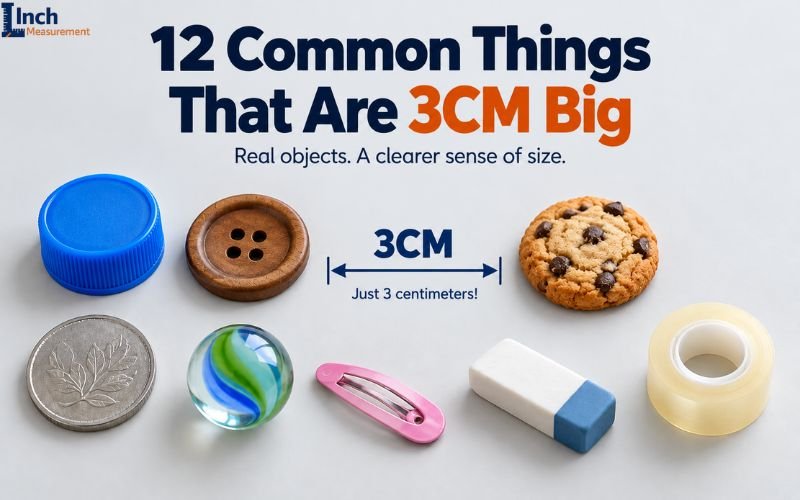
3cm is equal to 30 millimeters or about 1.18 inches. It is a little bigger than 1 inch, so it is still a fairly small measurement. If you are trying to picture how big is 3cm, think about the width of a bottle cap, a large button, or a small cookie.
Three centimeters can be surprisingly hard to picture when you only see the number. On a ruler, the distance is easy to identify, but without one, 3cm can feel abstract. It is short enough to fit easily between your fingers, yet it is noticeably larger than 1cm or 2cm. That small difference matters when you are buying products, making crafts, checking the size of an accessory, or following measurements in a DIY project.
Knowing that 3cm equals 30mm also helps because many product listings use millimeters instead of centimeters. In inches, 3cm is about 1.18 inches, which gives you another familiar reference point. Once you connect the number to everyday objects, it becomes much easier to judge the size at a glance.
How Big Is 3CM?
A measurement of 3 centimeters equals 30 millimeters and approximately 1.18 inches. That makes it slightly longer than 1 inch but still a small everyday measurement. If you place a 1-inch object beside something that is 3cm, the difference is easy to notice. Three centimeters is about 18% longer than 1 inch, so it can look bigger than you might expect from the number alone.
For a quick visual idea, picture the width of a bottle cap, large button, or poker chip. These objects can be close to 3cm, although their exact sizes vary. You may also see 3cm used for jewelry, craft supplies, toys, buttons, and small hardware. If a product is listed as 3cm wide, imagine something just over 1 inch across.
A Simple Way to Picture 3CM
Before looking at individual objects, it helps to build a basic mental picture of the measurement. 3cm is 30mm, or roughly 1.18 inches, so imagine a short line extending just beyond the 1-inch mark on a ruler. That difference may seem small, but it is enough to change how an object looks and feels.
For a quick estimate, compare 3cm with something familiar. A bottle cap, large button, poker chip, or small cookie can give you a useful visual reference. You can also place two fingertips together, although finger widths vary from person to person. These comparisons are not substitutes for a ruler when precision matters, but they are handy for shopping, crafts, and everyday size checks.
The most useful thing to remember is 3cm = 30mm = 1.18 inches. If you see any of these measurements in a product description, you are looking at essentially the same length.
12 Common Things That Are 3CM Big
12 Common Things That Are 3CM Big — Discover 12 familiar objects that can help you picture exactly how big 3cm is.
From bottle caps and buttons to cookies and small accessories, these examples make 3cm easy to understand.
You’ll also learn simple ways to estimate 3cm without a ruler.
| Common Thing | Approximate 3cm Comparison |
|---|---|
| Bottle Cap | About 3cm across |
| Large Clothing Button | About 3cm wide |
| Garlic Clove | About 3cm long |
| Small Cookie | About 3cm wide |
| Toy Building Block | About 3cm wide |
| Keychain Charm | About 3cm long |
| Poker Chip | About 3cm across |
| Large Marble | About 3cm wide |
| Tape Roll | About 3cm wide |
| Large Coin | Close to 3cm across |
| Small Hair Clip | Around 3cm long |
| Mini Eraser | Around 3cm long |
Bottle Cap
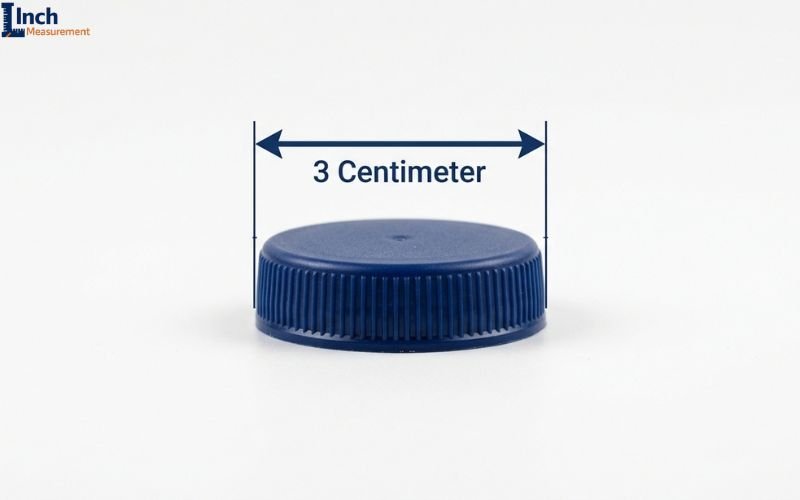
A bottle cap is one of the easiest household objects to use when trying to understand how big is 3cm. Many plastic drink bottle caps have a diameter close to this measurement, although cap sizes differ depending on the bottle.
Put a bottle cap flat on a table and look at its widest point from one side to the other. If it measures around 3cm, you are looking at roughly 1.18 inches.
The round shape is especially useful because 3cm describes the cap’s diameter rather than its height. This gives you a simple mental picture: a small circular object that fits comfortably between your fingers.
Bottle caps can also help when shopping online. If a product is advertised as 3cm wide, compare its pictured width with a bottle cap before ordering. It can prevent the common mistake of assuming that a small measurement will look larger in person.
Large Clothing Button
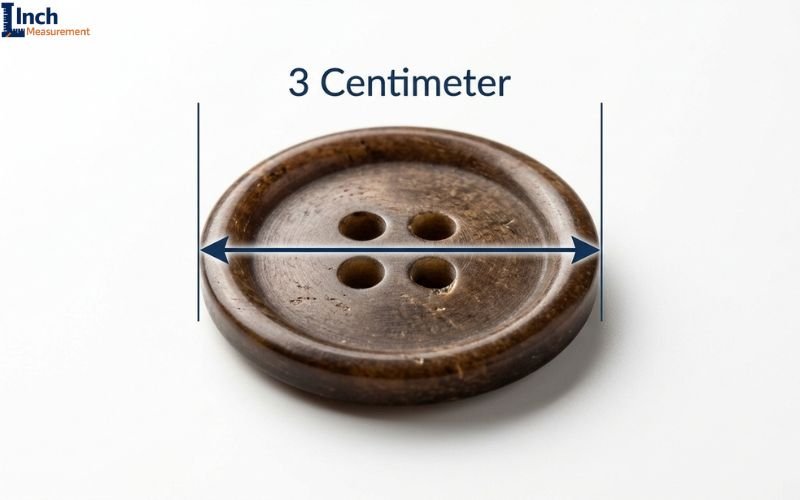
A large clothing button can be close to 3cm across. Regular shirt buttons are often smaller, while coat, jacket, decorative, and craft buttons can reach this size.
Hold a large button between your thumb and finger and look at its full width. A button around 3cm is roughly 1.18 inches across, making it noticeably larger than the tiny buttons commonly found on dress shirts.
This comparison is particularly useful if you work with sewing or crafts. A pattern might call for a 3cm button, and knowing what that looks like can help before you purchase a pack.
The thickness of the button does not need to be 3cm. Usually, the relevant measurement is its diameter from one edge to the opposite edge.
Related Post: 10 Common Things That Are About 4mm
Garlic Clove
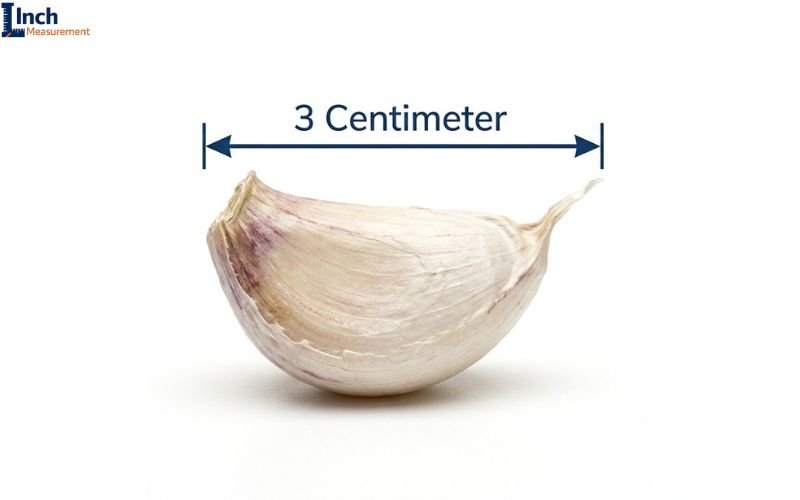
A medium or large garlic clove can give you a useful idea of 3cm in length. Garlic cloves are naturally irregular, so they will not provide an exact measurement, but many individual cloves are somewhere around this size.
Place a garlic clove beside a ruler and measure it from end to end. You may find that one clove is close to 3cm, while another is shorter or longer.
Garlic is a useful comparison because it gives you a three-dimensional reference. A coin or button mainly shows width, while a garlic clove lets you think about length, thickness, and overall volume.
If a recipe, craft project, or food-related measurement calls for something around 3cm long, a garlic clove can give you a rough visual estimate before you reach for a measuring tool.
Small Cookie
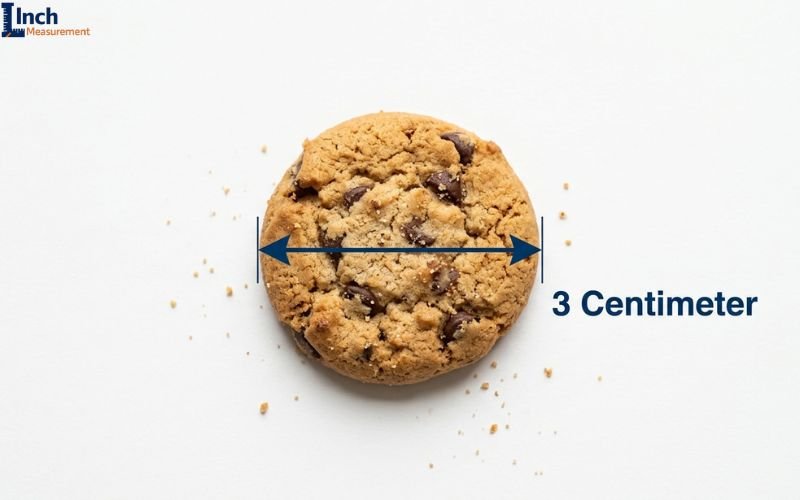
A small cookie can be close to 3cm wide, especially mini cookies or small biscuits. Food sizes vary a lot, so this is best used as a visual comparison rather than an exact measurement.
Imagine a small round cookie sitting in your palm. Its diameter may look only slightly larger than an inch. That is roughly the appearance of a 3cm circle.
This example is handy because most people have seen cookies of different sizes. A standard large cookie may be much wider than 3cm, while a mini cookie can be much closer.
If you are making cookies and want each one to be about 3cm before baking, remember that dough can spread in the oven. For accurate portions, measuring the dough is better than relying on appearance alone.
Toy Building Block
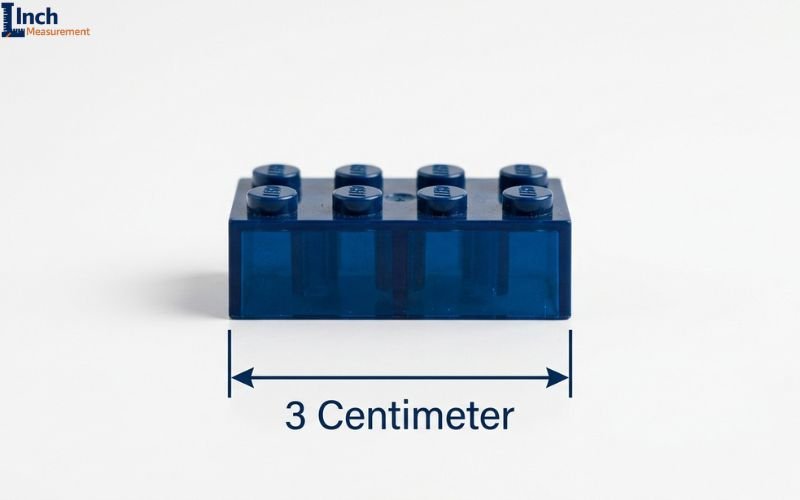
Some small toy building blocks have dimensions close to 3cm. Their square or rectangular shape makes them particularly useful for understanding the measurement.
Round objects can make size comparisons a little harder because you have to think about their diameter. A small block gives you straight edges, so the distance from one side to the other is easier to see.
A 3cm block is about 1.18 inches across. It is small enough to sit between your fingers but large enough to see clearly on a table.
This can also be a useful way to explain centimeters to children. Instead of giving them a number and asking them to imagine it, place a small building block next to a ruler and point out the 3cm mark.
Keychain Charm
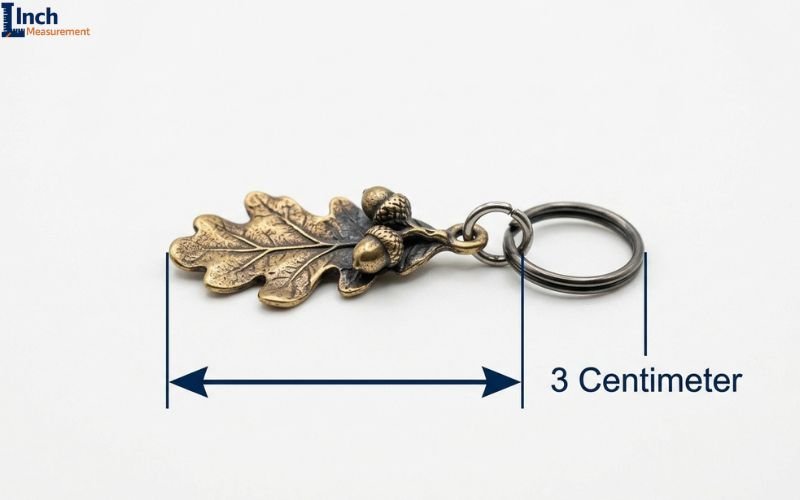
Small keychain charms often measure around 3cm in length or width. They come in many shapes, though, so one charm may be 3cm long while another is only 2cm or 4cm.
A charm around this size is large enough to show a simple symbol, letter, or design without becoming bulky. It also gives a good idea of how small a 3cm accessory can look when attached to a set of keys or a bag.
This comparison is useful when buying accessories online. Product photographs can make small objects appear much larger than they really are, especially when there is no familiar object beside them.
If the listing says a charm is 3cm long, picture something just over 1 inch from end to end.
Related Post: 10 Common Things That Are 10cm BIg
Poker Chip
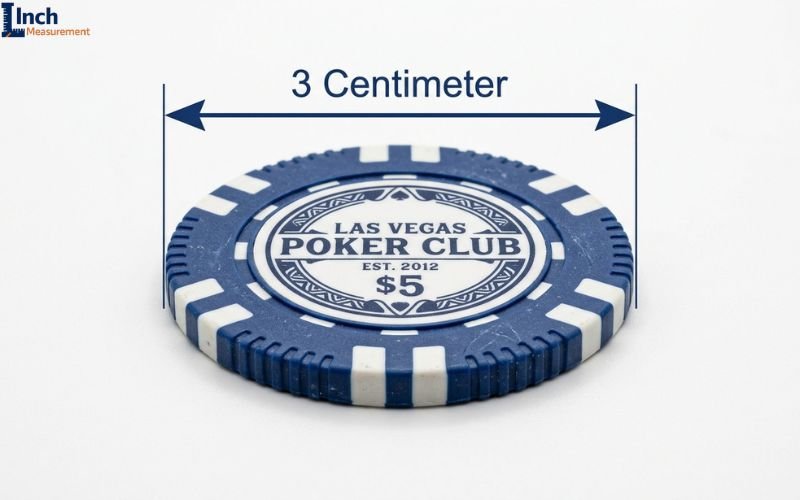
A standard poker chip is another familiar circular object that can be close to 3cm in diameter. Exact chip sizes vary, but many are around this general range.
Place the chip flat on a table and imagine a straight line from one edge through the center to the other edge. That distance gives you the diameter.
Poker chips are helpful because their circular shape is easy to recognize. You can also stack several chips to get a better sense of how small 3cm really is.
For example, if you are looking at a product described as having a 3cm circular surface, imagining the face of a poker chip may be easier than trying to visualize 30mm.
Large Marble
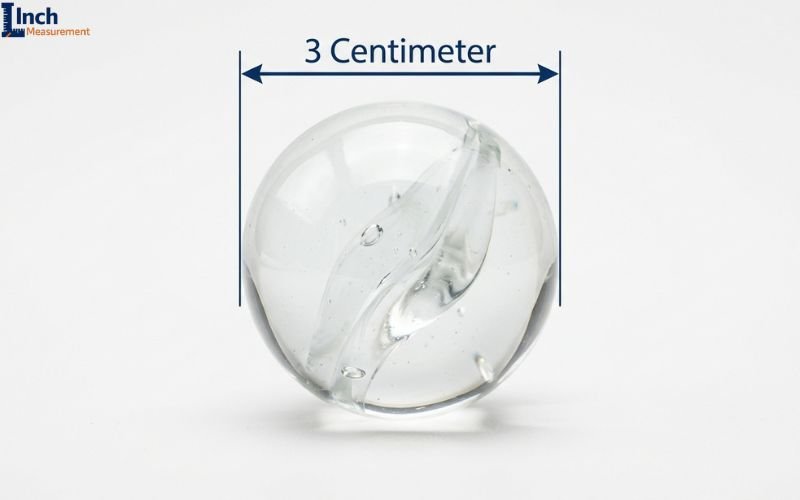
A large marble or decorative glass marble can be around 3cm wide. Smaller toy marbles are usually less than this, so it is worth checking the particular marble size before using one as a comparison.
A 3cm marble has a diameter of about 1.18 inches. Because it is round in every direction, it also helps you understand that 3cm is not simply a flat line.
Put one in your palm and compare it with a smaller marble. The difference becomes much easier to notice than when you only look at the numbers.
Large decorative marbles are also useful for craft projects, vases, and decorations. If a craft design calls for an object around 3cm in diameter, one of these can provide a quick visual reference.
Tape Roll
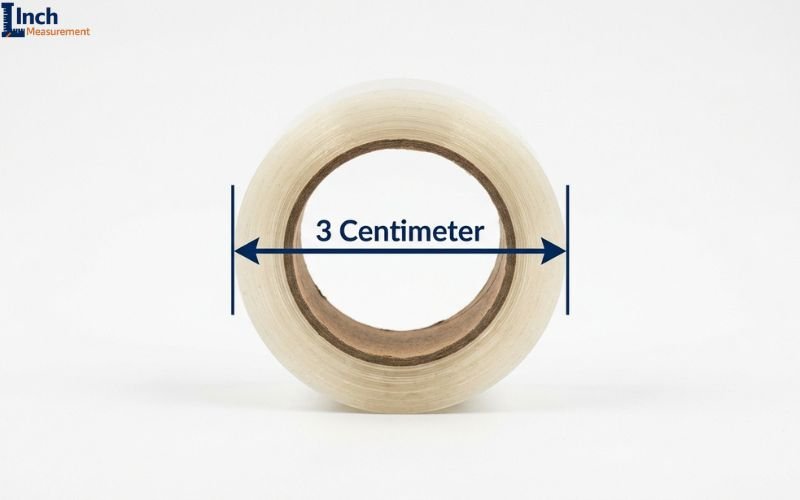
The width of some small tape rolls can be close to 3cm. This is another useful office or household reference because tape comes in many widths.
Do not confuse the width of the tape itself with the diameter of the entire roll. A tape roll may have a much larger outside diameter while its tape width is only around 3cm.
This distinction matters when reading product dimensions. A listing might say that a roll is 3cm wide, which means the strip or roll has that width from one side to the other.
For comparison, a 3cm width is slightly longer than a 1-inch measurement. If you have a measuring tape with both metric and imperial markings, you can see this difference very clearly.
Large Coin
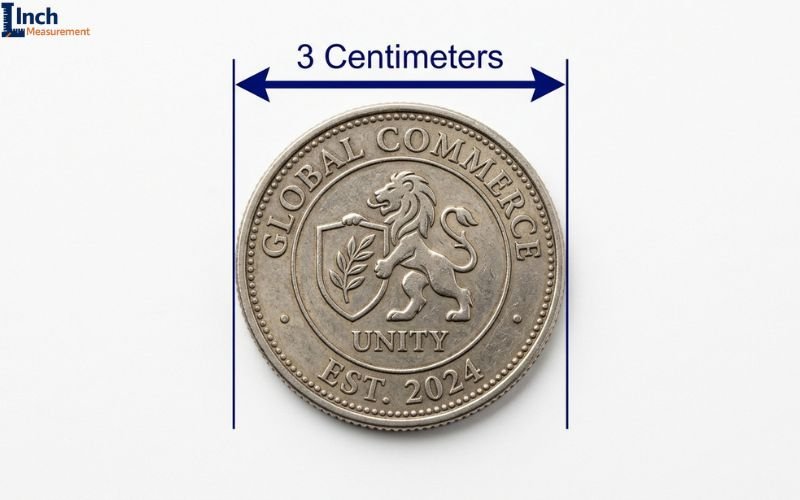
Some large coins can be close to 3cm in diameter. Coin sizes vary by country and denomination, so there is no single coin that should be treated as an exact 3cm reference everywhere.
Still, a larger coin can help you picture the measurement. Place the coin on a flat surface and look at its widest point. If its diameter is close to 30mm, it gives you a good real-world example.
Coins are especially convenient because their sizes are fixed. If you know the diameter of a particular coin, you can use it as a reference whenever you need to estimate a small measurement.
This can be helpful for jewelry, small hardware, crafts, and other situations where dimensions are given in millimeters or centimeters.
Related Post: 9 Common Things That Are 5cm Big
Small Hair Clip
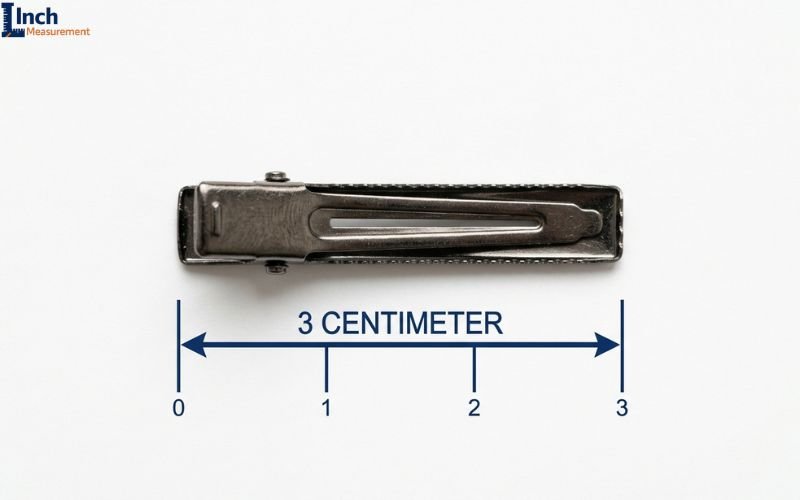
A small hair clip can be around 3cm long, particularly the compact clips designed to hold small sections of hair.
Hair clips are useful for understanding length because they have an obvious beginning and end. Place one next to a ruler and measure from its longest point. A clip around 3cm will be just a little longer than 1 inch.
The actual size can vary significantly between brands and designs. A small decorative clip might be 3cm, while a larger claw clip could be several centimeters longer.
If you are buying hair accessories online, check the listed dimensions rather than judging size from the product photograph. A 3cm clip will look quite small when held in an adult hand.
Mini Eraser
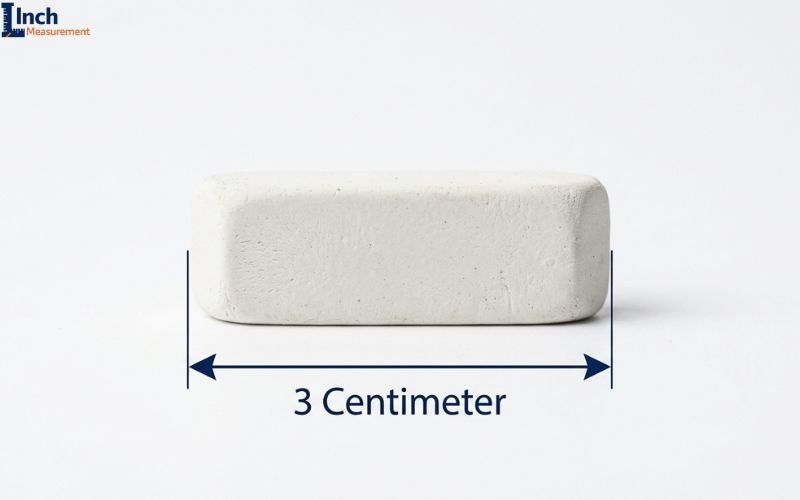
A small rectangular eraser can be close to 3cm long. School and stationery erasers come in many shapes, so some are much longer, but compact erasers often provide a useful reference.
A 3cm eraser measures about 1.18 inches from end to end. Its straight edges make the measurement easy to understand.
Erasers are particularly useful for children learning about centimeters. You can put one next to a ruler, point to the 3cm mark, and then compare the physical object with the number.
This example also shows why dimensions need context. An eraser could be 3cm long but only 1cm wide and less than 1cm thick. Saying an object is “3cm” does not tell you every dimension.
How to Measure 3CM Without a Ruler
You can estimate 3cm without carrying a ruler, but remember that these methods are approximate.
Use Two Fingertips
For some adults, the combined width of two fingertips can come reasonably close to 3cm. Place two fingers side by side and compare their combined width with the object.
Finger sizes vary, so this should not be used for precise work. It is mainly useful when you need a quick estimate while shopping, crafting, or checking an object.
Compare It With a Bottle Cap
A bottle cap can provide a more consistent visual reference than your fingers. If you know that a particular cap is close to 3cm across, keep that image in mind when estimating other small objects.
Think of 30 Millimeters
Remember the conversion: 3cm = 30mm. If you are looking at a product that says 30mm, it is the same length as 3cm.
This is particularly useful for hardware and craft products, where millimeters are often used instead of centimeters.
What Does 3CM Look Like?
So, what does 3cm look like in real life?
Picture a small round object a little wider than 1 inch. A bottle cap, large button, poker chip, or similarly sized object can give you the right general impression.
It is not as tiny as 1cm, but it is still small enough to fit easily between your fingers. A 3cm measurement is also much shorter than common objects such as a 5-inch smartphone screen or a 12-inch ruler.
The easiest way to remember it is to think 30mm, 1.18 inches, and roughly the width of a small bottle cap.
Why Knowing the Size of 3CM Is Useful
A small measurement like 3cm can matter more than you might expect. Online stores often list jewelry, charms, buttons, stickers, toys, craft pieces, and accessories in centimeters or millimeters.
Suppose you are ordering a decorative piece described as 3cm wide. Without a reference, you might imagine something closer to 2 inches. Once you know that 3cm is only about 1.18 inches, the expected size becomes much clearer.
The same idea applies to DIY work. If a project calls for a hole that is 7mm wide, for example, you know it is far smaller than 3cm. If a measurement is given as 10 feet, you are dealing with an entirely different scale.
Learning a few familiar reference sizes makes these numbers easier to judge.
3CM Compared With Other Measurements
Here are a few simple conversions and comparisons:
- 3cm = 30mm
- 3cm ≈ 1.18 inches
- 3cm = 0.03 meters
- 1 inch = 2.54cm
- 2cm = 20mm
- 4cm = 40mm
Because 1 inch equals 2.54cm, 3cm is slightly longer than 1 inch. The difference is only about 0.18 inch, so the two measurements can look very similar at first glance.
That small difference can still matter for precise work. A 3cm gap is not exactly the same as a 1-inch gap, especially when you are cutting material, drilling holes, or fitting parts together.
Related Post: 10 Everyday Things That Are 4 Inches Long
FAQs
Is 3cm bigger than 1 inch?
Yes. 3cm is about 1.18 inches, so it is slightly longer than 1 inch.
How many millimeters are in 3cm?
There are 30 millimeters in 3cm. One centimeter contains 10 millimeters.
What is an object that is about 3cm long?
A small hair clip, mini eraser, keychain charm, or medium garlic clove can be close to 3cm, depending on the exact object.
What does 3cm look like?
3cm looks a little longer than 1 inch. A bottle cap, large button, poker chip, or similarly sized circular object can help you visualize it.
Can I measure 3cm with my fingers?
You can make a rough estimate using two fingertips together, but finger sizes differ from person to person. Use an actual ruler or measuring tape when accuracy matters.
Is 30mm the same as 3cm?
Yes. 30mm and 3cm represent exactly the same length.
Is 3cm considered small?
Yes, 3cm is a small everyday measurement. It is large enough to notice easily but small enough to fit comfortably between your fingers.
How many inches is 3cm?
3cm is approximately 1.18 inches.
Final Answer
If you are wondering how big is 3cm, the simplest answer is 3 centimeters = 30 millimeters = about 1.18 inches.
It is a little longer than 1 inch and can be pictured using several everyday objects. A bottle cap, large button, poker chip, small cookie, or mini eraser can all give you a useful sense of the size.
For rough estimates, familiar objects are handy. For cutting, drilling, fitting parts, or any task where a small difference matters, use a ruler or measuring tape instead.
