
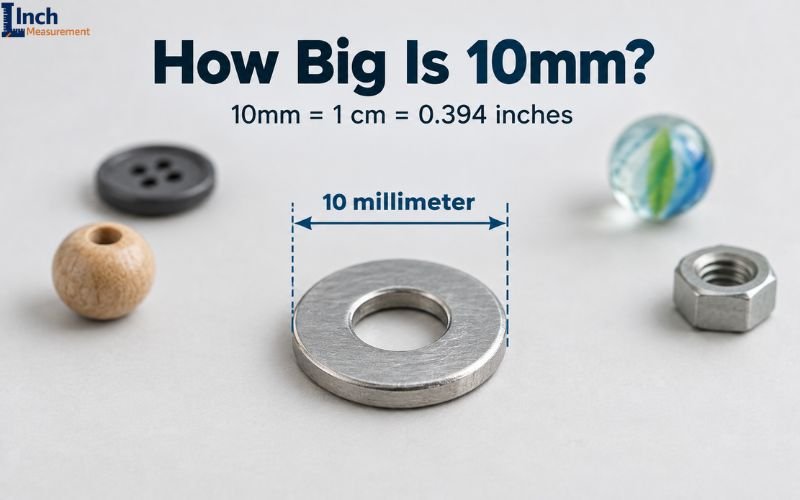
10mm is equal to 1 centimeter or about 0.394 inches. It is a small measurement, but it is not difficult to picture once you compare it with familiar objects.
You may come across 10mm when buying hardware, checking jewelry sizes, choosing craft supplies, measuring small parts, or looking at product dimensions online. A number such as 10mm can feel abstract until you connect it with something you can actually see and hold.
A small button, pencil eraser, marble, bead, or screw head can give you a useful visual reference. The examples below cover different types of everyday objects so you can get a better sense of the size without relying on one type of item.
How Big Is 10mm?
10mm equals exactly 1 centimeter and approximately 0.394 inches. It is just under 0.4 inches, making it less than half an inch but still large enough to see easily.
One simple way to picture it is to look at the width of a small button or pencil eraser. A round bead that measures 10mm across gives another good example because you can see the full diameter at once.
The measurement can describe different dimensions. An object may be 10mm wide, 10mm thick, 10mm long, or 10mm in diameter. Always check which dimension a product listing is referring to before making a comparison.
What Does 10mm Look Like?
Ten millimeters is about the width of a small everyday object rather than something large. It can fit comfortably on the tip of a finger and is easy to notice without being bulky.
For comparison, a 5mm bead would be only half the diameter of a 10mm bead. A 20mm object would be twice as wide. These differences may sound small, but they are easy to notice when the objects are placed side by side.
This is why physical references work so well. Seeing a 10mm object next to something familiar gives you a much clearer idea than simply reading “0.394 inches.”
Common Things That Are About 10mm Big
The examples below come from different areas, including stationery, hardware, food, crafts, electronics, and household items. Their actual dimensions can vary, so use them as visual references rather than exact measuring tools.
| Common Thing | Approximate Size |
|---|---|
| Small Button | 10mm |
| Pencil Eraser | 10mm |
| Small Marble | 10mm |
| Craft Bead | 10mm |
| USB Connector Thickness | 10mm |
| Small Screw Head | 10mm |
| Small Hex Nut | 10mm |
| Metal Washer | 10mm |
| Small Rubber Grommet | 10mm |
| Peanut Width | 10mm |
| Large Blueberry | 10mm |
| LEGO-Style Building Stud | 10mm |
Small Button
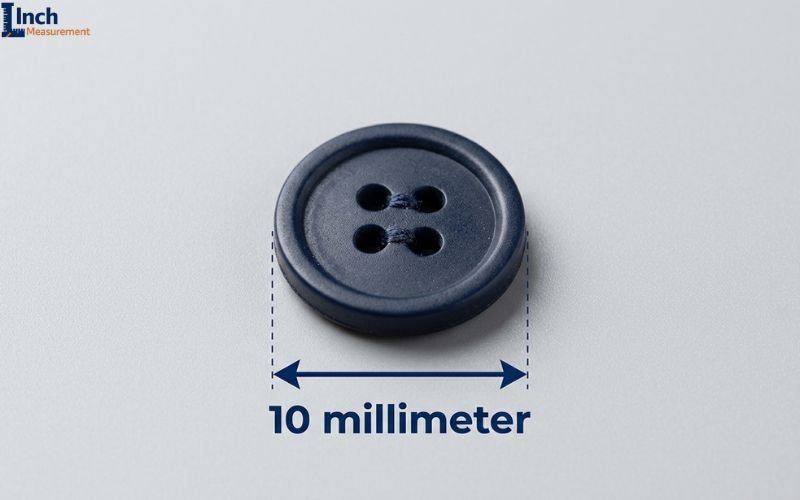
A small button can be close to 10mm across, making it one of the easiest objects to use as a visual reference. Buttons of this size can appear on shirts, children’s clothing, sewing projects, and craft supplies.
Look at the button from directly above and focus on its widest point. If it is close to 10mm in diameter, it will look roughly like a small circle that fits comfortably on your fingertip.
Button sizes vary quite a bit, so not every small button will measure exactly 10mm. Some may be only a few millimeters smaller or larger.
This comparison is especially useful when shopping for replacement buttons. If a listing says a button is 10mm, you can now picture something fairly small rather than imagining a standard large coat button.
Pencil Eraser
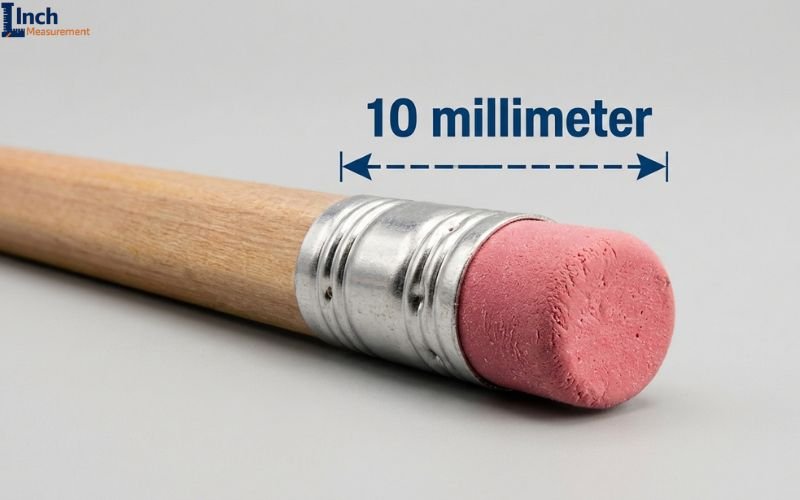
The width of a small pencil eraser can provide another useful reference for 10mm. Pencil erasers are familiar objects, which makes them easy to use when you need a quick visual comparison.
Look at the eraser from the end of the pencil rather than along its length. The width across the eraser is the useful part for this comparison.
Different pencils have different eraser sizes, so this should remain an approximate reference. A larger school pencil may have a wider eraser than a slim mechanical pencil.
Still, the comparison helps show that 10mm is a compact measurement. It is small enough for stationery but large enough to be clearly visible and handled comfortably.
Related Post: How Big Is 9mm? 12 Common Things That Are 9mm Big
Small Marble
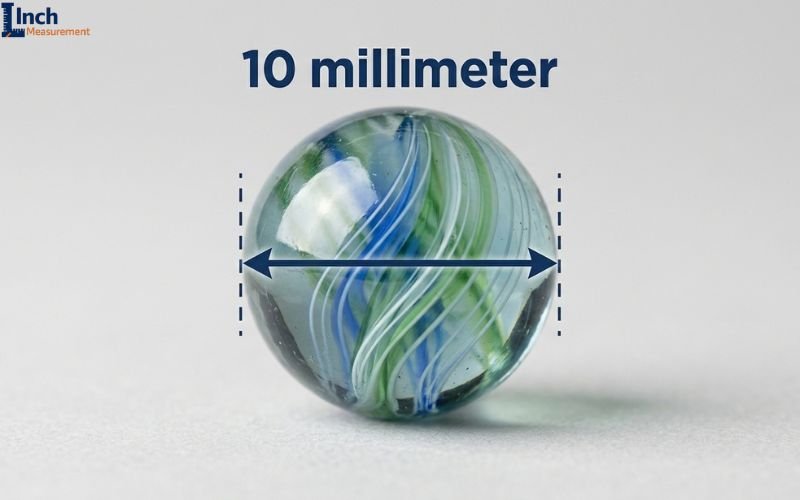
A small marble can be around 10mm in diameter. Marbles come in many sizes, though, so smaller decorative or craft marbles are more likely to be close to this measurement.
The round shape makes this a particularly easy comparison. When you look at the marble from any direction, its diameter remains roughly the same.
A 10mm marble is small enough to sit on a fingertip but large enough to see clearly. It gives you a better sense of the measurement than a flat object because you can see its three-dimensional size.
If you have marbles at home, compare several of them rather than assuming they are all the same. Standard playing marbles can be considerably larger.
Craft Bead
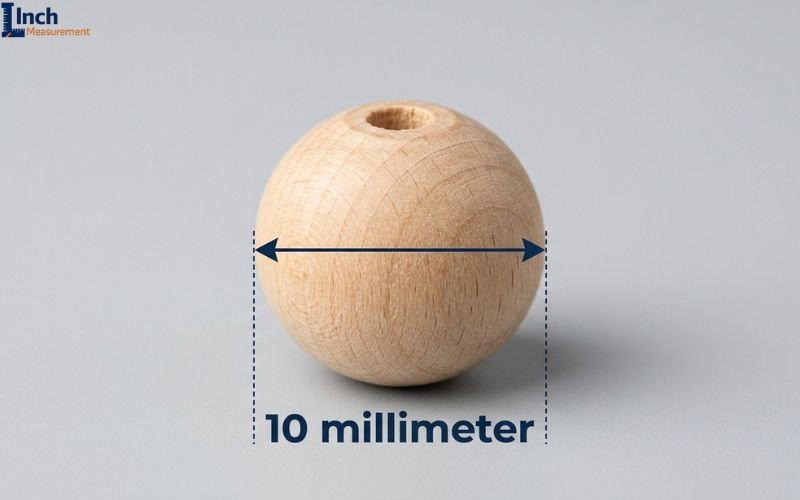
A 10mm craft bead is one of the most straightforward references because beads are commonly sold according to their diameter. You may find beads of this size in jewelry-making kits, craft stores, and DIY supplies.
A round bead measuring 10mm across is small but noticeable. It can be used for bracelets, necklaces, keychains, decorations, and other projects.
This is also a useful example when shopping online. If a product description says a bead is 10mm, you can picture something roughly similar to a small button.
Bead shape matters, though. A round bead gives you a clear 10mm diameter, while a flat or irregular bead may have a different width, height, and thickness.
USB Connector Thickness
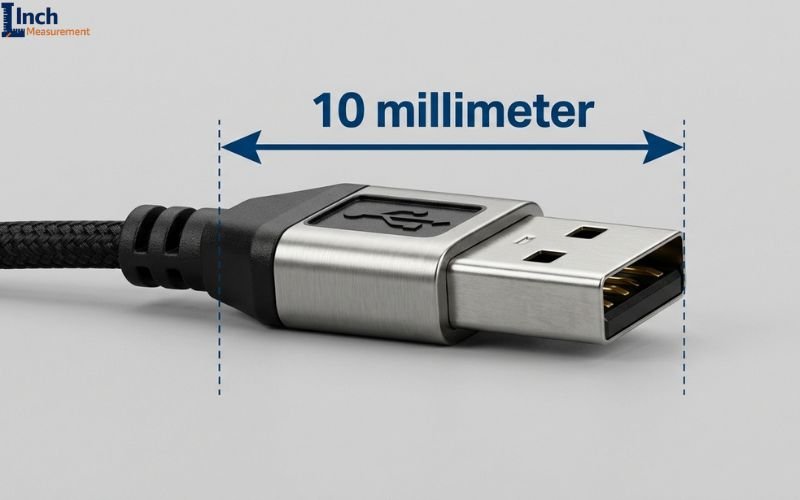
Some USB connectors and their surrounding housings can provide a useful reference for a measurement around 10mm. The exact dimensions depend heavily on the connector type and design.
This is a good reminder that electronic components often have several measurements listed separately. A connector may have a particular width, height, and length, and only one of those dimensions may be close to 10mm.
USB connectors are familiar to most people, so they can help make a small measurement easier to imagine. Look at the connector housing rather than the entire cable.
If you are buying an electronic replacement part, always use the manufacturer’s specifications instead of estimating from a photograph.
Small Screw Head
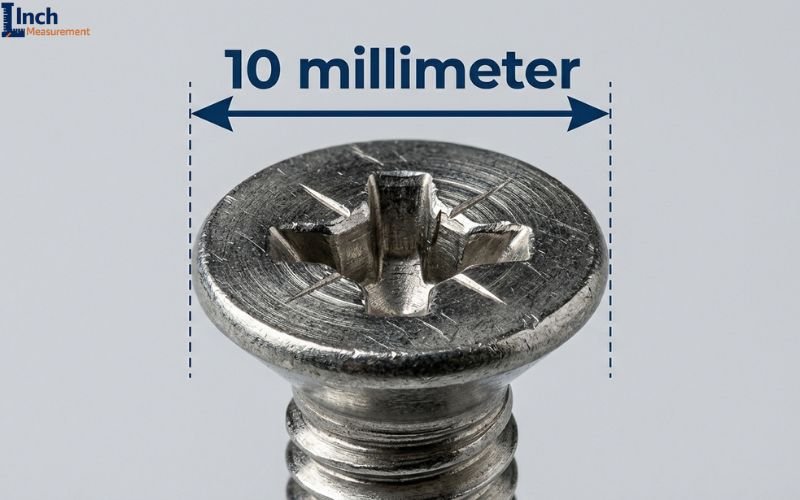
A small screw head can measure around 10mm across depending on the screw type and design. This gives you a practical hardware example of the measurement.
Screws are used everywhere, from furniture and electronics to household repairs. Their heads come in many shapes, including Phillips, slotted, hex, and other designs.
The important part here is the head width, not the total screw length. A screw could have a head close to 10mm while being several centimeters long.
If you are replacing a screw, check the head diameter, shaft diameter, thread type, and length. Looking only at one measurement can easily lead to buying the wrong part.
Related Post: How Big Is 8mm? 12 Common Things That Are 8mm Big
Small Hex Nut
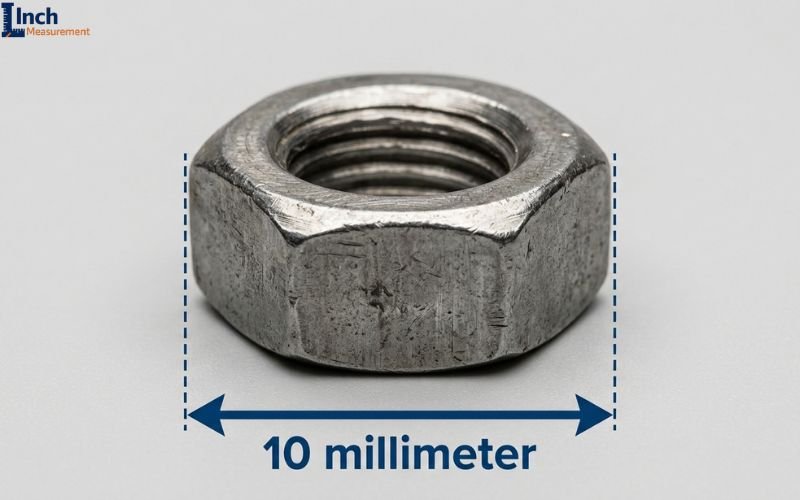
A small hex nut can have a width close to 10mm across its outer sides. Its six-sided shape makes it easy to recognize and gives you another useful hardware comparison.
Hex nuts are common in furniture, bicycles, machinery, electronics, and household repair work. They are designed to fit bolts and threaded rods, so their dimensions need to be reasonably precise.
One detail can cause confusion: the size associated with a nut does not always mean its outside width is exactly that number. A nut’s stated size often relates to the compatible bolt or thread.
For visual purposes, however, a small hex nut can help you understand how compact 10mm really is.
Metal Washer
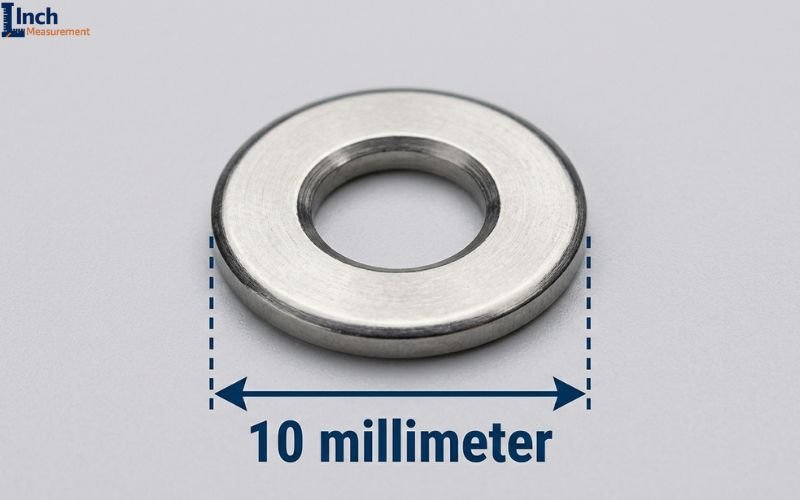
A small metal washer can have an outside diameter of roughly 10mm. Washers are flat, circular pieces commonly placed under nuts or bolt heads.
The outside edge gives you the useful comparison here. Hold the washer flat and look across its widest point. A washer around 10mm wide will appear similar in diameter to a small button or craft bead.
Washers come in many sizes, so you should not assume every small washer is 10mm. Their inside hole and thickness also vary.
If you are buying replacement washers, check all the listed dimensions. The outside diameter alone does not tell you whether a washer will fit a particular bolt.
Small Rubber Grommet
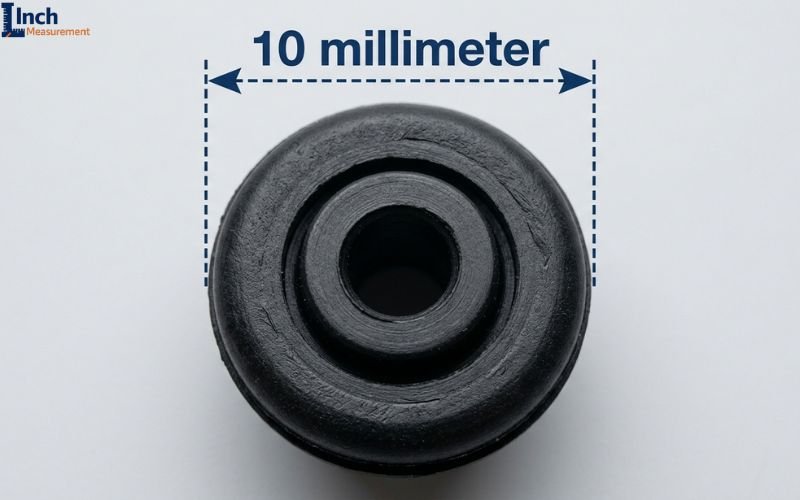
A small rubber grommet can be around 10mm across. These flexible rings are often used to protect wires and cables where they pass through holes in metal, plastic, or other materials.
Unlike a solid button or bead, a grommet has an opening through the center. That means you may see several measurements in a product listing, including outside diameter, inside diameter, and thickness.
For example, a grommet could have an outside diameter near 10mm while its central opening is much smaller.
This makes grommets a useful reminder to read product dimensions carefully. If you need one for a DIY or electronics project, matching only the 10mm outside measurement may not be enough.
Related Post: 10 Common Things That Are 20CM Big
Peanut Width
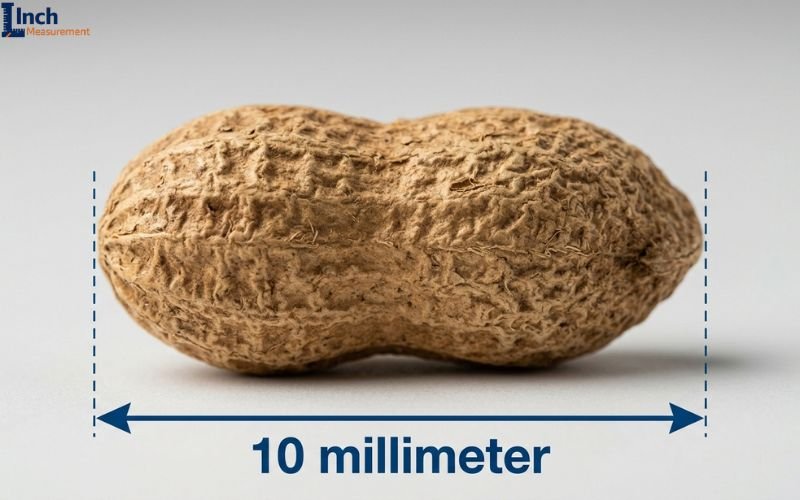
A peanut can sometimes be around 10mm wide, especially across one of its narrower sections. However, peanuts vary naturally in shape and size, so this is a rough comparison rather than a precise reference.
Food is useful for visualizing measurements because you can often see the size without special equipment. A peanut close to 10mm across looks noticeably larger than a grain of rice but remains quite small.
If you are comparing food with a measurement, focus on the specific dimension being discussed. A peanut’s length can be much greater than its width.
This example is mainly useful for developing a mental picture of 10mm. It should not be used when you need an exact measurement.
Large Blueberry

A large blueberry can be close to 10mm in diameter, although berries naturally come in different sizes. Some blueberries are smaller, while large ones can be considerably wider.
The round shape makes the comparison easy. Place a blueberry beside a small button or bead and you can quickly see how similar or different their sizes are.
This is also a good example of why everyday comparisons are approximate. Natural objects are not manufactured to exact dimensions. Even two blueberries from the same container may have different diameters.
Still, if you are trying to understand what 10mm looks like, a larger blueberry can provide a surprisingly useful reference.
LEGO-Style Building Stud
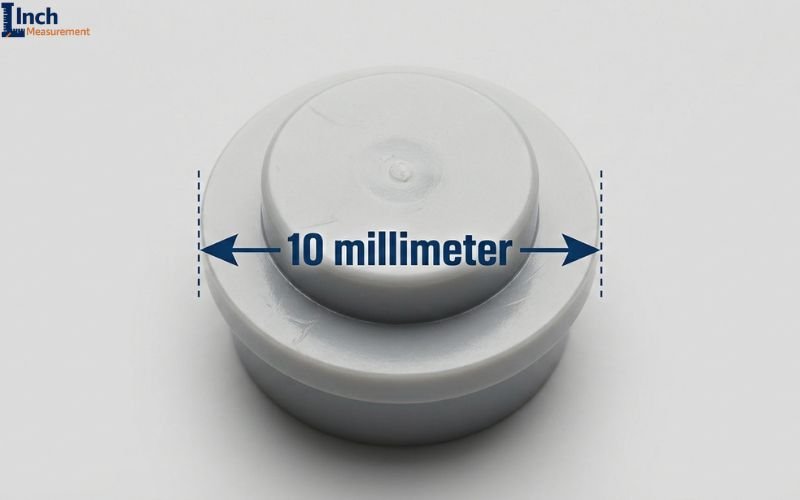
A single stud on a LEGO-style building piece can help you visualize a measurement close to 10mm. The exact size depends on the building system and the specific part, so this is best treated as an approximate reference.
Building blocks are useful because their small raised studs are easy to see and compare. A single stud occupies only a tiny amount of space, yet it is large enough to handle easily with your fingertips.
This example also shows how millimeter-scale measurements appear in toys and manufactured products. Small differences in dimensions matter because individual pieces need to connect properly.
If you are measuring a particular building block for a project, use its published dimensions rather than assuming every stud is exactly 10mm.
How Can You Estimate 10mm Without a Ruler?
You can get a rough idea of 10mm by comparing it with familiar everyday objects. These methods are useful when you only need an estimate.
Compare It With a Small Button
A small shirt or craft button can be close to 10mm wide. Compare the object with the button to see if they are about the same size.
Use a Standard Pencil
A standard pencil is often around 7–8mm thick, so 10mm is slightly wider. Place the object beside the pencil for a quick comparison.
Compare It With Your Fingernail
Your pinky fingernail may be close to 10mm wide. Compare its width with the object to get a rough estimate.
Use a Small Craft Bead
A 10mm craft bead provides a simple physical reference. Compare your object with the bead to judge whether it is around 10mm.
Tips for Estimating 10mm by Eye
The easiest way to judge a small measurement is to give your eyes a familiar reference. Instead of looking at an object by itself, place it beside a button, bead, pencil, or another item with a known approximate size.
Pay attention to perspective when looking at product photographs. A tiny object photographed close to the camera can look surprisingly large. If possible, find the dimensions in the product specifications before ordering.
It also helps to identify exactly what is being measured. If a product says it is 10mm wide, do not assume it is also 10mm tall or thick.
For very small parts, repeated comparisons can improve your judgment. A 15cm ruler can be useful for checking your estimate afterward and building a better sense of small distances.
Related Post: How Big Is 6mm? 10 Common Things That Are 6mm Big
People Also Ask
How big is 10mm in inches?
10mm is approximately 0.394 inches, which is slightly less than 0.4 inches.
Is 10mm the same as 1 centimeter?
Yes, 10mm equals exactly 1 centimeter.
What does 10mm look like?
A small button, bead, pencil eraser, or marble can help you picture a 10mm measurement.
Is 10mm bigger than 1/4 inch?
Yes, 10mm is larger than 1/4 inch, which measures about 6.35mm.
Is 10mm close to half an inch?
Yes, but it is smaller; half an inch equals 12.7mm.
Can I estimate 10mm without a ruler?
Yes, compare the object with a small button, bead, pencil, or another familiar item close to 10mm.
Conclusion
How Big Is 10mm is easier to understand when you connect the measurement with objects you already recognize. A small button, bead, marble, screw head, washer, or blueberry can give you a useful visual reference.
Remember that these objects vary, so they are not replacements for accurate measuring tools. When an exact fit matters, check the product dimensions or use a ruler or caliper.
For a quick estimate, place the object beside a familiar reference and compare the same dimension, such as width, diameter, or thickness.
