
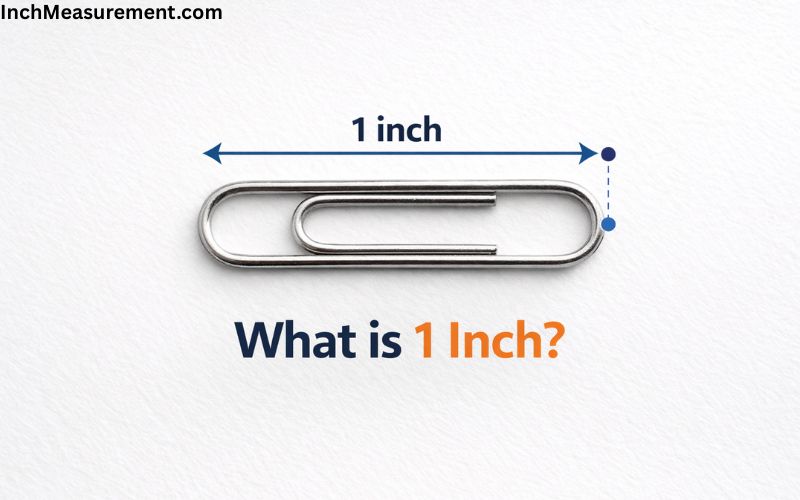
An inch is a small unit of length in the imperial measurement system. It is commonly used in the United States, the United Kingdom, and several other countries for measuring everyday objects. One inch equals 2.54 centimeters, making it easy to convert between metric and imperial measurements.
Because an inch is relatively small, it is often used to measure items such as small tools, electronics parts, office supplies, and household objects. Many people find it difficult to visualize exactly how long an inch is without a ruler. Looking at familiar objects that measure close to an inch can help make this unit easier to picture.
Several common items around homes, offices, and workplaces measure about an inch in length or width. These objects provide helpful visual references when a ruler is not available. The examples below show everyday items that are approximately one inch long.
Common Objects That Measure About One Inch
| Item | Approximate Size (inches) |
| Paperclip | 1 inch |
| Bottle cap | 1 inch |
| Thumbtack pin | 1 inch |
| LEGO brick height | 1 inch |
| Coin stack (3–4 coins) | 1 inch |
| Sewing button | 1 inch |
| Small binder clip width | 1 inch |
| Eraser tip | 1 inch |
| Pencil ferrule | 1 inch |
| Dice edge | 1 inch |
The items listed above are commonly found in homes, offices, classrooms, and workshops. Each one offers a simple way to estimate the length of an inch without measuring tools.
1. Paperclip
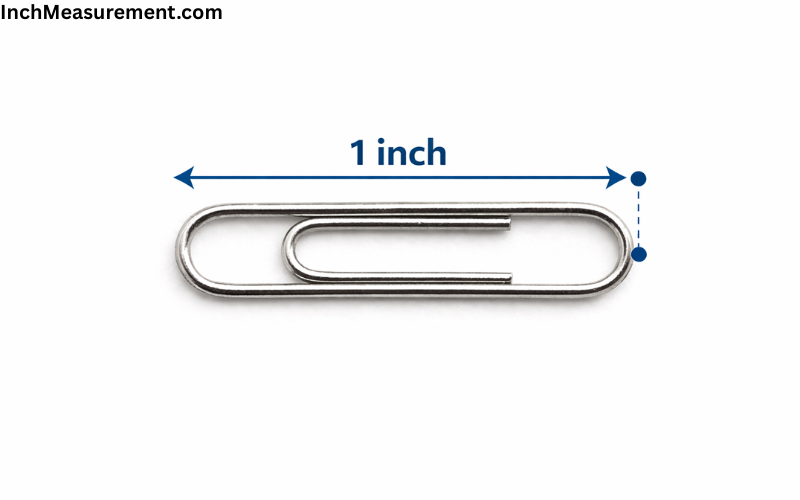
A standard small paperclip is one of the easiest objects to use when estimating an inch. Many basic paperclips measure around 1 inch in length, especially the smallest size used for holding a few sheets of paper together.
Paperclips are usually made from thin steel wire that is bent into a looped shape. Their compact size makes them useful for organizing documents without damaging the paper. Because they are so common in offices, schools, and homes, they serve as a convenient reference when visualizing small measurements.
The size of paperclips can vary slightly depending on the manufacturer and style. Some larger paperclips measure 1.3 to 1.5 inches, while mini paperclips are closer to a true one-inch length. When comparing everyday objects to measurement units, a mini paperclip is often considered a reliable reference point.
Using a paperclip as a measuring guide can be helpful when estimating small objects, craft materials, or hardware pieces. For example, if a screw or small tool is about the same length as a paperclip, it is likely close to one inch long.
Because paperclips are inexpensive and widely available, they remain one of the most practical everyday examples of a one-inch object.
2. Bottle Cap
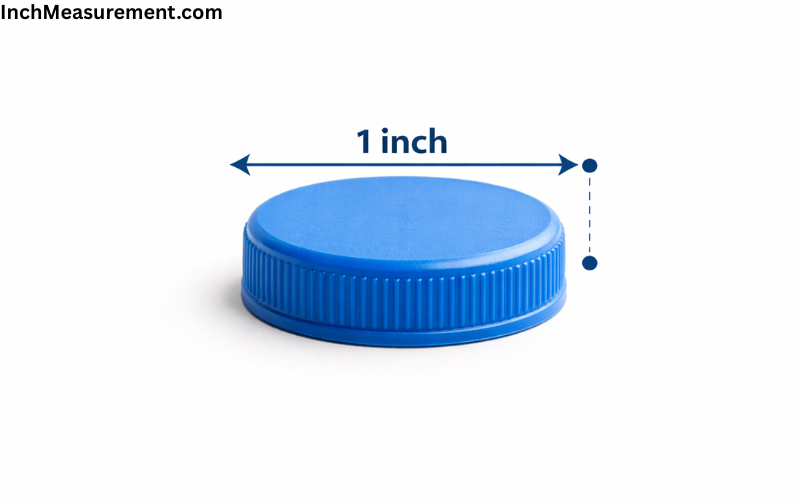
A common plastic bottle cap from a water bottle or soda bottle measures about one inch across. While the exact size can vary slightly depending on the brand, many standard beverage bottle caps have a diameter very close to an inch.
Bottle caps are designed to seal bottles tightly and keep liquids from spilling or losing carbonation. Most modern caps are made from lightweight plastic and include ridges around the sides so they can be easily twisted open and closed.
Since bottle caps are found on nearly every type of drink container, they are another useful visual guide for estimating an inch. If you place a ruler across the top of a typical water bottle cap, you will see that the measurement is close to one inch from side to side.
Bottle caps are also commonly used in craft projects, small mechanical designs, and educational activities. Their consistent size makes them useful when teaching children about measurement units.
In daily life, using a bottle cap as a reference helps people estimate short distances, small parts, or design dimensions without needing measuring tools.
3. Thumbtack Pin
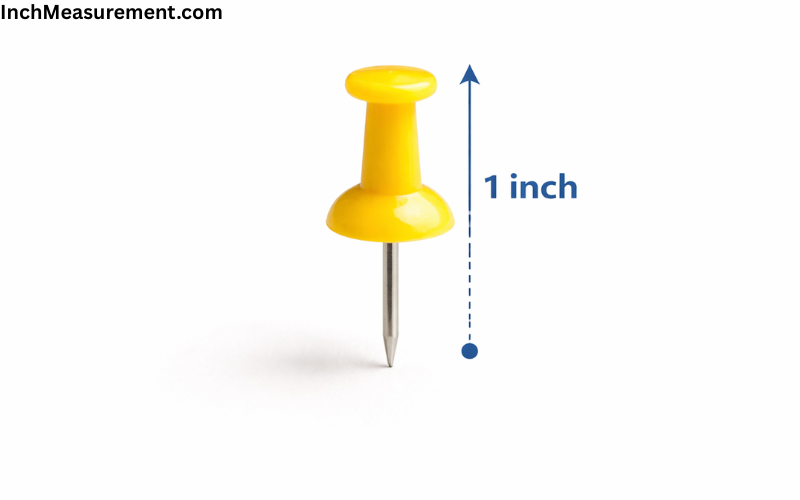
A thumbtack, also called a push pin, is a small fastening tool used to attach paper, photos, or notes to bulletin boards. The metal pin on a thumbtack is usually about one inch long, making it another simple example of this measurement.
Thumbtacks typically consist of two main parts: a sharp metal pin and a round plastic or metal head. The head allows users to press the pin into surfaces such as cork boards or soft walls without hurting their fingers.
Because the pin length is designed to securely hold papers while remaining easy to remove, manufacturers often keep the size close to one inch. This length provides enough grip without being excessively long.
Thumbtacks are commonly found in offices, classrooms, and home workspaces. They are often used for organizing reminders, calendars, photographs, and notices.
When someone needs a quick estimate of one inch, comparing it to the length of a thumbtack pin can be helpful. Even though small variations exist between brands, most thumbtack pins remain close to the one-inch measurement.
4. LEGO Brick Height
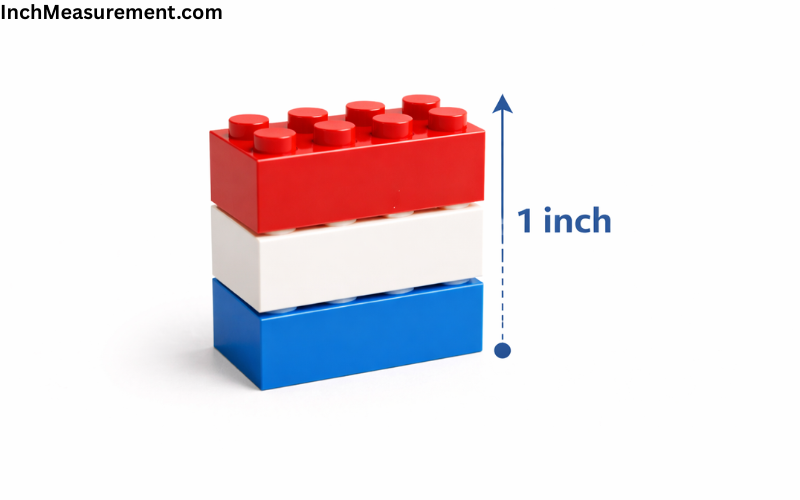
A standard LEGO brick height is close to one inch when multiple pieces are stacked together. Individually, a single LEGO brick measures about 0.38 inches tall, but stacking three bricks creates a height slightly above one inch.
LEGO pieces are manufactured with extremely precise measurements so they can connect perfectly with one another. This precision allows builders to create complex structures that maintain accurate proportions.
Because LEGO bricks follow consistent sizing rules, they are sometimes used in educational environments to demonstrate measurement and geometry. Teachers often use them to help students visualize small units such as inches or centimeters.
The predictable height of stacked LEGO bricks provides a simple visual tool when estimating measurements. For example, stacking three standard bricks produces a height that closely represents one inch.
LEGO toys are widely used in homes and classrooms around the world, making them a familiar and practical example of everyday measurement.
5. Coin Stack
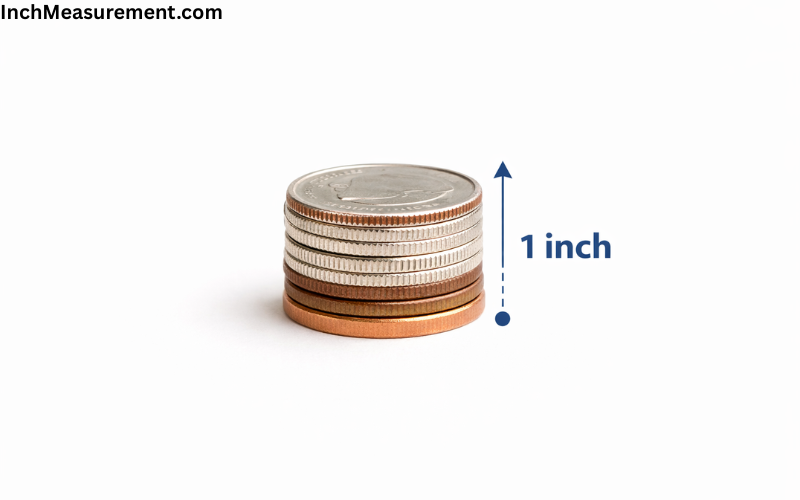
While individual coins are much thinner than an inch, stacking several coins together can create a height of approximately one inch. For example, stacking three to four quarters or several smaller coins results in a column that is close to an inch tall.
Coins are manufactured with consistent thickness to ensure they work properly in vending machines and counting systems. Because of this uniformity, stacking them produces predictable heights.
Using coins as a measurement reference is common in situations where rulers are unavailable. People sometimes estimate the thickness of objects by comparing them with stacked coins.
Different currencies have slightly different coin thicknesses, so the number of coins required to reach one inch may vary by country. However, the concept remains the same: stacking several coins produces a height close to the one-inch measurement.
Since coins are carried in wallets, pockets, and purses, they are an accessible way to visualize small measurements during everyday tasks.
6. Sewing Button
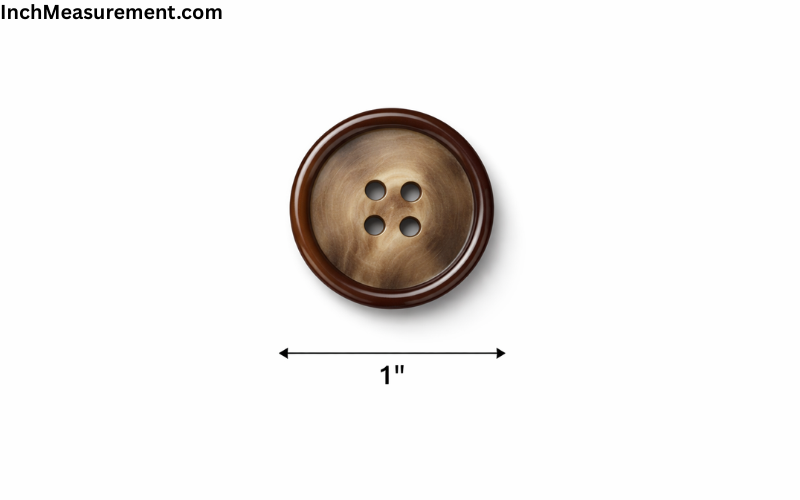
Many standard sewing buttons measure about one inch in diameter, particularly those used for coats, jackets, and larger garments. Buttons come in many shapes and sizes, but the one-inch button is very common in clothing design.
Buttons serve both functional and decorative purposes. They fasten clothing pieces together while also adding style and detail to garments. Designers select button sizes based on the thickness of the fabric and the overall look they want to achieve.
A one-inch button is large enough to be easily handled while still fitting neatly on clothing items. This size works well for sweaters, jackets, and certain shirts.
Because buttons are small and round, measuring their diameter with a ruler clearly shows the one-inch length. This makes them a useful example when explaining measurement units.
People who sew or repair clothing frequently work with buttons and other small components, so the one-inch size is familiar in tailoring and textile work.
7. Small Binder Clip Width
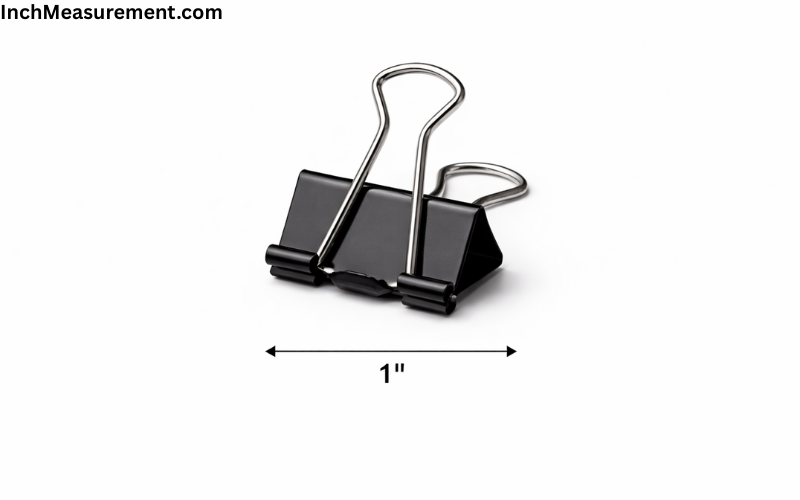
Small binder clips are common office tools used to hold stacks of paper together. The width of a mini binder clip is often about one inch, making it another helpful visual reference.
Binder clips consist of a metal body and two wire handles that can be folded down when not in use. They are stronger than paperclips and can hold larger groups of documents securely.
Mini binder clips are designed for smaller stacks of paper, which is why their width stays close to one inch. Larger binder clips may measure 1.5 inches or more.
Because binder clips are used in offices, schools, and homes, they are easy to find when someone needs to estimate small measurements. Comparing an object to the width of a mini binder clip provides a quick approximation of one inch.
Their durability and simple design make binder clips a reliable example when learning about everyday measurements.
8. Eraser Tip
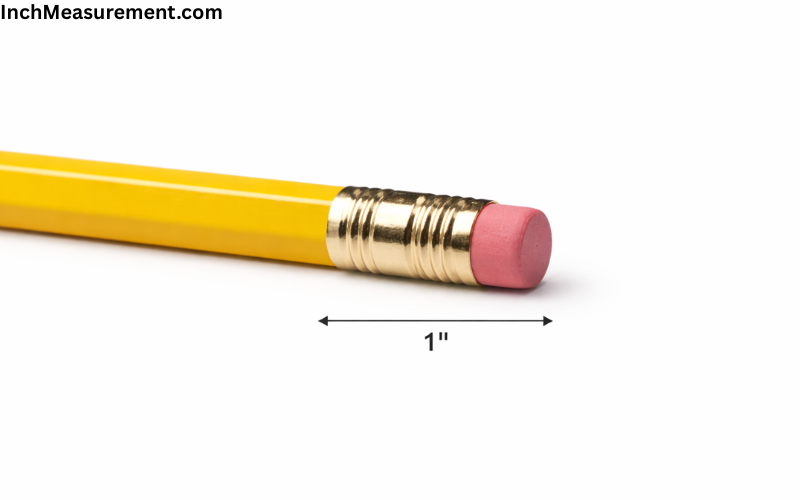
The tip of a pencil eraser is another object that measures close to one inch in length. Many standalone erasers or the eraser portion attached to pencils are designed with this approximate size.
Erasers are made from rubber or synthetic materials that remove pencil marks from paper by creating friction that lifts graphite from the page. Their compact size makes them easy to carry in pencil cases or desk drawers.
In many pencils, the metal ferrule holds the eraser in place, and the eraser portion itself is often about an inch long. Standalone rectangular erasers also commonly include one-inch sections.
Because erasers are part of everyday school and office supplies, they are a convenient reference when visualizing small measurements.
Students, teachers, artists, and writers frequently handle erasers, making them another practical example of an object that represents approximately one inch.
9. Pencil Ferrule
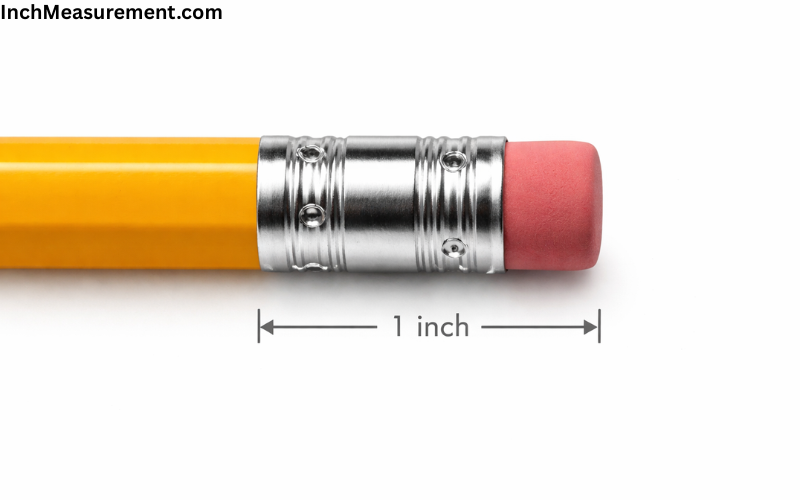
The ferrule on a pencil is the small metal band that connects the eraser to the pencil body. This metal section is typically about one inch long, depending on the pencil design.
Ferrules are usually made from aluminum or brass and are crimped around the wooden pencil to hold the eraser securely in place. The design allows the eraser to remain stable even after repeated use.
Because pencils are produced in large quantities using standardized measurements, the ferrule size stays fairly consistent across different brands. This makes it a dependable reference for visualizing one inch.
When measuring small objects or explaining measurement units to students, the ferrule on a pencil provides a clear and accessible example.
Since pencils are used worldwide in schools, offices, and homes, this small component is an everyday object that represents the one-inch length.
10. Dice Edge
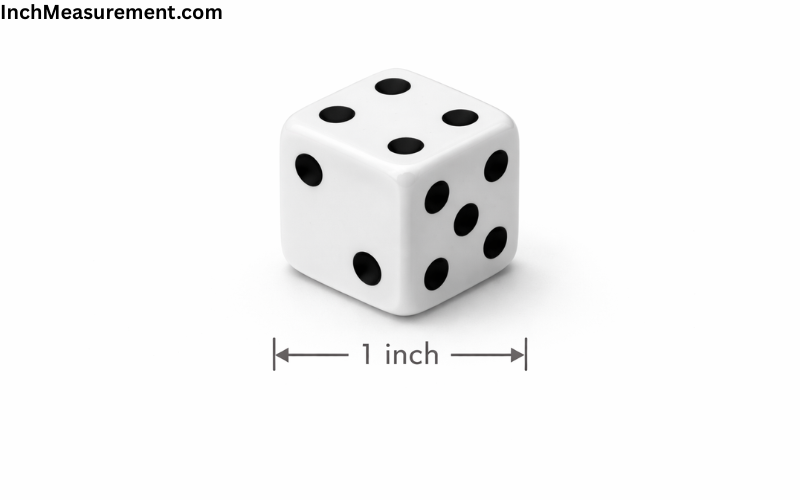
A standard gaming dice often measures about one inch on each side. Dice are small cubes used in board games, probability demonstrations, and educational activities.
Each side of a dice contains dots called pips that represent numbers from one to six. The uniform shape ensures fair results when rolled during games.
Many classic board games use dice that measure approximately one inch in width, height, and depth. This size is large enough to handle comfortably while still being compact.
Because of their simple cube shape, dice clearly show equal measurements on every edge. This makes them helpful when teaching about dimensions such as length, width, and height.
Dice are widely used in games, classrooms, and mathematical demonstrations. Their consistent size makes them another familiar example that closely represents a one-inch measurement.
FAQs
How long is one inch in centimeters?
One inch equals 2.54 centimeters. This conversion is commonly used when switching between the imperial and metric measurement systems.
What household item is exactly one inch long?
Several items measure close to one inch, such as small paperclips, dice, binder clips, and certain buttons. Exact measurements can vary slightly depending on the manufacturer.
Why is the inch still used today?
The inch remains widely used in countries like the United States for measuring screens, tools, construction materials, and everyday objects.
How can I estimate an inch without a ruler?
You can compare objects to common items such as a dice, bottle cap, or small paperclip. These items provide helpful visual references for estimating one inch.
Is one inch a large measurement?
An inch is considered a small unit of length. It is typically used for measuring small objects, parts, or short distances.
Conclusion
Understanding how long one inch is becomes much easier when you compare it with familiar everyday objects. Since an inch equals 2.54 centimeters, it is a small but commonly used unit of measurement for many items in daily life. From office supplies like paperclips and binder clips to small objects such as dice, buttons, and bottle caps, many items measure close to one inch in length or width.
Using these common objects as references can help you quickly estimate measurements when a ruler is not available. For example, a paperclip, a small button, or the width of a mini binder clip can provide a simple visual guide for an inch. These practical comparisons make it easier to picture the size of small measurements during everyday tasks, crafts, schoolwork, or basic home projects.
Recognizing items that are about an inch long also helps improve general measurement awareness. Whether you are measuring small tools, planning a craft project, or estimating dimensions, knowing what an inch looks like can make quick comparisons more accurate.
By remembering a few common one-inch examples, you can develop a better sense of size and length without always needing measuring tools. This simple skill can be helpful in many situations where quick measurement estimates are needed.
