
Introduction
When trying to visualize a length like 30 feet, it can feel abstract without real-world comparisons. Measurements like feet are commonly used in construction, sports fields, and everyday objects, but unless you regularly work with them, it’s not always easy to picture.
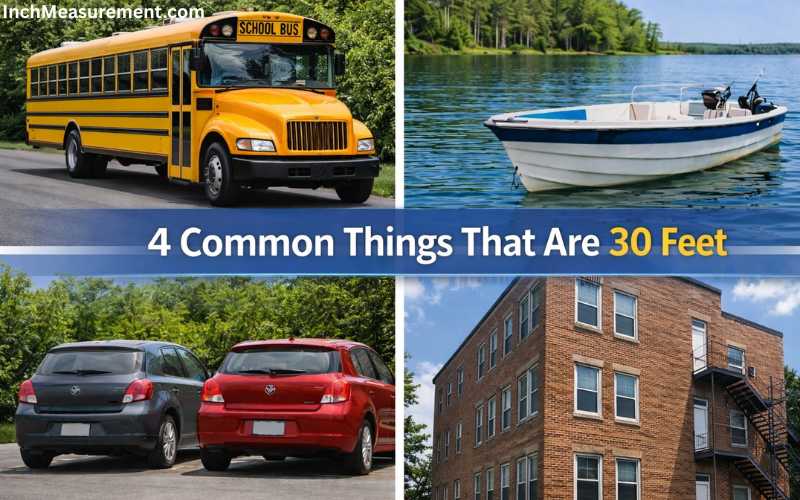
To put it simply, 30 feet equals 360 inches or about 9.14 meters. That’s roughly the length of a small bus, two average cars parked end to end, or the height of a three-story building.
This guide will help you clearly understand how long 30 feet is by comparing it to familiar objects and structures. You’ll also find a helpful table and detailed explanations so you can easily relate this measurement to real life.
30 Feet in Inches (Quick Conversion Table)
| Item | Length in Feet | Length in Inches |
| Standard School Bus | 30 ft | 360 inches |
| Bowling Lane | 30 ft | 360 inches |
| Small Yacht | 30 ft | 360 inches |
| Two SUVs Combined | 30 ft | 360 inches |
| 3-Story Building Height | 30 ft | 360 inches |
| Telephone Pole (Short) | 30 ft | 360 inches |
| Garden Hose (Large) | 30 ft | 360 inches |
| Shipping Container (Small) | 30 ft | 360 inches |
| Basketball Court Width | 30 ft | 360 inches |
| Large Tree Height | 30 ft | 360 inches |
| Construction Beam | 30 ft | 360 inches |
| Outdoor Banner | 30 ft | 360 inches |
1. Standard School Bus
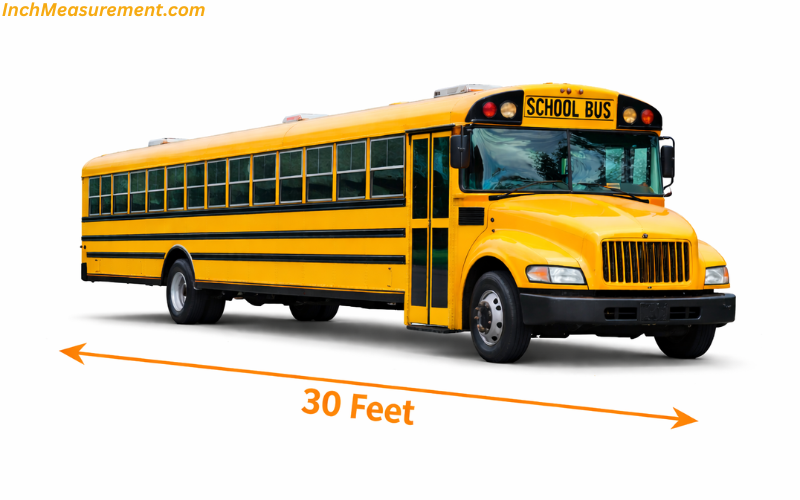
A standard school bus is one of the easiest ways to picture 30 feet. Many smaller or mid-sized school buses measure close to this length. When you see one parked on the street, it gives a clear sense of how long 30 feet actually is.
School buses are designed to carry multiple rows of seats, usually accommodating 20 to 40 students depending on the model. The length allows for safe spacing, aisle movement, and structural stability. When standing next to one, you’ll notice it stretches across a large portion of a road lane.
If you imagine laying the bus flat in a straight line, that’s exactly what 30 feet looks like. This makes it a practical reference when estimating distances in parking areas, construction sites, or even outdoor events.
2. Bowling Lane
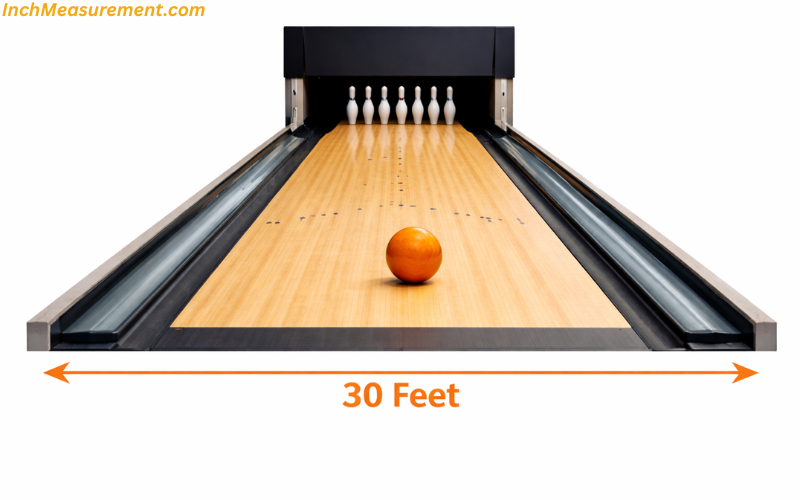
A bowling lane is another great example that closely matches 30 feet. While a full bowling lane is longer, the distance from the foul line to the pins is about 60 feet, so half of it equals 30 feet.
If you’ve ever bowled, you already have a built-in sense of this length. Think about standing halfway down the lane—that’s approximately 30 feet from either end.
This comparison works well because bowling lanes are standardized, meaning the measurement is consistent across most bowling alleys. It gives you a reliable visual reference that doesn’t change from place to place.
Using this example, you can imagine 30 feet as a long, straight indoor distance that’s easy to walk in just a few seconds.
Related Post: How Long Is 20 feet
3. Small Yacht
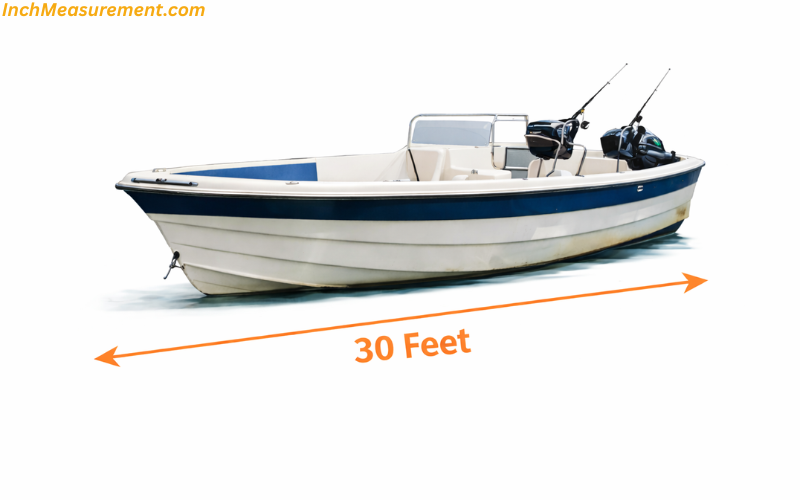
A small recreational yacht or boat often measures around 30 feet in length. These boats are commonly used for leisure activities such as fishing, cruising, or short trips on lakes and coastal waters.
A 30-foot yacht typically includes a small cabin, seating area, and storage space. The length allows for comfort without making the vessel too large to handle easily.
When you picture a boat of this size docked at a marina, it helps you understand how substantial 30 feet is. It’s long enough to feel spacious but still compact compared to larger ships.
This example is especially useful if you are familiar with boats or have visited a waterfront area.
4. Two SUVs Parked End to End
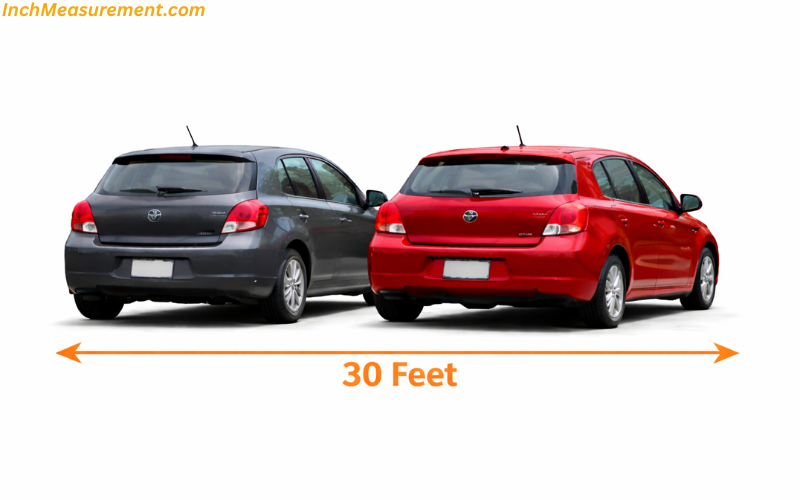
If you place two average SUVs bumper to bumper, their combined length is very close to 30 feet. Most SUVs are about 14 to 16 feet long, so two together give a realistic comparison.
This is one of the most practical ways to visualize 30 feet because cars are something people see every day. Imagine a driveway with two SUVs parked in a straight line—that’s the space you’re looking at.
This comparison is helpful for estimating parking space, garage size, or driveway length. It also gives a better sense of how much room 30 feet occupies in a residential setting.
5. Three-Story Building Height
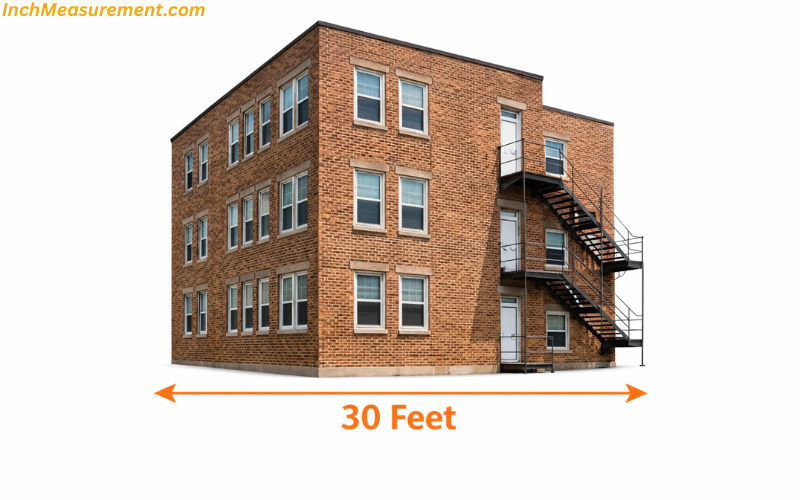
A building with three floors typically reaches about 30 feet in height. Each floor averages around 10 feet, including ceiling space and structural elements.
If you look at a typical residential or small commercial building, the height from the ground to the roof is often close to this measurement.
This vertical comparison helps you understand 30 feet not just in length but also in height. It’s especially useful for construction planning or visualizing elevation.
Standing next to such a building gives a strong sense of scale and shows how tall 30 feet really is.
6. Short Telephone Pole
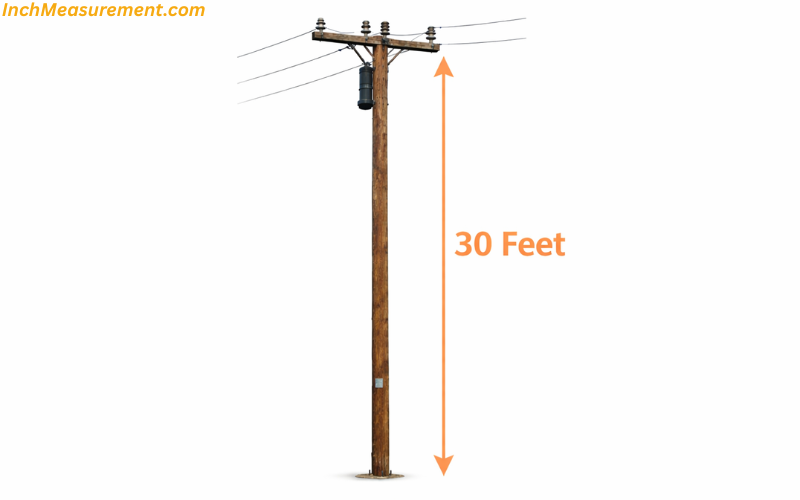
Some smaller telephone or utility poles are around 30 feet tall. These are often used in residential areas to support power lines, street lighting, or communication cables.
When you look at a pole along the roadside, you may not think about its height, but it provides a clear vertical reference.
This example works well because these poles are spaced regularly, making it easy to compare distances between them.
It also shows how 30 feet can be both a vertical and horizontal measurement depending on how it’s used.
7. Large Garden Hose
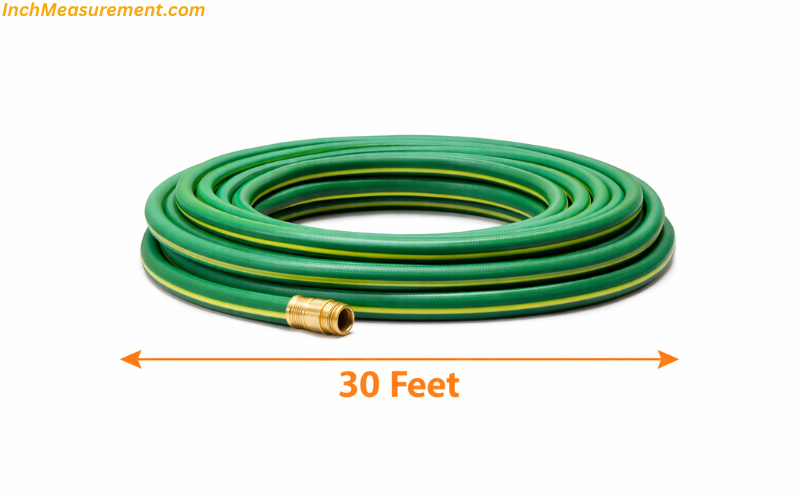
A large garden hose is commonly sold in 25 to 50-foot lengths, with 30 feet being a very common size for home use.
If you stretch a 30-foot hose across your yard, you’ll see how far it reaches. It’s usually enough to cover a small to medium garden area without needing extensions.
This everyday item makes it easy to relate to the measurement in a practical way. It also helps when estimating distances for outdoor projects like watering plants or washing vehicles.
8. Small Shipping Container
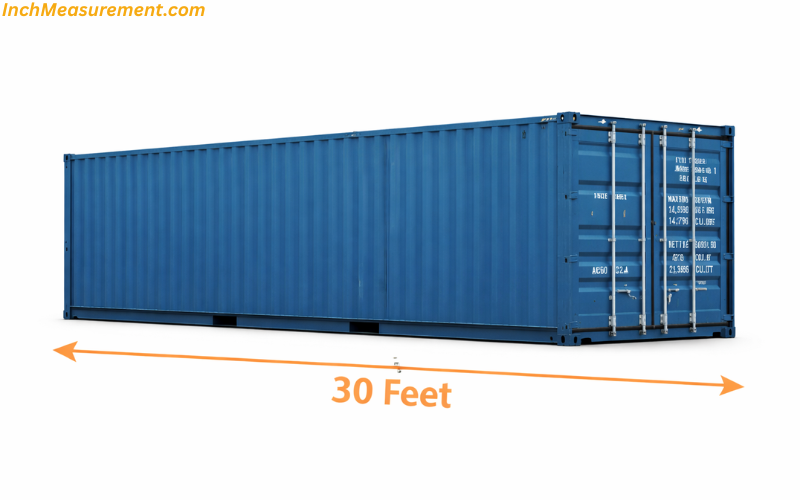
While standard shipping containers are often 20 or 40 feet long, some smaller or custom containers measure around 30 feet.
These containers are used for storage, transport, and even converted into offices or homes. Their rectangular shape makes it easy to visualize length clearly.
When you see one placed on a site, it gives a strong impression of how long 30 feet is in a straight line.
This example is especially useful for people involved in logistics or construction.
9. Basketball Court Width
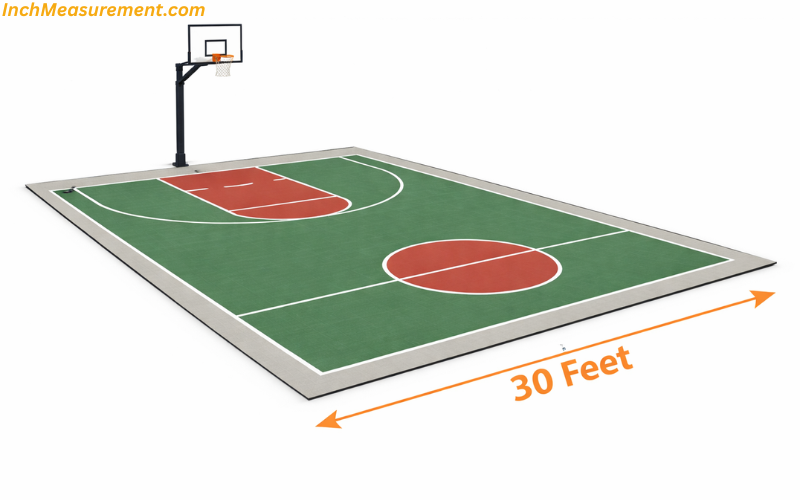
The width of a professional basketball court is about 50 feet, so a little more than half of that is close to 30 feet.
If you stand on one side of the court and walk slightly past the center, you’ve covered about 30 feet.
This comparison is helpful for sports enthusiasts and provides a clear indoor reference that is easy to imagine.
10. Large Tree Height
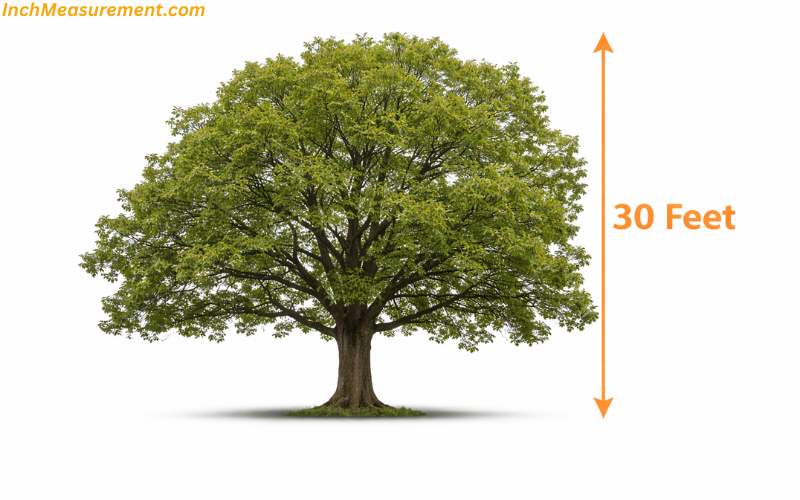
Many mature trees, especially in residential areas, grow to about 30 feet tall. This includes common shade trees found in parks and neighborhoods.
Looking at a tree of this height helps you visualize 30 feet vertically. It also gives a sense of scale when planning landscaping or outdoor design.
Trees provide a natural reference that’s easy to observe in everyday life.
11. Construction Beam
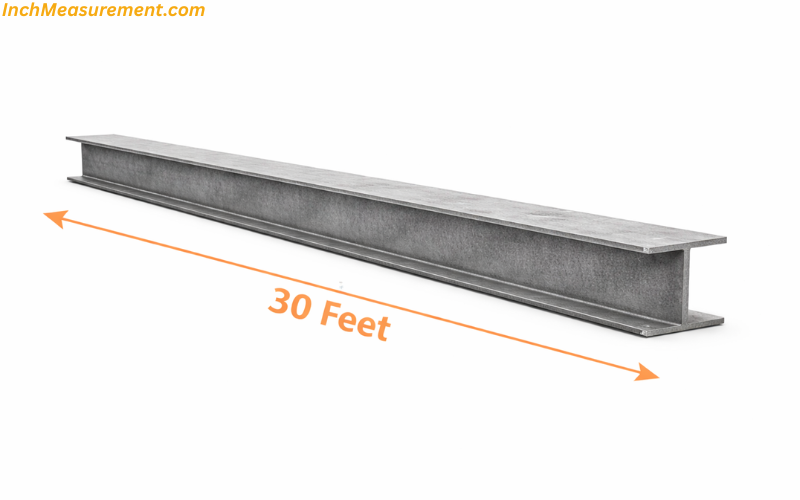
Steel or wooden beams used in construction often come in lengths of around 30 feet. These beams are used to support roofs, bridges, and large structures.
When placed horizontally, they clearly show the span of 30 feet. This is especially useful for understanding how far a structure can extend without additional support.
This example is practical for anyone involved in building or renovation work.
12. Outdoor Banner or Billboard Section
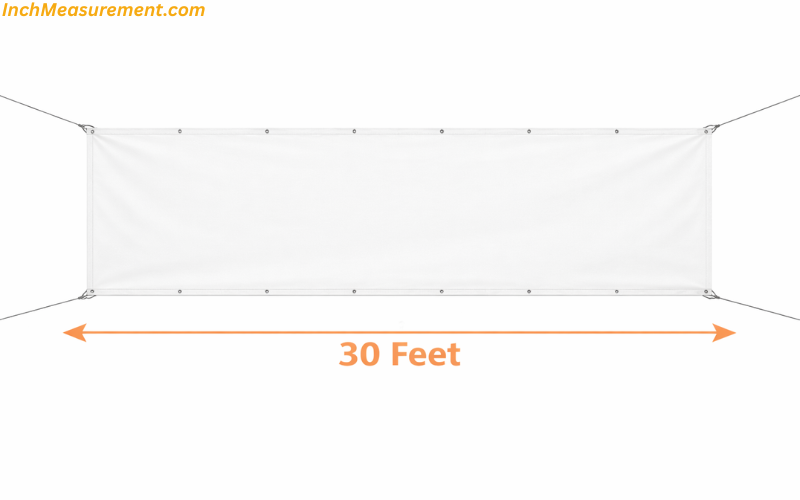
Large outdoor banners or billboard sections are often designed around 30 feet in length to ensure visibility from a distance.
These banners are used for advertising, events, and public displays. When stretched across a frame, they provide a clear visual of how long 30 feet is.
This comparison works well because banners are typically placed in open spaces, making their size easier to judge.
FAQs
How long is 30 feet in inches?
30 feet equals 360 inches.
How many meters is 30 feet?
30 feet is approximately 9.14 meters.
How far can you walk in 30 feet?
An average person can walk 30 feet in about 6 to 8 steps, depending on stride length.
Is 30 feet a large distance?
Yes, it’s a moderate distance. It’s longer than most rooms and comparable to large vehicles or small buildings.
What is an easy way to measure 30 feet?
You can estimate it using two SUVs, a garden hose, or about 10 average adult steps (3 feet per step).
Conclusion
30 feet is a practical and commonly used measurement that appears in many areas of daily life, from vehicles and buildings to sports and outdoor spaces. By comparing it to familiar objects like a school bus, two SUVs, or a three-story building, it becomes much easier to visualize.
Whether you’re planning a project, estimating space, or simply curious, these examples provide clear and relatable ways to understand the length. With 360 inches in total, 30 feet is a substantial distance that fits comfortably between small and large-scale measurements.
