
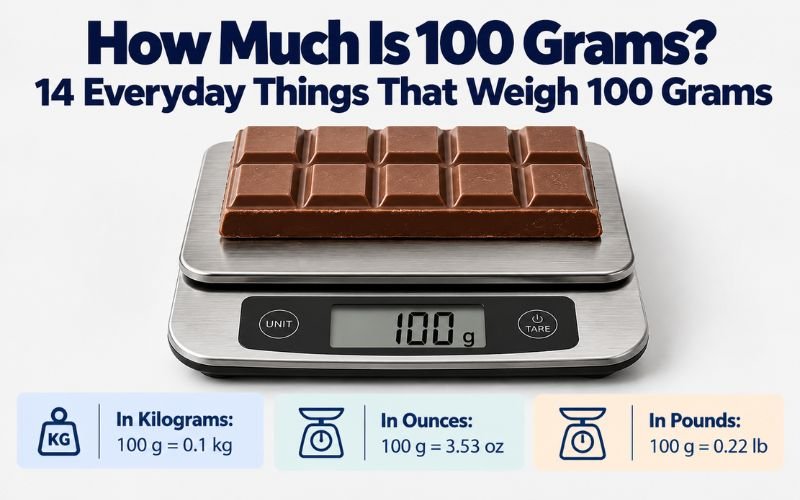
100 grams is equal to 0.1 kilograms, 3.53 ounces, or about 0.22 pounds. It is a small amount of weight, but you will see it often in recipes, food labels, kitchen measurements, and product packages.
If you are trying to picture how much 100 grams actually is, everyday objects can make the measurement easier to understand. A small apple, a chocolate bar, a soap bar, or a small packet of food may be close to 100 grams, although the exact weight can vary.
Knowing this conversion is also useful when a recipe uses grams but your kitchen scale shows ounces, or when you are comparing food packages with different weights. Since 1 kilogram contains 1,000 grams, 100 grams is exactly one-tenth of a kilogram. In this guide, you will see simple conversions, everyday examples, and practical ways to estimate 100 grams when you do not have a scale nearby.
How Much Is 100 Grams?
| Weight | Equivalent |
|---|---|
| 100 grams | 0.1 kilograms |
| 100 grams | 3.53 ounces |
| 100 grams | 0.22 pounds |
| 100 grams | 100,000 milligrams |
| 100 grams | 1/10 of a kilogram |
| 100 grams | About 3.5 ounces |
100 grams is a small but useful amount of weight. It is equal to 0.1 kilograms, 3.53 ounces, or about 0.22 pounds. A simple way to picture it is to think of a small chocolate bar, a handful of certain foods, or another compact everyday item that weighs around 100 grams.
This weight is common in cooking, grocery shopping, shipping, crafts, and many household tasks. For example, a recipe may call for 100 grams of flour, sugar, cheese, or chocolate. Product packages may also use grams to show their weight, especially for food and small items.
Knowing what 100 grams feels like can be helpful when you do not have a kitchen scale nearby. Familiar objects give you a quick visual reference, although their exact weight can vary. For precise measurements, a digital kitchen scale is still the best option.
How Much Is 100 Grams in Ounces and Pounds?
100 grams is equal to approximately 3.53 ounces or 0.22 pounds. These conversions are useful because some products and recipes use grams, while others list weight in ounces or pounds.
For a quick comparison, 100 grams is less than one-quarter of a pound. Since 1 pound contains 16 ounces, 100 grams is a little more than 3.5 ounces. In kilograms, it is exactly 0.1 kg.
Knowing these conversions makes it easier to understand package sizes and follow recipes that use different measurement systems. If a recipe asks for 100 grams of an ingredient, you can use a scale for the most accurate result or use a familiar 100-gram item as a rough visual reference.
Everyday Things That 100 Grams
There is no single object that always weighs exactly 100 grams. A small apple may be close, while a larger apple could be twice as heavy.
The table below gives you practical reference points for imagining 100 grams.
| Everyday Item | Weight |
|---|---|
| Small apple | 100 grams |
| Small chocolate bar | 100 grams |
| Small soap bar | 100 grams |
| Small bag of nuts | 100 grams |
| 100 ml of water | 100 grams |
| Small candle | 100 grams |
| Small yogurt cup | 100 grams |
| Small pack of coffee | 100 grams |
| Small pack of rice | 100 grams |
| Small pack of pasta | 100 grams |
| Several strawberries | 100 grams |
| Small potato | 100 grams |
| Several slices of bread | 100 grams |
| Small pack of dried fruit | 100 grams |
Small Apple
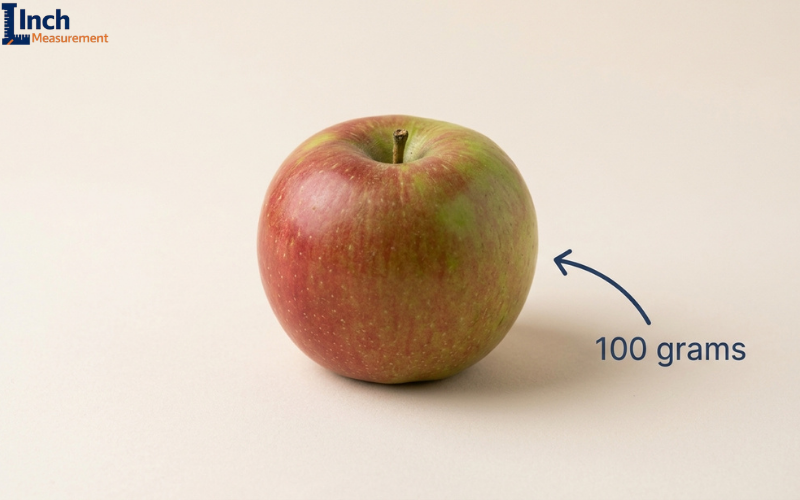
A small apple can weigh close to 100 grams. It is a handy comparison because most people can easily picture the size and weight of an apple.
The actual weight changes with the variety and size. A large apple can weigh 200 grams or more, while a very small one may weigh considerably less.
If you need exactly 100 grams of apple for a recipe, cut the apple and weigh the pieces rather than relying on its size.
Small Chocolate Bar
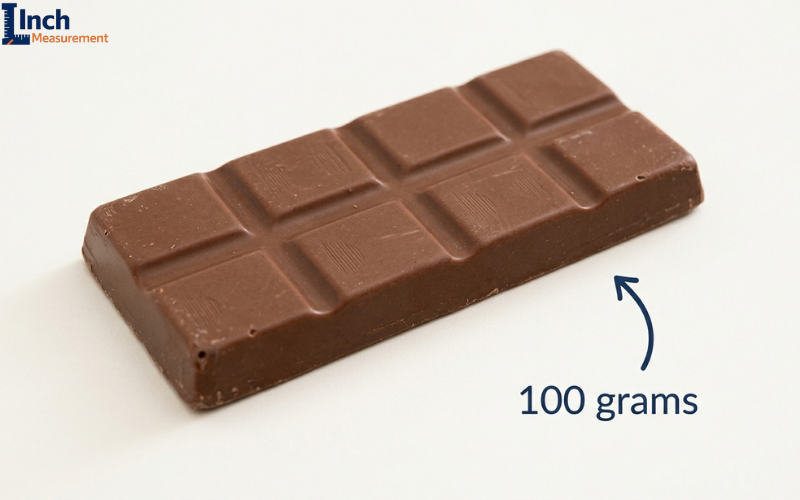
A small chocolate bar is another useful example. Many chocolate products are sold in packages around the 100-gram mark.
Chocolate is fairly dense, so a 100-gram bar may look smaller than 100 grams of a lighter food. The package label is the best way to check its actual weight.
For baking, weighing chocolate is usually more reliable than measuring it by cups because pieces can vary in size.
Small Soap Bar
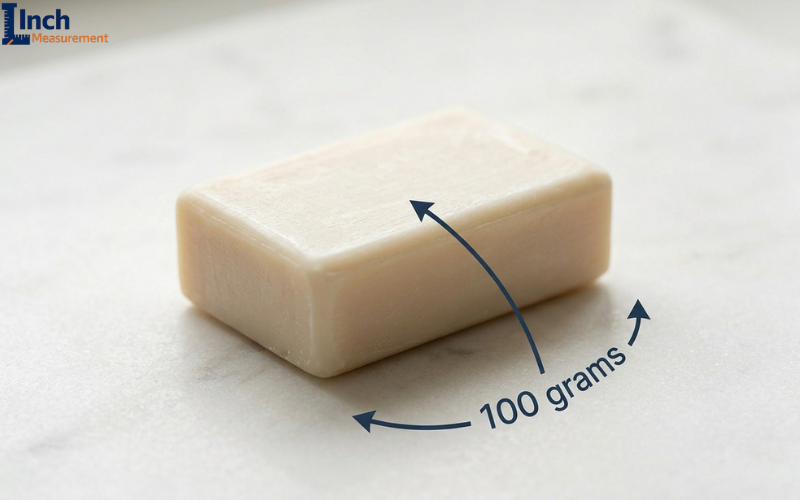
Some standard soap bars weigh around 100 grams. A wrapped bar can therefore give you a rough idea of what 100 grams feels like in your hand.
Soap is available in many sizes, though. A product labeled 75 grams will feel lighter, while a 125-gram bar will be heavier.
If you are using soap as a visual reference, check the weight printed on the package rather than assuming every bar is the same.
See Also: How Long Is 200 Inches? 10 Common Things That Are 200 Inches Long
Small Bag of Nuts
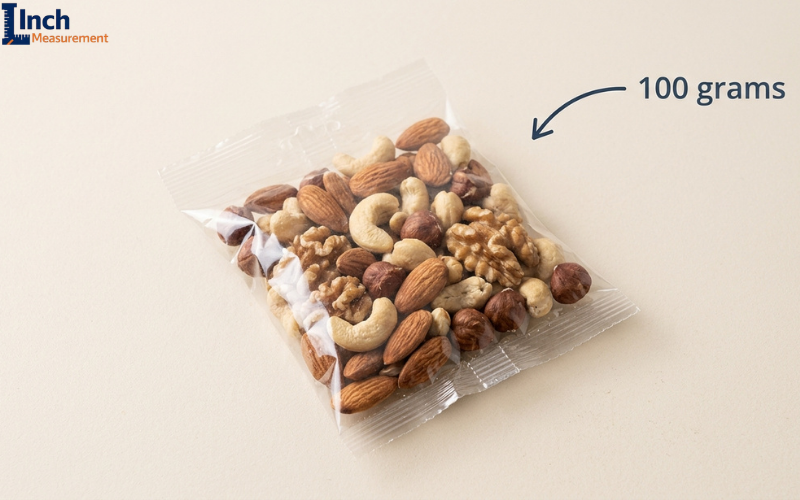
A small bag of almonds, peanuts, cashews, or mixed nuts can contain about 100 grams.
Nuts are dense, so 100 grams of them may occupy less space than you expect. A small handful can therefore represent a noticeable portion of the total weight.
If you are comparing nutrition information, check the serving size. A nutrition label may give values for 30 grams even though the entire package weighs 100 grams.
100 Milliliters of Water
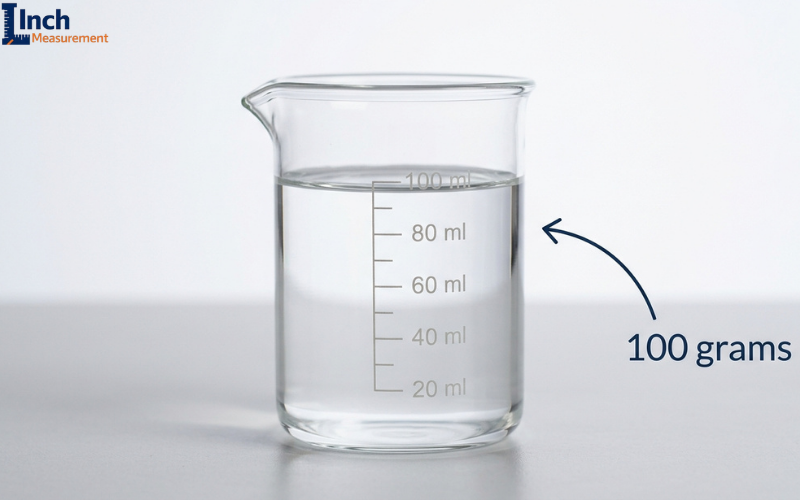
Water gives one of the simplest examples of the relationship between volume and weight.
100 milliliters of water weighs about 100 grams. This works because water has a density close to 1 gram per milliliter under ordinary conditions.
Do not apply the same rule to every liquid. A 100 ml amount of cooking oil, honey, or syrup will not have the same weight as 100 ml of water.
That is why a measuring cup cannot always replace a kitchen scale.
Small Candle
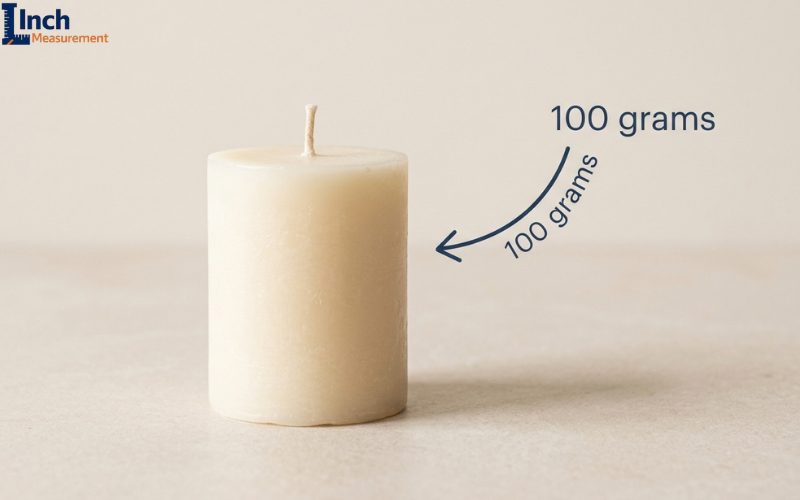
A small candle may weigh around 100 grams, especially if it is made from a modest amount of wax and has little packaging.
The container can change the total weight considerably. A glass candle that contains 100 grams of wax could weigh much more once the glass is included.
If you are using the candle only as a visual reference, focus on the complete item and remember that it is an estimate.
Small Yogurt Cup
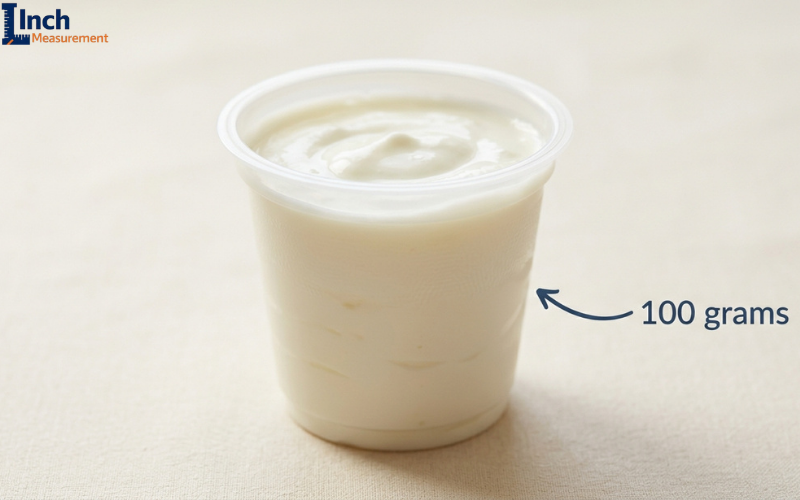
Some individual yogurt cups contain around 100 grams of yogurt. This makes a small yogurt container an easy packaged-food reference.
Check the label before using it as an example. Yogurt is commonly sold in different sizes, and a 125-gram or 150-gram cup will not represent 100 grams.
The difference is useful to remember if you are following a recipe or tracking food portions.
Small Pack of Coffee
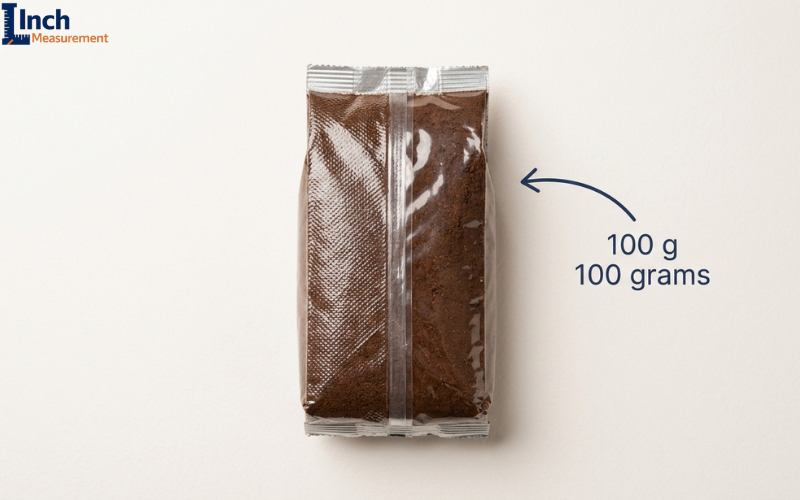
Coffee is often sold in small packets or pouches around 100 grams. Both ground coffee and whole beans can be used as examples.
A 100-gram bag may look quite small because coffee is relatively dense. The amount of space it takes up also depends on whether the coffee is ground or whole.
For brewing, the weight of coffee matters more than the volume because a spoonful can contain different amounts depending on how finely the coffee is ground.
Small Pack of Rice
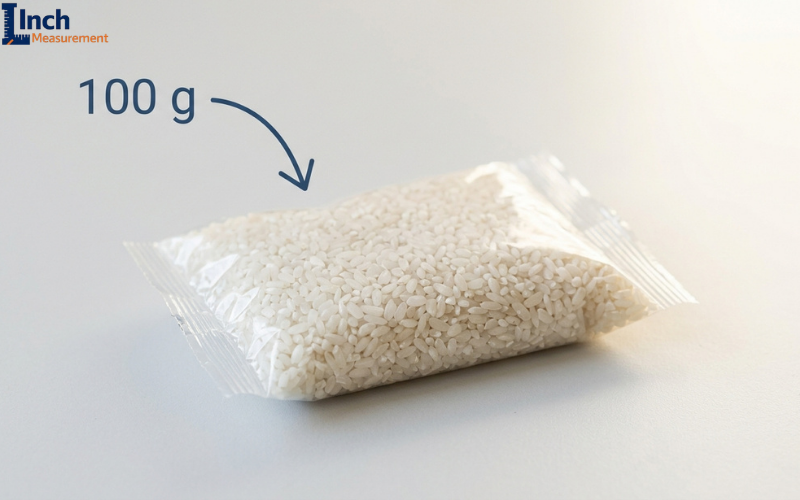
A package containing 100 grams of rice is an exact reference if the label states that the net weight is 100 grams.
Rice also shows why weight and volume should not be confused. One hundred grams of dry rice does not take up the same amount of space as 100 grams of cooked rice.
Cooking adds water to the grains, changing their volume and final weight.
See Also: What Is 60 Inches in Feet? 10 Common Things That Are 60 Inches Long
Small Pack of Pasta
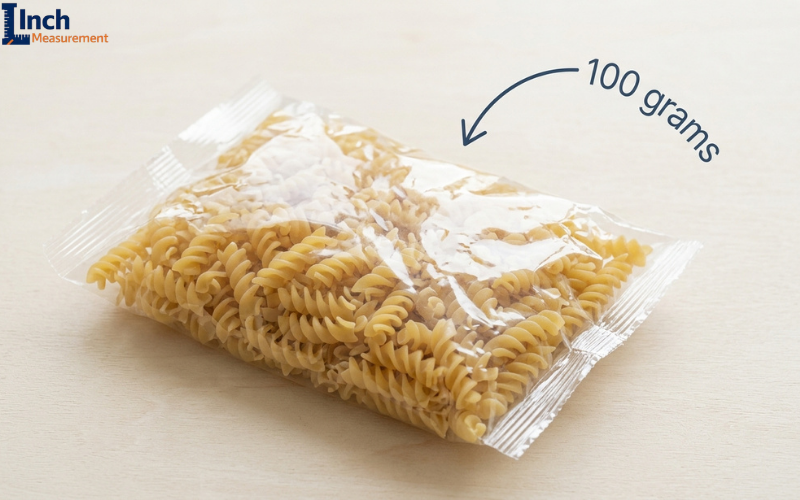
A 100-gram portion of dry pasta is another common food measurement. Recipes sometimes use grams because the shape of pasta can make cup measurements less reliable.
For example, 100 grams of spaghetti will look very different from 100 grams of small pasta shapes, even though both weigh the same.
If you are dividing a larger package, a kitchen scale is the easiest way to separate an accurate 100-gram portion.
Several Strawberries
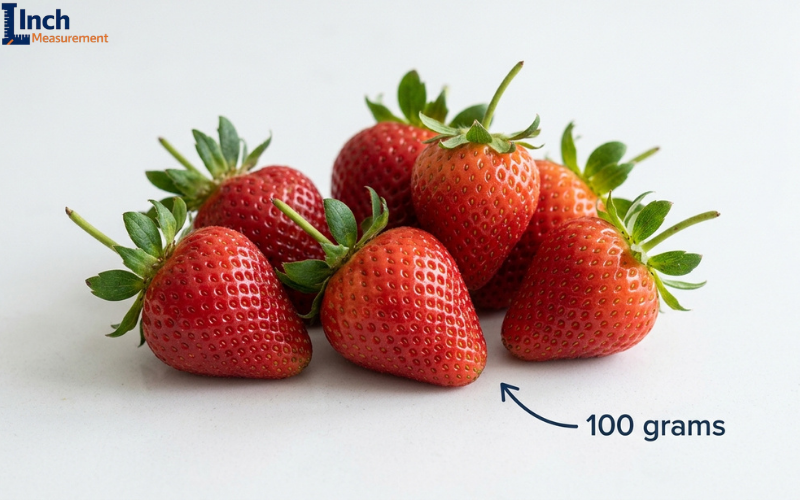
Several medium-sized strawberries can add up to about 100 grams. The exact number depends on the size of each fruit.
Small strawberries may require more pieces to reach 100 grams, while a few very large strawberries could reach the same weight.
This is a useful example for understanding why counting pieces is not the same as measuring weight.
Small Potato
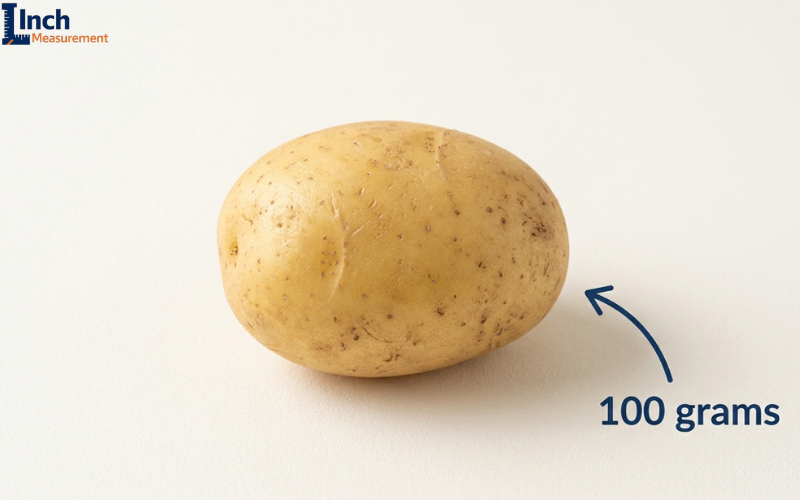
A small potato can be close to 100 grams. Potatoes vary widely in size, so this should only be considered a rough reference.
A medium potato may weigh considerably more. If a recipe requires 100 grams of potato, cutting a larger potato and weighing the portion will give a much better result.
The same idea applies to onions, tomatoes, carrots, and other produce.
Several Slices of Bread
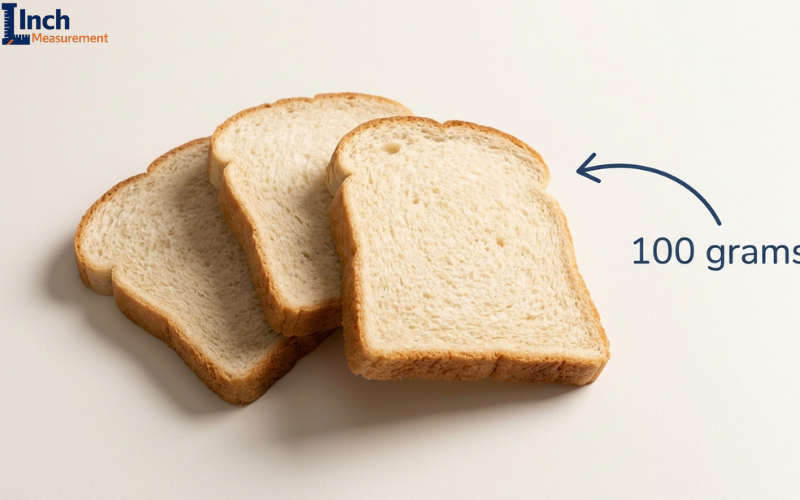
A few slices of bread can weigh around 100 grams, depending on the type and thickness.
Thin sandwich bread may have lighter slices, while thick bakery bread can weigh much more. Two slices of one brand might weigh very differently from two slices of another.
If a recipe calls for 100 grams of breadcrumbs, weighing the crumbs is more accurate than counting slices.
Small Pack of Dried Fruit
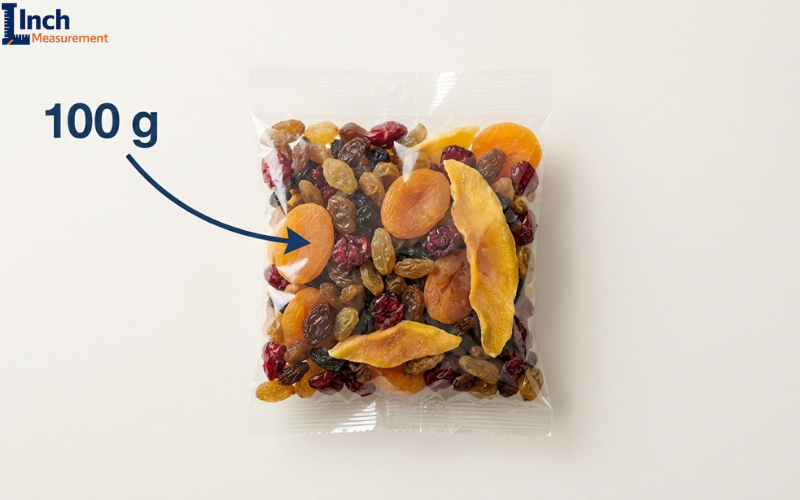
A small package of raisins, dates, cranberries, or another dried fruit may contain about 100 grams.
Dried fruit has less water than fresh fruit, so it is relatively dense. As a result, 100 grams of dried fruit can take up much less space than 100 grams of some fresh foods.
The package label gives you the most reliable reference if you need the exact amount.
How Much Is 100 Grams of Food?
The answer changes depending on the food. This is one of the most important things to understand about grams.
Imagine 100 grams of flour and 100 grams of water. Both weigh exactly 100 grams, but they take up different amounts of space because their densities are different.
The same applies to sugar, rice, oil, meat, fruit, and nuts. A cup is a volume measurement, while a gram is a weight measurement.
That is why recipes that list ingredients by weight can be more precise.
100 Grams of Flour
One hundred grams of flour is a common amount in baking. The volume can vary depending on how the flour is placed into a measuring cup.
Scooping flour directly from the bag can pack it down and give you more flour than gently spooning it into a cup and leveling it.
A digital kitchen scale avoids this problem. Set the scale to grams, place your bowl on it, use the tare function, and add flour until the display reaches 100 grams.
100 Grams of Sugar
Sugar is denser than flour, so 100 grams of sugar does not occupy the same volume.
Different types of sugar also behave differently. Granulated sugar flows easily, while brown sugar is often packed into a measuring cup.
For consistent baking results, follow the recipe’s stated measurement method rather than converting grams to cups without checking the ingredient.
100 Grams of Rice
Dry and cooked rice are very different references.
If you weigh 100 grams of dry rice, the amount will be much smaller in volume than the same 100 grams after cooking. Water absorbed during cooking increases the rice’s weight and volume.
Always check whether a recipe or nutrition label refers to cooked or uncooked rice.
100 Grams of Meat
A 100-gram serving of meat is a common reference in nutrition information. The piece may look different depending on its cut and thickness.
Cooking can also change the weight because water and fat may be lost. A piece that weighs 100 grams before cooking may weigh less afterward.
If you are tracking portions, use the same measurement method each time so your comparisons stay consistent.
Can You Measure 100 Grams Without a Scale?
You can estimate 100 grams without a scale, but you cannot reliably measure an unknown item to exactly 100 grams by sight or touch.
The easiest shortcut is a product with a known weight. If a sealed package says 100 g, its contents represent 100 grams.
You can also divide a known package. Half of a 200-gram package is approximately 100 grams, assuming the contents are evenly distributed.
A 500-gram package can be divided into five equal 100-gram portions. A 1-kilogram package contains ten such portions.
For cooking, a scale is still the better choice when accuracy matters.
See Also: How Long Is 12 Feet? 10 Everyday Things That Are About 12 Feet Long
FAQs About How Much Is 100 Grams
How much is 100 grams in ounces?
100 grams is approximately 3.53 ounces. For a quick estimate, you can round it to about 3.5 ounces.
How much is 100 grams in pounds?
100 grams is about 0.22 pounds. It is slightly less than one-quarter of a pound, which is approximately 113.4 grams.
Is 100 grams equal to 100 ml?
Not generally. 100 grams measures weight, while 100 ml measures volume. For water, 100 ml weighs about 100 grams, but other liquids and foods have different densities.
What does 100 grams look like?
It depends on the object or food. A small apple, small chocolate bar, small soap bar, or 100-gram package can help you picture the amount, but these examples are approximate.
How can I measure 100 grams without a scale?
Use a package with a known weight or divide a larger known amount. For example, half of a 200-gram package is about 100 grams. For accurate cooking measurements, a kitchen scale is the safest option.
Final Thoughts
How much is 100 grams? It is 0.1 kilograms, 3.53 ounces, or about 0.22 pounds.
The easiest way to picture it is with familiar objects. A small apple, chocolate bar, soap bar, or small food package can give you a rough idea of the amount.
For exact measurements, though, do not rely on appearance. A kitchen scale is the simple answer, especially for baking, portioning food, or measuring ingredients where a few grams can make a difference.
