
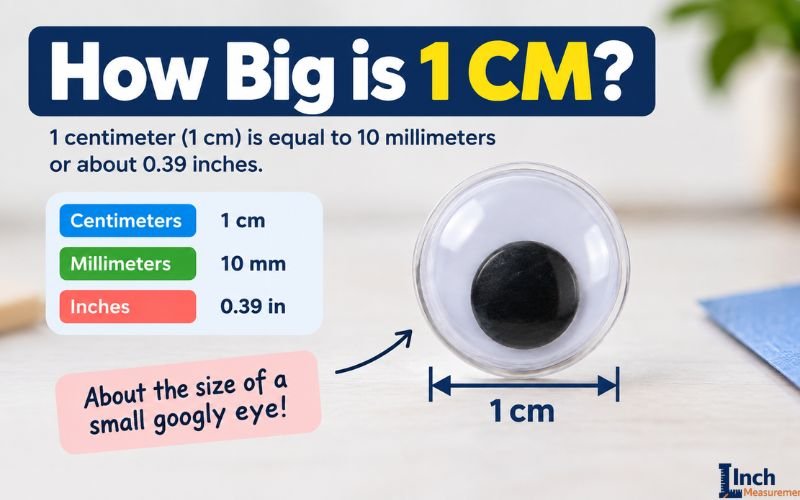
1 centimeter (1 cm) is equal to 10 millimeters or about 0.39 inches. It is a very small measurement, slightly less than half an inch, but it is still useful in many everyday situations. If you are wondering how big is 1 CM, imagine the diameter of a small bead, a pea, or a small button.
One centimeter is easy to picture on a metric ruler. The distance from the 0 mark to the 1 cm mark contains ten tiny 1 mm divisions. This also means that 2 cm is twice as long, while 5 cm is half of 10 cm.
You may need to estimate 1 cm when measuring a small craft item, button, bead, screw, wire, or piece of material. Objects such as a 10 mm bead or a standard 10 mm drill bit provide especially useful references because 10 mm is exactly 1 cm. Natural objects like peas can help you visualize the size, but they are not precise measuring tools because their dimensions vary.
How Big Is 1 CM?
If you are asking how big is 1 CM, the easiest answer is that 1 centimeter measures 10 millimeters. In inches, 1 cm is approximately 0.3937 inches, which is just under 0.4 inch.
Another useful way to picture it is to imagine a ruler divided into very small sections. The distance from the 0 mark to the 1 cm mark is 1 centimeter. On most metric rulers, this distance contains ten tiny millimeter divisions.
One centimeter is small enough to be easy to underestimate. A typical pencil, for example, is usually only around 7–8 mm thick, so its diameter is slightly smaller than 1 cm. A 10 mm drill bit, by comparison, has a diameter exactly equal to 1 cm.
The measurement can describe length, width, thickness, or diameter. That distinction matters. A round button might be 1 cm across, while a piece of wire could be 1 cm long. Saying something is “1 cm big” does not tell you which dimension is being measured.
Quick Ways to Measure 1cm Without a Ruler
Need to estimate 1 cm without a ruler? You can use a few everyday objects as rough references. The easiest one is a 10 mm bead, because 10 mm is exactly 1 cm. Place it next to the object you want to measure and compare their width.
A small pea can also be close to 1 cm across, although peas naturally come in different sizes. A small shirt button may be around 1 cm wide as well. For a more reliable reference, check the size printed on craft beads, buttons, or hardware packages.
Your fingernail can give you another quick estimate, but this method is less accurate because everyone’s fingers are different. A standard pencil is usually around 7–8 mm thick, so it can help you see that 1 cm is slightly wider than a pencil.
These methods work for quick estimates, but use a ruler or caliper when the measurement needs to be exact.
12 Common Things That Are 1cm Big
Wondering what 1 cm actually looks like in everyday life? These 12 common objects provide simple, familiar references that can help you picture this small measurement.
| Common Item | Approximate Size |
|---|---|
| Green pea | 1 cm / 0.39 inches |
| Pencil eraser width | 1 cm / 0.39 inches |
| Small shirt button | 1 cm / 0.39 inches |
| AAA battery terminal | 1 cm / 0.39 inches |
| Dice dot | 1 cm / 0.39 inches |
| Jelly bean | 1 cm / 0.39 inches |
| Fingernail width | 1 cm / 0.39 inches |
| Small marble | 1 cm / 0.39 inches |
| Paperclip width | 1 cm / 0.39 inches |
| Coin thickness stack | 1 cm / 0.39 inches |
| Small googly eye | 1 cm / 0.39 inches |
| M6 hex nut | 1 cm / 0.39 inches |
A Green Pea
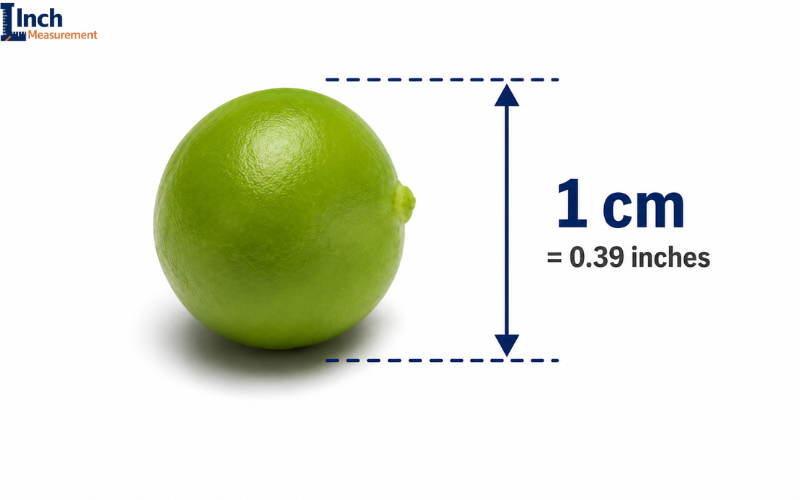
A green pea is one of the easiest foods to use as a rough reference for 1 cm. Many individual peas measure somewhere around 8 to 10 mm across, although their size changes depending on the variety, age, and how they were grown.
Place a pea beside a metric ruler and you can see why it works as a visual comparison. A pea near the 1 cm mark gives you a much better sense of the measurement than simply hearing that 1 cm equals 10 mm.
The shape also makes the comparison useful. Peas are generally round, so their diameter is the dimension being compared. A larger pea may be slightly more than 1 cm, while a smaller one can be noticeably below it.
If you are estimating the size of something such as a small craft piece, seed, bead, or button, a pea can give you a quick starting point. It should not be used where accuracy matters because natural foods are not manufactured to one exact size.
For cooking, gardening, or casual measurements, though, it is a surprisingly handy reference.
Pencil Eraser Width
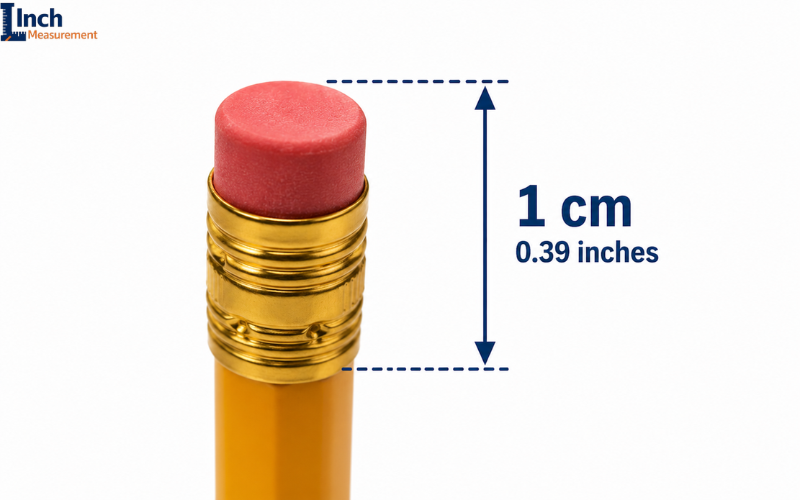
Some large pencil eraser caps measure close to 1 cm across. The exact size depends on the pencil and the style of eraser, so this is an approximate reference rather than a fixed measurement.
A regular wooden pencil is often around 7–8 mm in diameter. That means a pencil itself is usually narrower than 1 cm. A wider eraser cap or a large molded eraser can come much closer to the 10 mm mark.
This makes pencils useful for comparing nearby measurements. If you are trying to picture 1 cm, imagine the thickness of a standard pencil and then add a small amount. The difference may look tiny, but even a few millimeters matter in precise work.
For school projects, drawing, or simple crafts, this kind of comparison can help you estimate dimensions before finding a ruler. If you are cutting material or drilling a hole, however, use an actual measuring tool instead of judging by the pencil.
Small Shirt Button
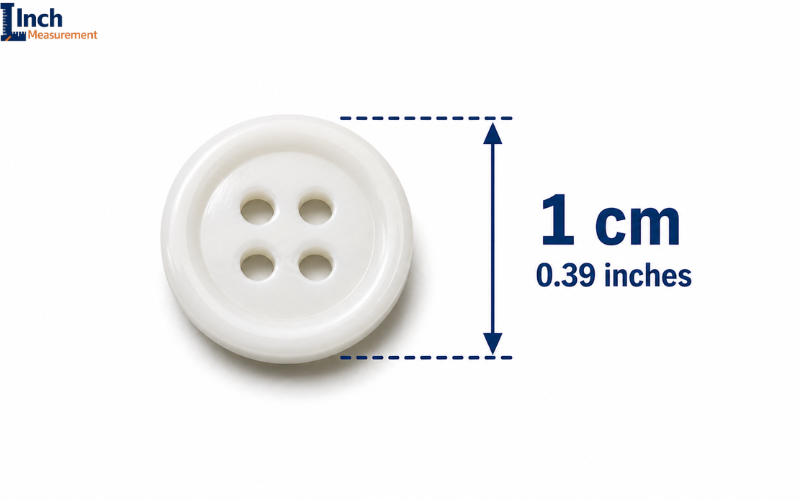
A small shirt button can be close to 1 cm in diameter. Some small buttons measure around 10 mm, while others are closer to 11 or 12 mm.
Button sizes are not universal, so it is better to think of this as an approximate reference. Larger coat or jacket buttons can be several centimeters wide and would not be useful for visualizing 1 cm.
A small button is especially helpful because it has a clear circular shape. If someone tells you that a round object is about 1 cm wide, you can picture a small shirt button sitting across that distance.
For sewing, the actual button size matters. A button hole must be large enough for the button to pass through, and the thickness of the fabric can affect the fit. If you are replacing a button, measuring the original with a ruler is better than relying on a visual comparison.
Still, if you simply need to understand how big 1 cm is, a small shirt button is an object you may already have at home.
See Also: How Long Is 5 Meter
AAA Battery Terminal
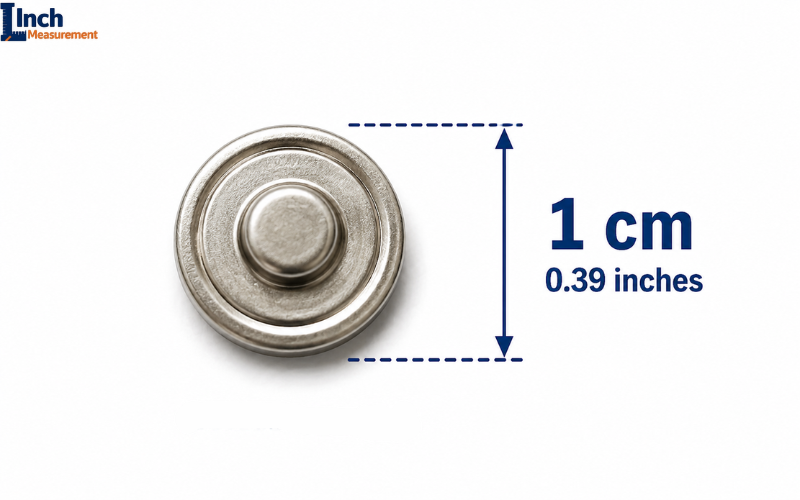
The metal terminal on the top of a AAA battery is close to 1cm wide. This small raised section is a great example because batteries are common in remote controls, toys, and flashlights.
When people ask how big is 1cm, battery parts can help explain the measurement clearly. The terminal is small enough to fit comfortably under one fingertip but still visible without effort.
This example is also useful because it connects measurements to electronics. Small device parts are often measured in centimeters or millimeters. Understanding 1cm helps people better picture the size of tiny components.
If you compare a battery terminal with objects from 6 inches examples, you can clearly see the difference between small and medium measurements. A single centimeter is tiny, but many small parts together can build larger devices we use every day.
Dice Dot
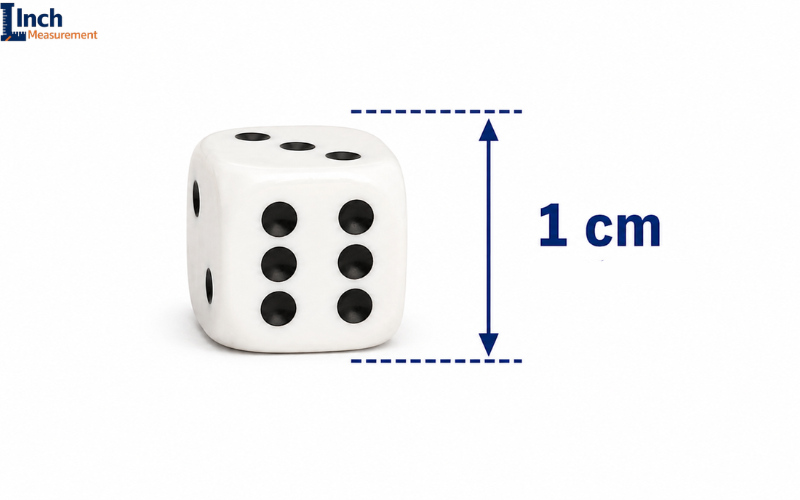
The dots on many standard dice are close to 1cm in size. These small circles are simple but effective examples of centimeter measurements.
Dice are easy to find in homes and classrooms, making them a practical way to picture 1cm. When you look at the dot carefully, you can understand how a tiny shape can still be clear and visible.
This example also shows why small measurements matter in design. Even tiny dots must be large enough to see and count easily. Designers use centimeters and millimeters to make sure objects stay balanced and readable.
Dice dots are especially useful for children learning measurements. They can count dots while also understanding object size. This combines learning with visual comparison in a simple way.
A 1cm dice dot may look small next to larger objects, but it still stands out clearly because of its shape and contrast.
Jelly Bean
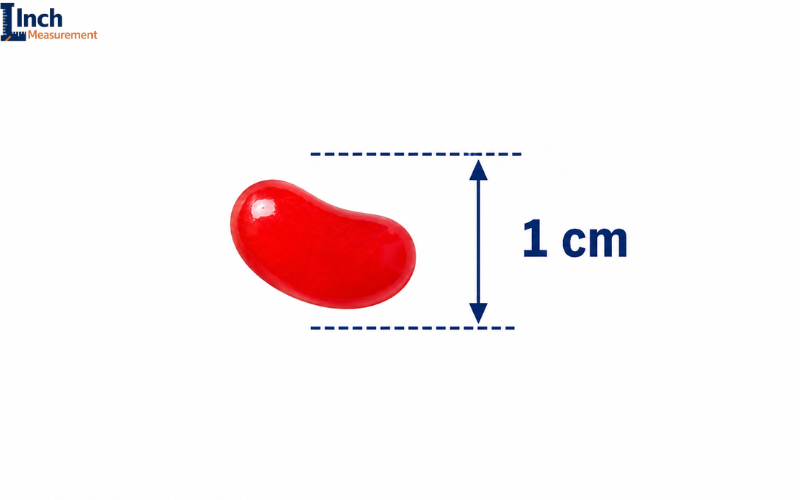
A jelly bean candy is often around 1cm thick or wide. This colorful candy makes understanding 1cm much more fun and relatable.
Most people have seen or eaten jelly beans, so they can quickly picture the measurement. Holding one between your fingers shows how small a centimeter really is. It is tiny enough to fit easily in your palm, yet large enough to notice clearly.
Candy examples are helpful because food sizes are easy to remember. A jelly bean also demonstrates that 1cm objects can come in different shapes. Some are round, while others are oval or flat.
Compared with measurements such as 8 inches, a jelly bean is extremely small. Still, this tiny candy gives an accurate visual idea of 1 centimeter.
People often understand measurements faster when they connect them with familiar foods. That is why jelly beans are useful examples in size comparison guides.
Fingernail Width
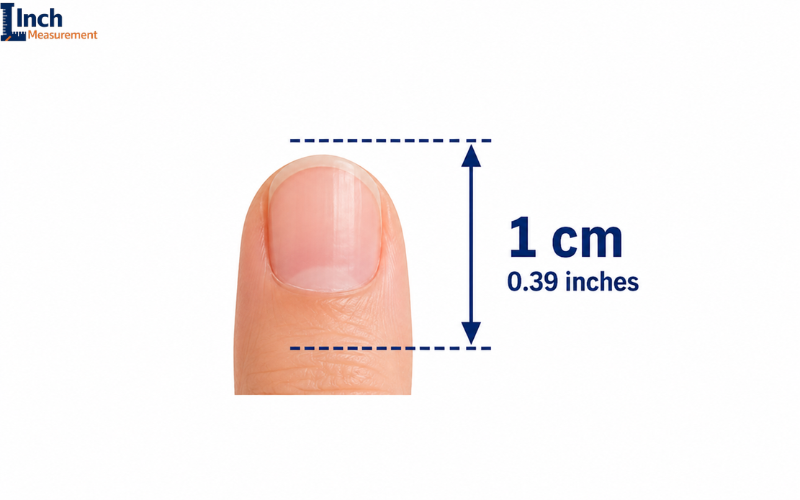
The width of a pinky fingernail for many adults is close to 1cm. This makes your own hand a quick measuring tool.
One reason this example works so well is convenience. You always have your hands with you, so you can estimate 1cm almost anywhere. While finger sizes differ slightly from person to person, the pinky nail often provides a close estimate.
This method is especially useful when shopping, crafting, or measuring tiny objects quickly. Instead of searching for a ruler, you can compare the item to your fingernail.
Hand measurements have been used for centuries before modern rulers became common. Even today, people still use fingers and palms for quick estimates.
Although not exact, the fingernail method is practical for daily life. It helps people understand what does 1cm look like using something natural and familiar.
Related Post: 10 Common Things That Are 2cm Big
Small Marble
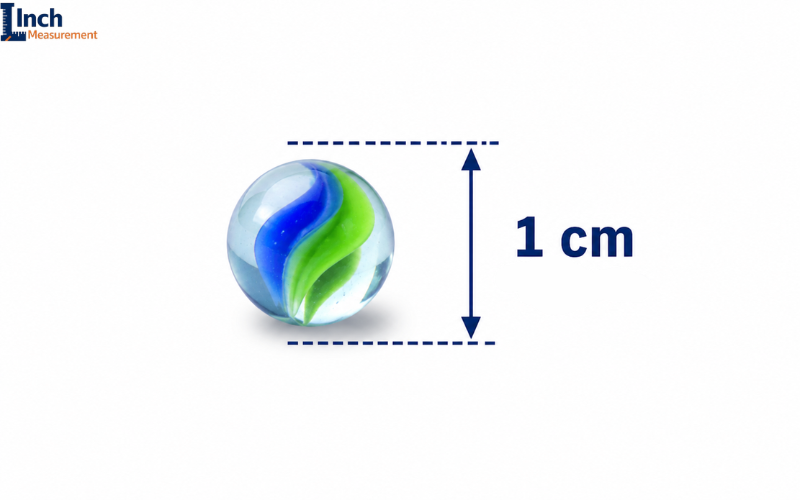
Some toy marbles are about 1cm wide. These smooth glass balls are another easy way to picture the size of a centimeter.
Marbles are popular because they are colorful, round, and easy to hold. Looking at a small marble gives a clear sense of how tiny 1cm really is. A marble may seem small, but it is still large enough to roll smoothly and remain easy to pick up.
Children often use marbles in games, which makes them useful teaching tools for measurements. Teachers and parents can use them to explain size comparisons in a simple way.
Compared with items in 10 inches examples, a marble appears very tiny. Still, it is large enough to demonstrate the practical use of centimeters in toys and crafts.
Because marbles come in different sizes, checking a small marble helps give a close visual estimate of 1cm.
Paperclip Width
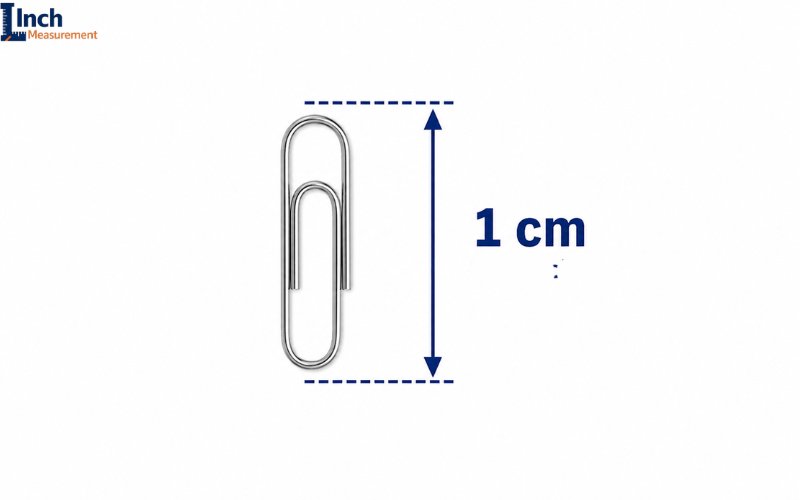
The width of a standard paperclip loop is often close to 1cm. This office item is simple but useful for understanding small measurements.
Paperclips are found in schools, homes, and offices, making them easy to compare with other objects. Their metal loops provide a neat visual shape that helps explain centimeter size clearly.
A paperclip also shows how tiny measurements are important in product design. If the clip were much smaller, it would not hold papers properly. If it were much larger, it would waste material and take more space.
This example helps explain why centimeters are used in manufacturing and office supplies. Small details matter, even in everyday objects.
The next time you hold a paperclip, look at its loop width carefully. You will have a quick idea of how big 1cm is without needing any ruler nearby.
Coin Thickness Stack
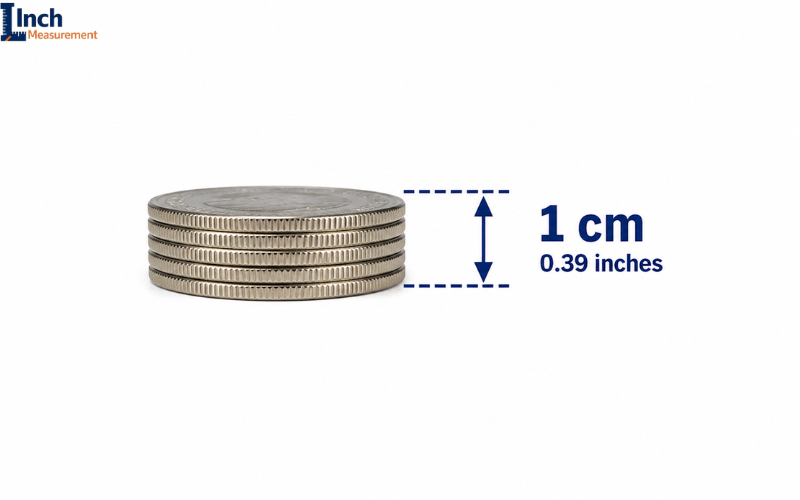
A stack of several coins together can measure close to 1cm tall. This example helps explain height instead of width.
Coins are useful because people handle them every day. While one coin is usually thinner than 1cm, stacking multiple coins creates a quick centimeter estimate.
This comparison also teaches that measurements can apply in different directions. Some objects are measured by height, while others are measured by width or length. Understanding this makes centimeters easier to use in daily life.
Coin stacks are practical for quick estimates at home. If you need to picture a centimeter, stacking coins can give a rough visual guide.
Compared with larger measurements like 12 inches, a 1cm coin stack is tiny. Even so, it remains an important unit for measuring small objects accurately.
Related Post: 9 Common Things That Are 3CM Big
Small Googly Eye
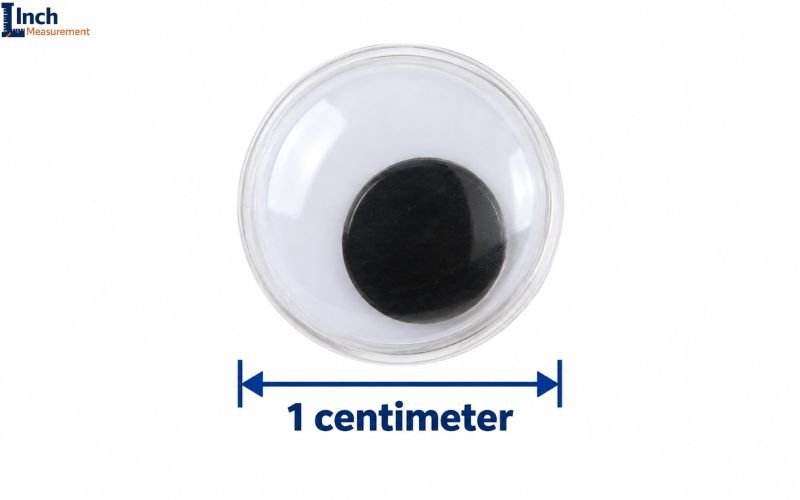
A 10 mm googly eye is another simple example of something that is exactly 1 cm across. These small craft eyes are sold in different sizes, so you should check the package measurement rather than assuming every googly eye is 1 cm.
A 10 mm version has a diameter of 10 millimeters. Since 10 millimeters make 1 centimeter, its width from edge to edge is 1 cm.
Small craft supplies are useful reference objects because their sizes are often listed in millimeters. You may see products labeled 6 mm, 8 mm, 10 mm, 12 mm, or larger.
The difference between 8 mm and 10 mm might sound small, but it is a quarter of a centimeter. In detailed craft work, that difference can change how an object looks.
If you are trying to understand what 1 cm looks like, place a 10 mm googly eye beside a ruler. The visual relationship is simple: its widest point should line up with approximately one centimeter.
M6 Hex Nut
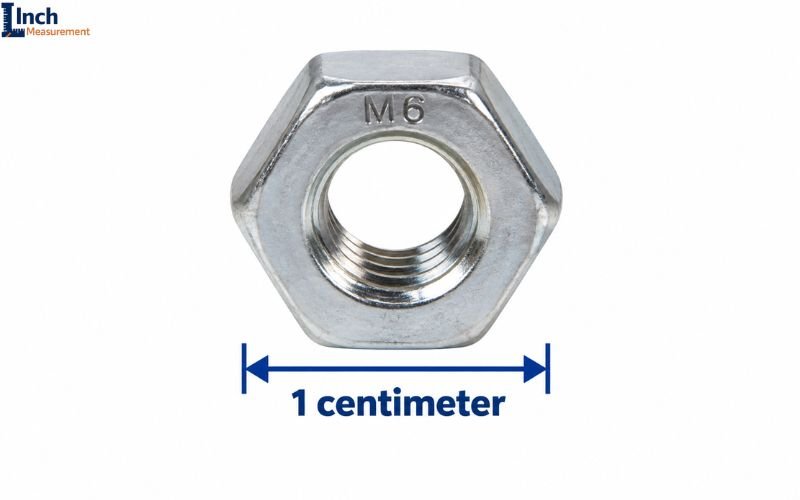
An M6 hex nut is a useful hardware example because many standard M6 nuts measure 10 mm across the flat sides. That measurement is called the width across flats.
This is slightly different from measuring a round object. A hex nut has six sides, so you need to measure from one flat side directly across to the opposite flat side. On a standard M6 nut, that dimension is commonly 10 mm.
The M6 designation refers to the nominal thread size, not the outside width of the nut. That is why it can be confusing if you are new to metric hardware. The “6” in M6 does not mean the nut is 6 mm wide.
This example is especially useful if you work with bicycles, furniture, machinery, tools, or home repairs. Metric hardware often uses millimeters, so understanding that 10 mm = 1 cm makes these measurements easier to interpret.
A ruler or caliper is still needed for exact work, especially because hardware standards and product designs can vary.
Real-Life Situations Where 1 CM Matters
A 1 cm measurement may seem tiny, but small differences can matter in everyday tasks.
Suppose you are choosing a bead for a bracelet. A 10 mm bead is 1 cm, while a 15 mm bead is 1.5 cm. That extra 5 mm changes how many beads can fit around the same length.
The same idea applies to drilling. Choosing a 10 mm drill bit instead of a 7 mm bit creates a much wider hole. For hardware, a few millimeters can determine whether a nut, bolt, or fitting works correctly.
In clothing and sewing, 1 cm can also be significant. A 1 cm seam allowance is a common measurement in some sewing patterns, and changing that allowance affects the finished dimensions of the garment.
Small measurements become even more important when several are added together. Ten separate 1 cm sections make 10 cm, so a tiny difference repeated many times can create a noticeable error.
Common Mistakes When Estimating 1 CM
The biggest mistake is assuming that every small object has a standard size. A pea is not manufactured to exactly 1 cm, and buttons come in many diameters. These objects are references, not precision measuring instruments.
Another common error is measuring the wrong dimension. A AAA battery is close to 1 cm in diameter, but its total length is more than 4 cm. Always ask whether the measurement refers to length, width, height, thickness, or diameter.
It is also easy to mix up centimeters and millimeters. Since 1 cm equals 10 mm, a 5 mm object is only half a centimeter. A 10 mm object is 1 cm, while a 100 mm object is 10 cm.
For precise work, visual estimation is not enough. Use the correct measuring tool and read the smallest marked division carefully.
If it is helpful for you and want more free guides then here we have more for you:
- 10 Common Things That Are 3 Meter Long
- 10 Common Things That Are 2 Meter Long
- 12 Common Things That Are 1 Meter Long
- 10 Common Things That Are 53 Inches Tall
- 10 Common Things That Are 5’9 Tall
Frequently Asked Questions
Is 1 cm the same as 10 mm?
Yes. 1 centimeter is exactly equal to 10 millimeters. The two measurements describe the same length using different metric units.
Is 1 cm bigger than 1 inch?
No. 1 inch equals 2.54 cm, so 1 inch is considerably longer than 1 cm. One centimeter is about 0.39 inch.
How big is 1 cm on a ruler?
On a metric ruler, 1 cm is the distance from the 0 mark to the 1 cm mark. It contains ten 1 mm divisions.
What common object is closest to 1 cm?
A 10 mm bead is an excellent reference because its stated diameter is exactly 1 cm. A pea or small button can also give you a rough visual comparison.
Can I use my finger to measure 1 cm?
You can make a rough estimate, but finger sizes vary too much for reliable measurements. Your fingernail may look close to 1 cm wide, but it should not replace a ruler for precise work.
How many centimeters are in 1 meter?
There are 100 centimeters in 1 meter. Since 1 cm is 10 mm, one meter also contains 1,000 millimeters.
How many inches is 1 cm?
1 cm is approximately 0.39 inches. For quick mental conversion, you can think of it as about 0.4 inch.
Is a pencil 1 cm thick?
Usually not. A standard wooden pencil is commonly around 7–8 mm in diameter, which is smaller than 1 cm. Some thicker pencils and specialty writing tools can be wider.
Is a 10 mm drill bit 1 cm?
Yes. 10 mm equals 1 cm, so a 10 mm drill bit has a nominal cutting diameter of 1 cm.
What is the easiest way to picture 1 cm?
Think of a 10 mm round bead, a small button, or a pea close to 1 cm in diameter. These give you a physical reference that is easier to visualize than a number alone.
Final Remarks
1 cm is a small measurement, but it is easy to understand once you connect it with familiar objects. A 10 mm bead, small button, pea, or similar item can give you a quick visual idea of the size.
Remember that everyday objects are only useful for rough estimates because their sizes can vary. If you are measuring something for sewing, drilling, crafting, building, or any task where accuracy matters, use a ruler or caliper.
The key conversion is simple: 1 cm = 10 mm = 0.39 inches. Once you know this, switching between centimeters, millimeters, and inches becomes much easier.
